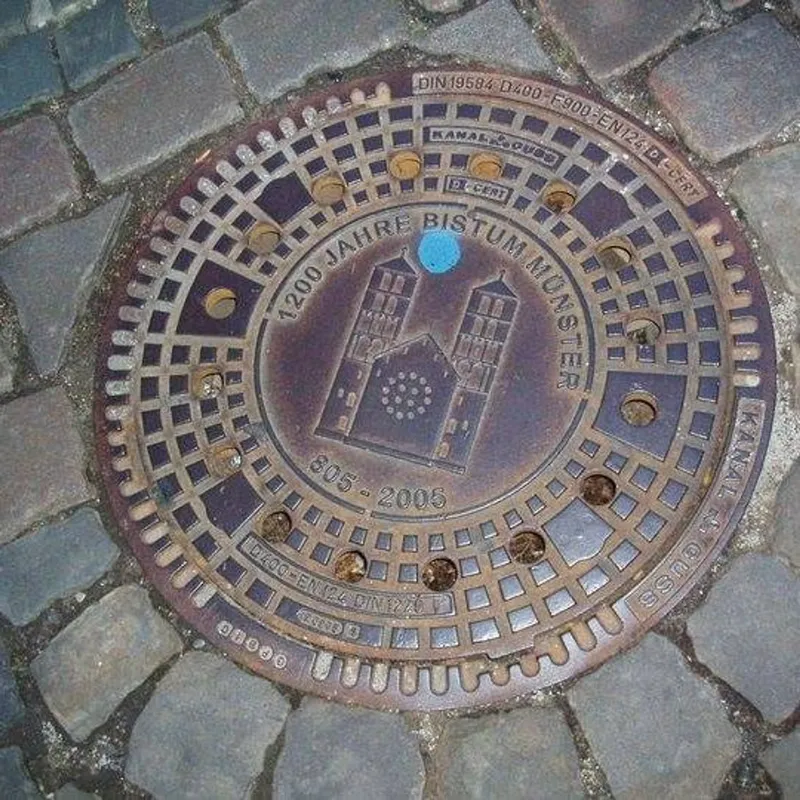
caryfukThe central depiction of the cathedral with its two towers dominates this example, surrounded by inscriptions commemorating 1200 years of the bishopric of Münster. The sturdy surface is further decorated with a geometric grid and technical specifications, suggesting its functional but historically significant purpose. The blue dot, clearly a later addition, adds an unexpected colour accent to this otherwise serious artefact.
DEManhole covers in Germany
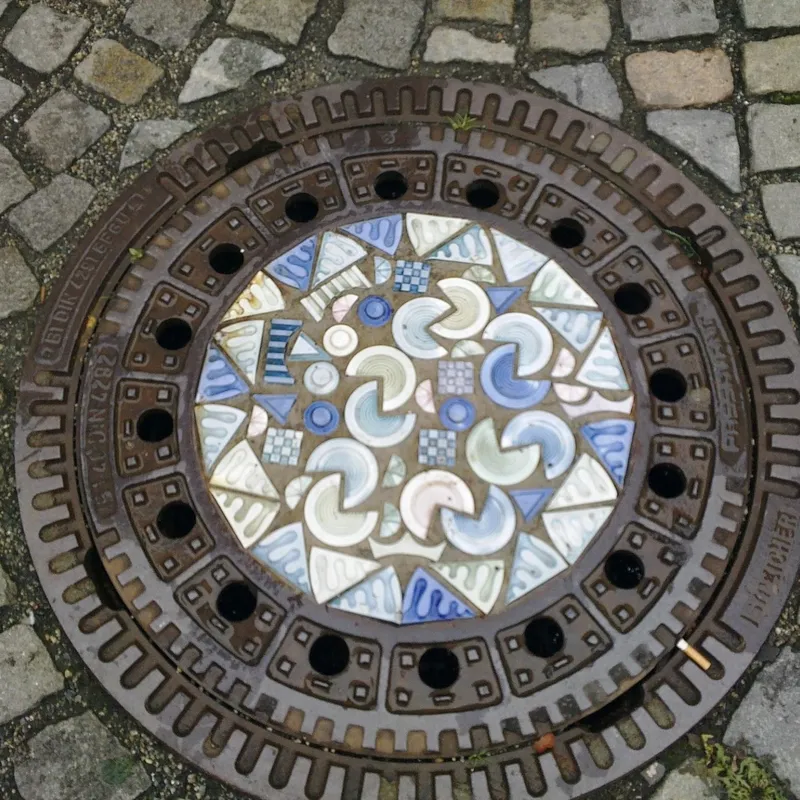
caryfukThe central mosaic of this specimen displays a complex geometric pattern made up of ceramic fragments in shades of blue, green and beige, which represents a fascinating departure from the typical utilitarian aesthetic. The surrounding cast iron frame bears distinctive embossed inscriptions such as 'STADTWERKE' and 'BEICHER', which serve as key identification markers for philological classification.
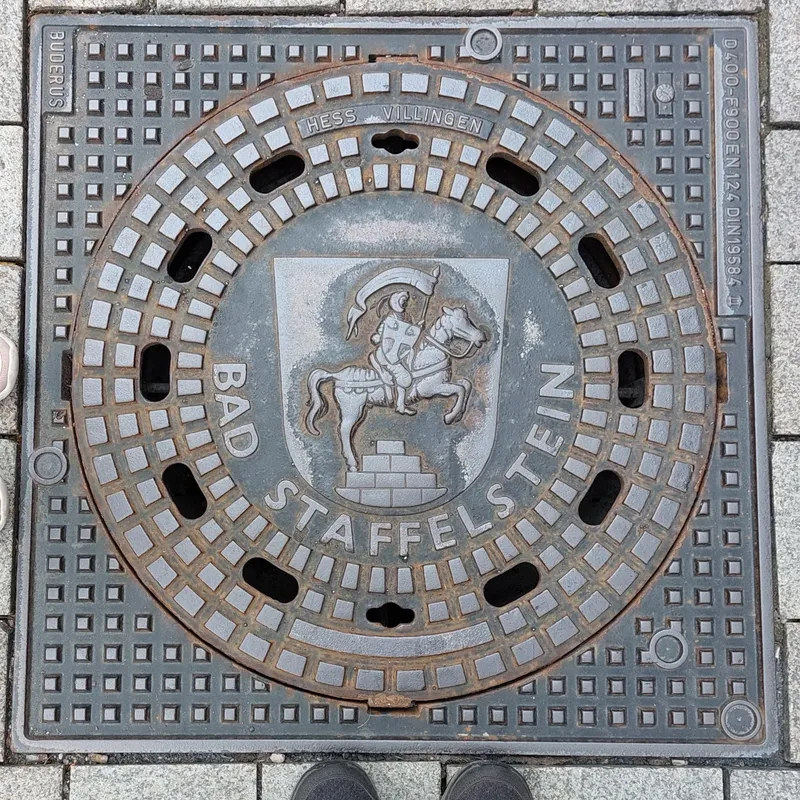
etienne-van-den-homberghTo understand this city coat of arms on the German Wikipedia page, you really need to take a few minutes. The four layers of stacked bricks symbolize Staffelstein. A nice example of a canting coat of arms. The rider on the rearing horse is not the famous Alwin Schockemöhle but Saint George of Cappadocia.
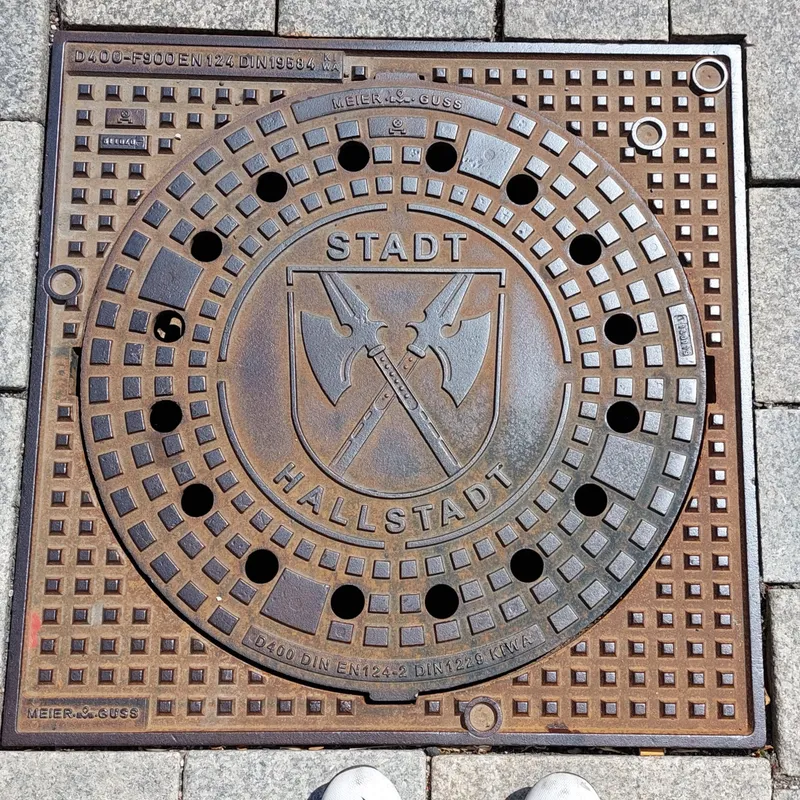
etienne-van-den-homberghIn Hallstadt, they certainly appreciate a clear weapon. Two even, as we see two halberds lying crossed over each other.
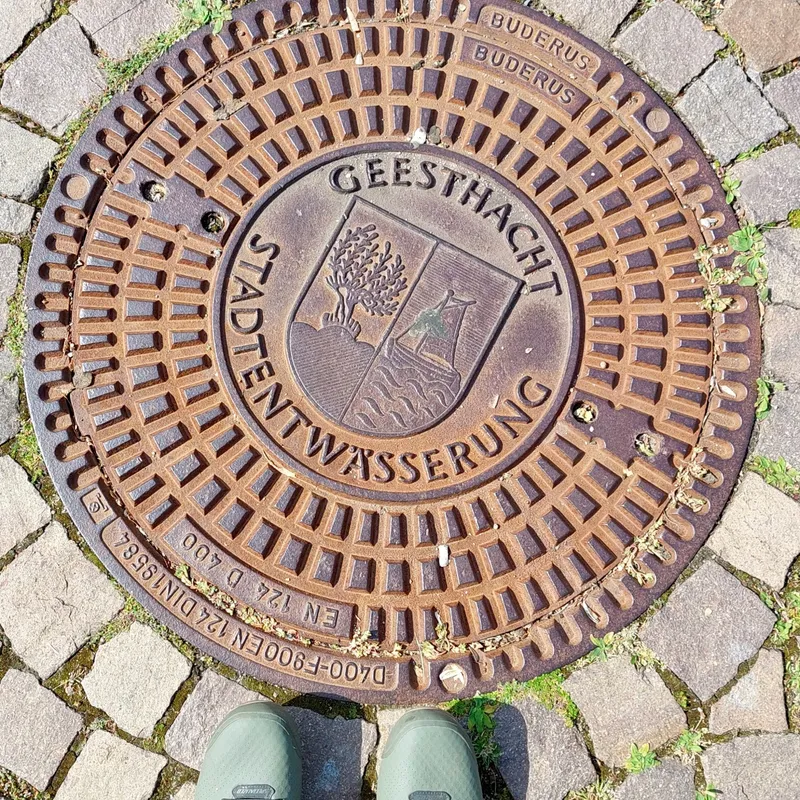
etienne-van-den-homberghThe lid features two elements that are characteristic of the history of this small town in Schleswig-Holstein. On the left (on the right for those familiar with heraldry) is a willow tree with seven branches. In this region, these branches were used to weave baskets. The fact that there are exactly seven branches is a reference to seven influential families in the town’s history. On the right is a depiction of a “Kahn,” a flat-bottomed boat used for fishing, freight transport, and ferry services. All in all, it makes for a lovely image.
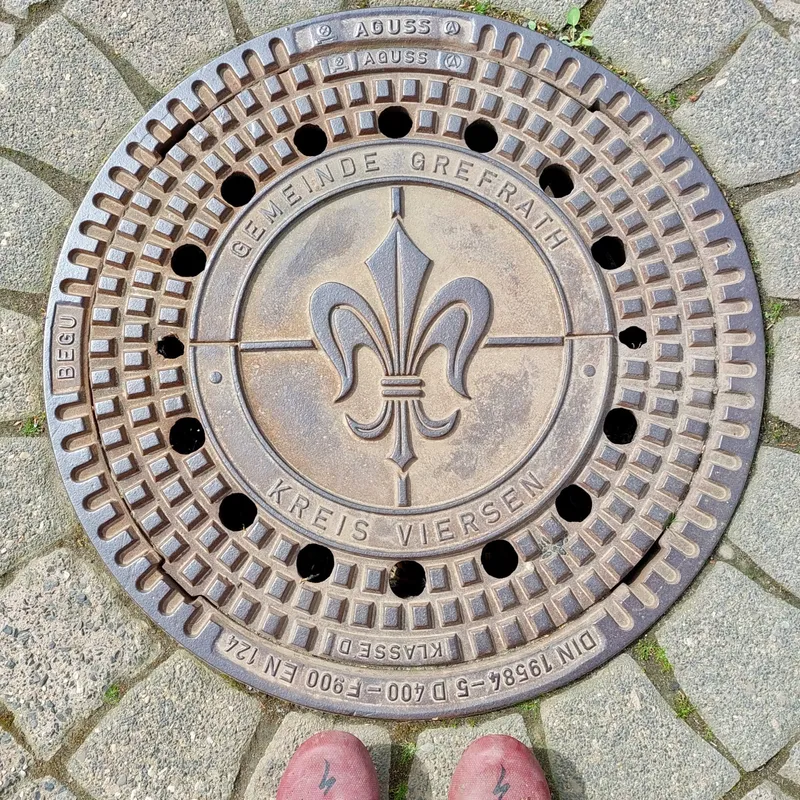
etienne-van-den-homberghThe municipality of Grefrath consists of the larger town of Grefrath and the smaller town of Oedt. When the two towns merged in 1970, the beautiful old heraldic coats of arms were replaced with this simple yet elegant lily. The lily refers to the ancient noble family von Greverode. The beautiful silver and gold colors in the coat of arms are, of course, not visible on the lid, but can be admired on this Wikipedia page.
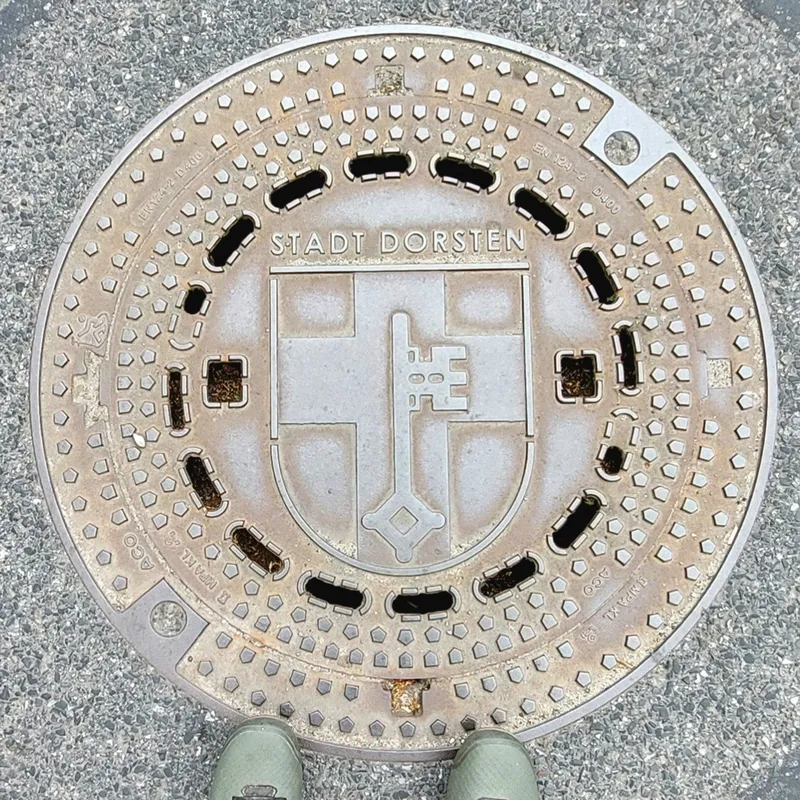
etienne-van-den-homberghWhen it comes to a German coat of arms, you can always turn to German Wikipedia for help. Both the key and the cross on which the key rests are related to Dorsten’s historical ties to the greater Cologne area. In the past, Dorsten belonged to the Diocese of Cologne (the key); today, it belongs to Münster. Administratively, it belonged to the Electorate of Cologne (the cross).
etienne-van-den-homberghMeierGuss leverde de stad een fraai gegoten deksel waarbij de details goed zichtbaar zijn. In Lilienthal werd in 1232 een vrouwenklooster gebouwd dat de naam Sancta Maria in Valle Liliorum kreeg: de Heilige Maria in het dal der lelies. Zowel Maria - met het kindje Jezus op schoot - als de lelies keren in het wapen terug.
etienne-van-den-homberghThe coat of arms of Dülmen consists of a single Latin cross, a Kleeblattkreuz to be precise. According to the German Wiki, that cross is presumably derived from the coat of arms of the city's patron saint, Saint Victor.
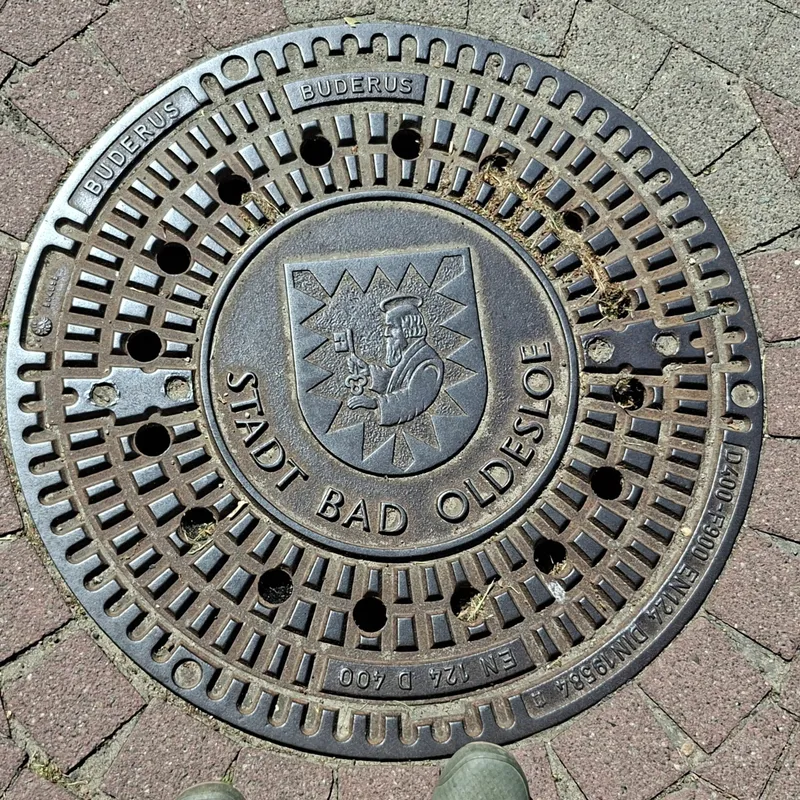
etienne-van-den-homberghSt Peter, with his key, is instantly recognisable. The jagged edge around the saint looks rather peculiar. It is the nettle leaf on the coat of arms of Holstein.
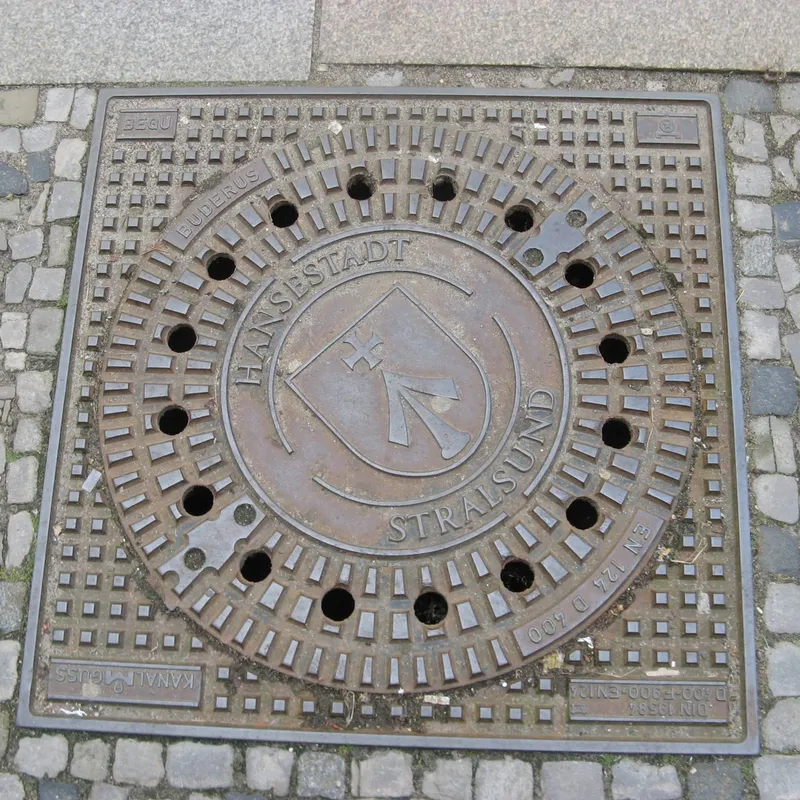
caryfukThe central motif is a heraldic shield, typical for urban infrastructure, surrounded by the inscription "HANSESTADT STRALSUND". The surrounding surface exhibits a robust, textured pattern of raised rectangular blocks, suggesting a design optimized for traction and durability, which is a common observation in specimens studied by the Institute of Lidology.
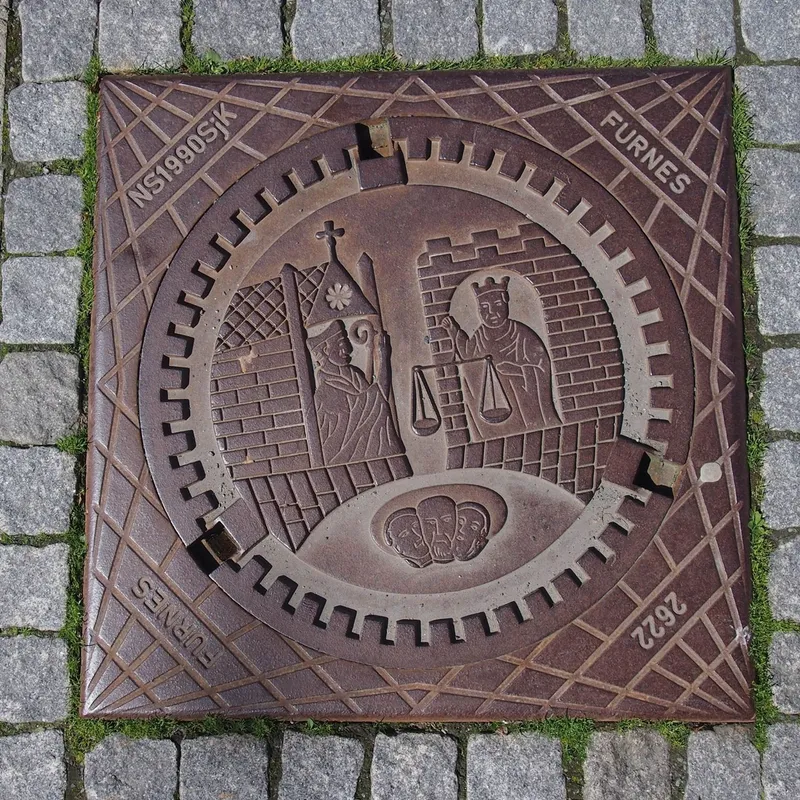
caryfukThe central circular relief on this square cast-iron specimen depicts two historical figures - a bishop and a crowned person holding scales, evoking the symbolism of justice and ecclesiastical authority. The edge of the circle is flanked by a distinctive toothed pattern, which adds a mechanical accent to the overall design, while three stylized human faces can be seen at the bottom. Surrounded by paving stones, this artefact provides valuable insight into local iconography and the aesthetics of public infrastructure.
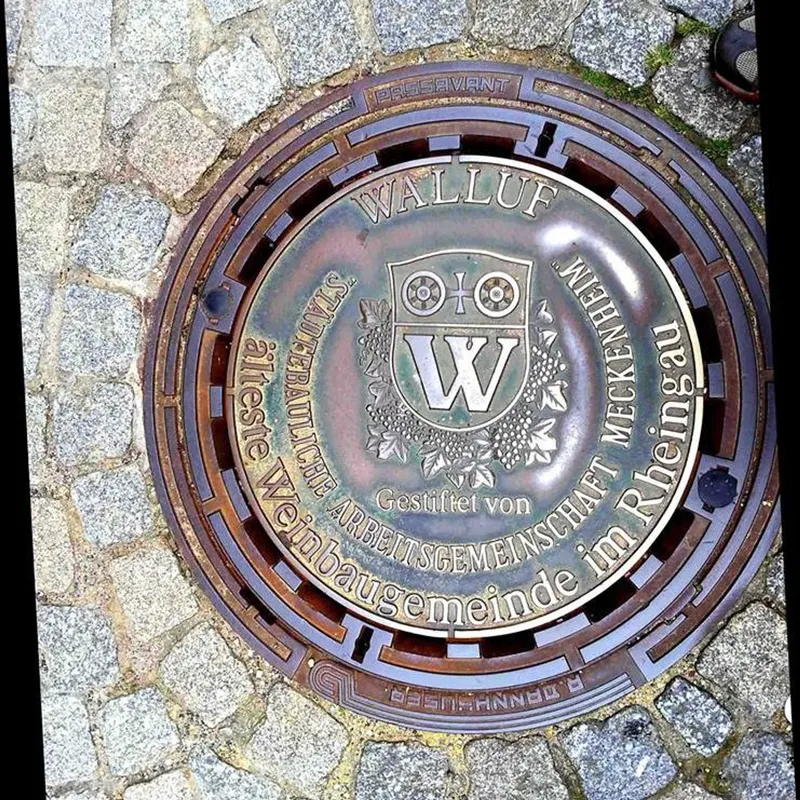
caryfukThe central medallion of this specimen reveals a coat of arms with the letter 'W' surrounded by vines, indicating a deep connection to the region's winemaking tradition. The surrounding texts, carefully carved, provide valuable philological data on the origin and purpose of this artefact, which is clearly more than just a functional element of the city's infrastructure. The Institute of Lidology would note that such details are crucial to understanding local identity, and with surprising effectiveness given that it is a mere hatch.
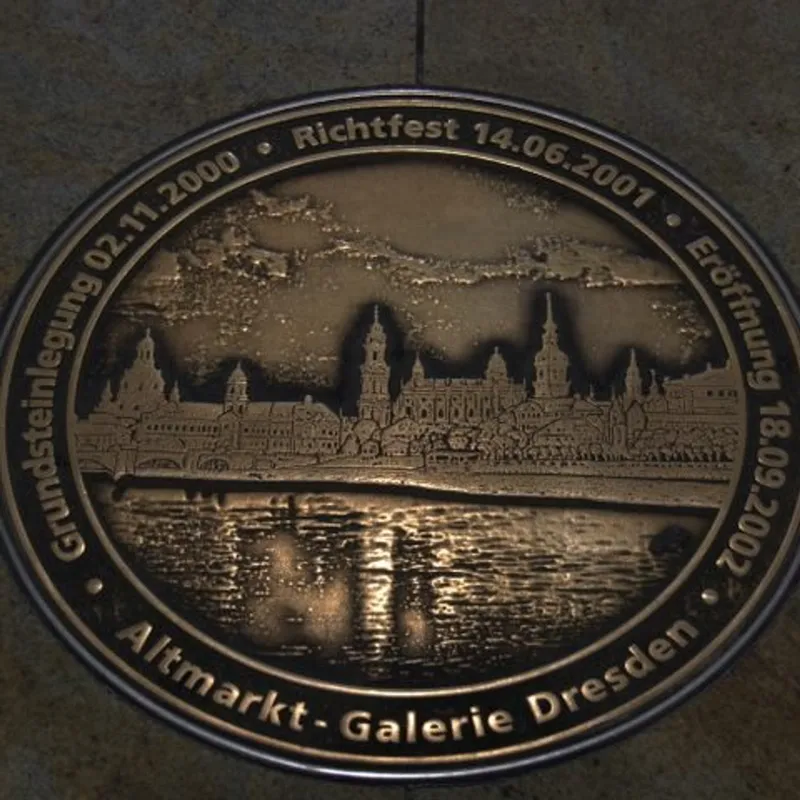
caryfukThe bronze plaque, a remarkable example of urban numismatics, depicts in detail the panorama of Dresden with its river and architectural landmarks. Around the edge are precisely engraved the years and events associated with the construction of the Altmarkt-Galerie Dresden, making it a fascinating chronological record. The Institute of Lidology would classify this artefact as an important element of public space with historical narrative value.
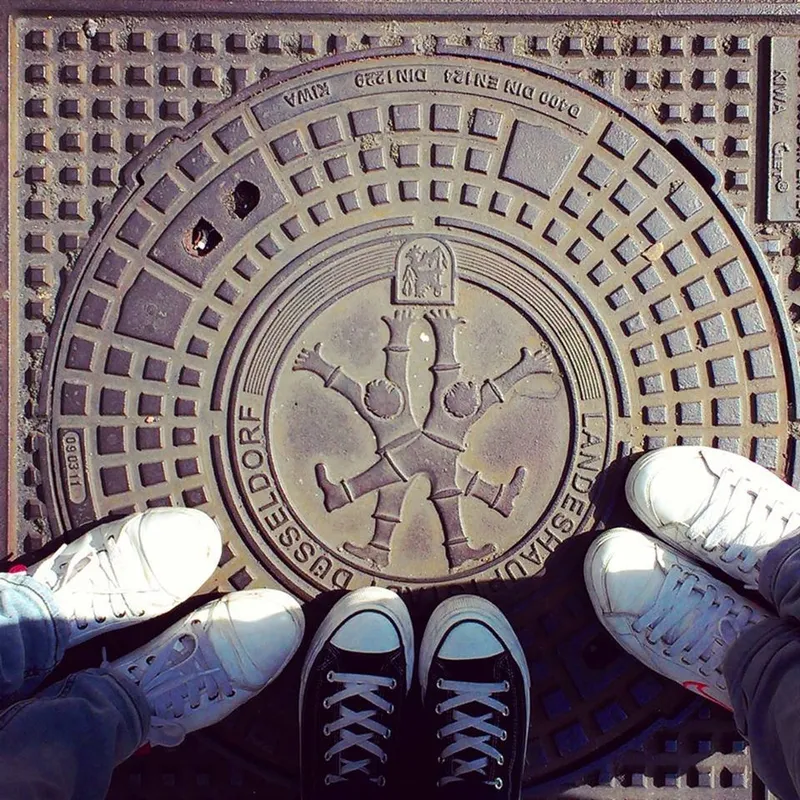
caryfukThe central emblem depicting figures performing an acrobatic element, known as the Radschläger, is surrounded by a circular inscription DÜSSELDORF LANDESHAUPT. The peripheral part of the hatch displays a robust grid pattern, typical of urban infrastructure, and bears the marking D400 DIN EN124 DIN1229. The date 09 03 11, presumably indicating the year of manufacture, is discreetly placed on the left-hand side, allowing a precise chronological classification of this example.
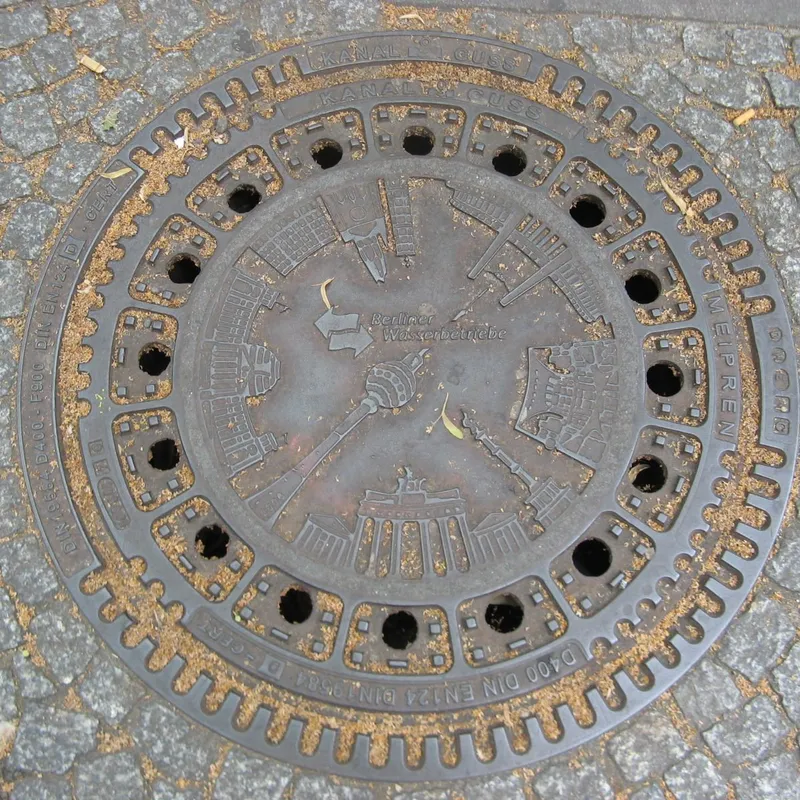
caryfukThe central field of this example shows a stylized map of Berlin with iconic landmarks such as the Brandenburg Gate and the TV Tower, complete with arrows and the inscription 'Berliner Wasserbetriebe'. The outer edge is decorated with a toothed pattern and contains technical specifications, indicating its robust engineering design. The overall impression is a combination of urban identity and functional durability, making it an interesting object for the study of philology.
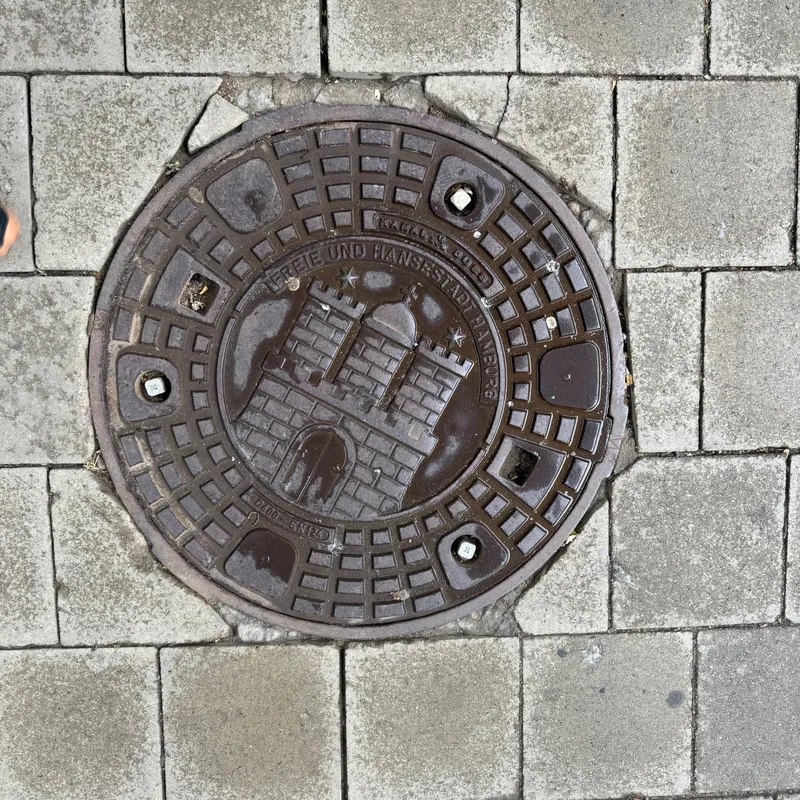
caryfukThis specimen, carefully documented by the Institute of Ludology, is a sturdy circular cover made of dark metal, set into a grid of light gray paving stones. The dominant feature is the city’s coat of arms—a stylized castle with three towers—surrounded by inscriptions that refer to its origins. The surface bears traces of moisture and wear, evidence of its long-term exposure to the urban environment.
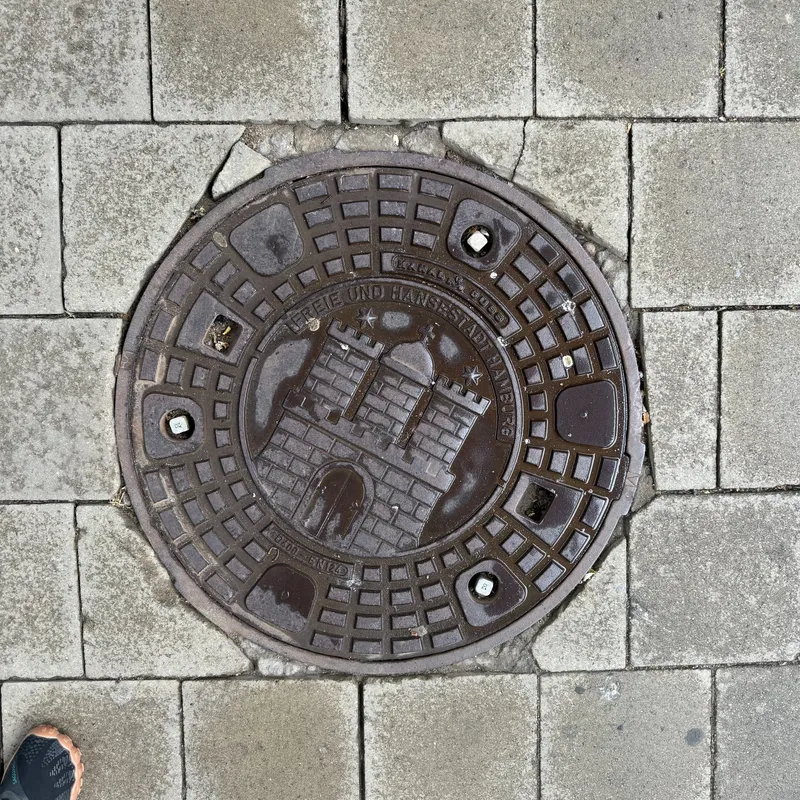
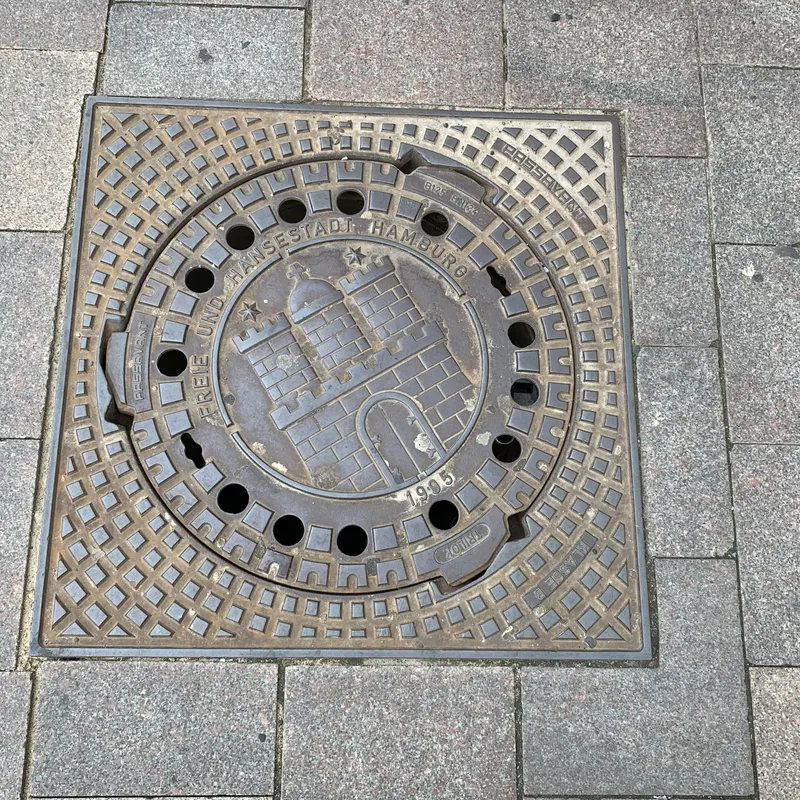
caryfukThe central heraldic emblem, depicting a fortified gate with three towers, immediately identifies this specimen as originating from the Free Hanseatic City of Hamburg. The surrounding inscription “FREIE UND HANSESTADT HAMBURG” confirms its municipal affiliation and purpose, further specified by the abbreviation “KANAL.S.” for sewer infrastructure. This specific artifact, rated for the robust D400 load class, represents a significant object in lithological studies, reflecting regional identity within functional design.
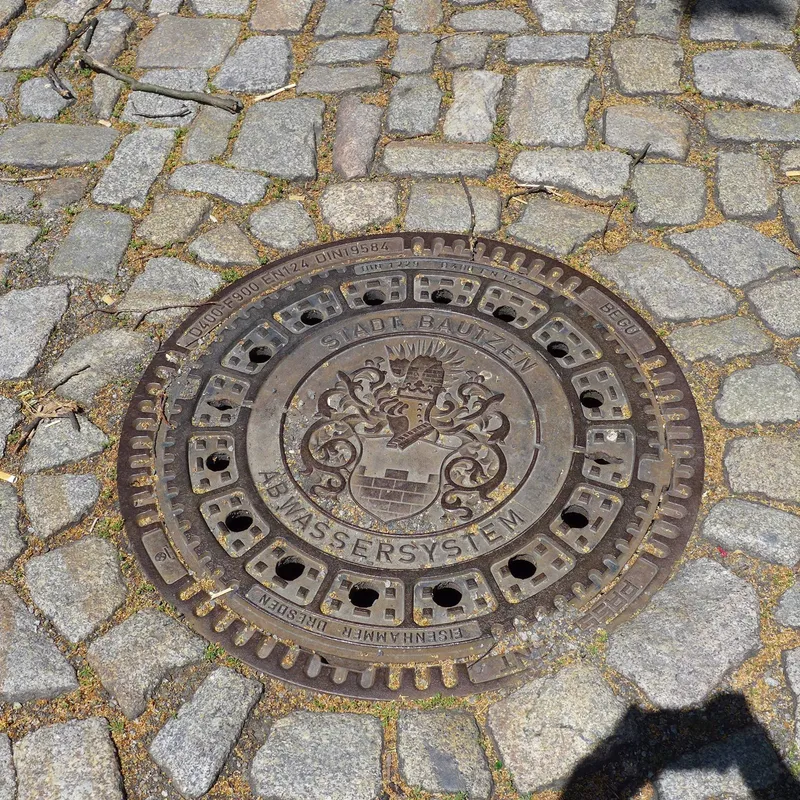
caryfukIn the centre of this specimen is the distinctive municipal coat of arms, surrounded by inscriptions referring to the city of Bautzen and its water system. The surrounding rough stone paving gives the whole a rustic appearance, while rust stains indicate long-term exposure to the weather. This artefact of engineering is surrounded by small branches and dry grass, emphasising its integration into the urban environment.
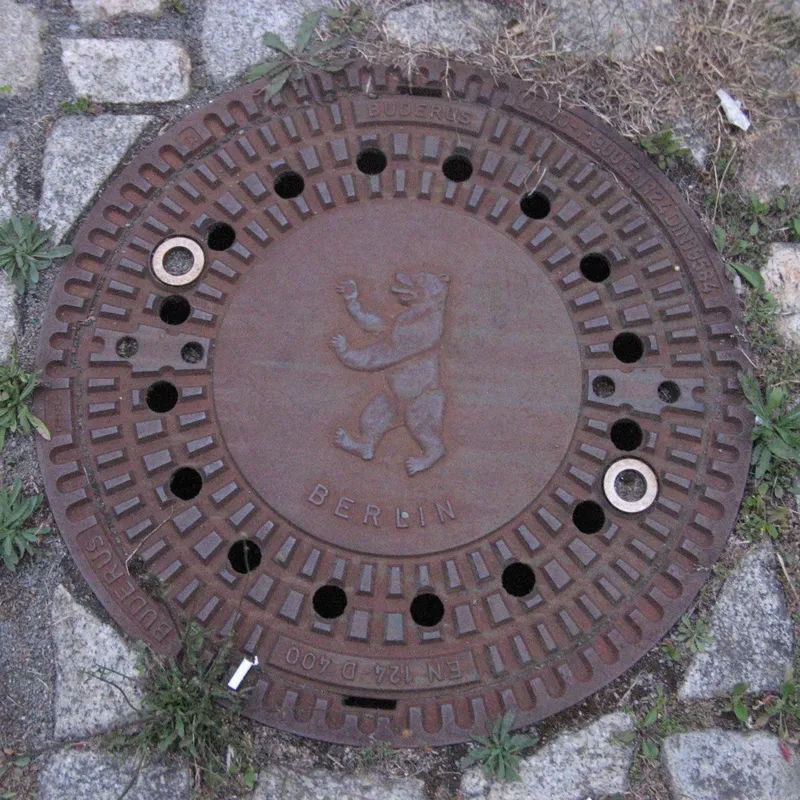
caryfukThe central relief of a bear, the heraldic symbol of Berlin, dominates this example of a cast-iron manhole cover. The surrounding ring bears inscriptions of the manufacturer and technical specifications, allowing its classification within urban infrastructure. The rust patina indicates long-term exposure to atmospheric influences, which is a common phenomenon for these robust artifacts.
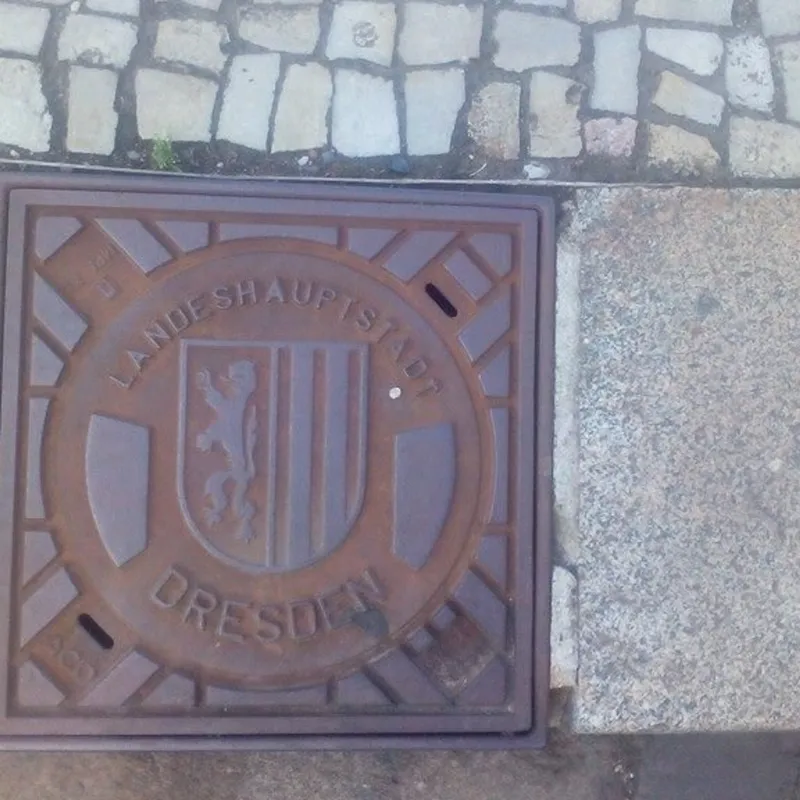
caryfukThis example of urban infrastructure is dominated by a central coat of arms with a heraldic lion and vertical stripes, surrounded by the inscription 'LANDESHAUPTSTADT DRESDEN'. The rusty patina indicates long-term exposure to atmospheric influences, which is typical of this category of urban artefacts. The surrounding paving of boulders and coarse granite complements its robust location in an urban context, which is of interest to the Institute of Lidology.
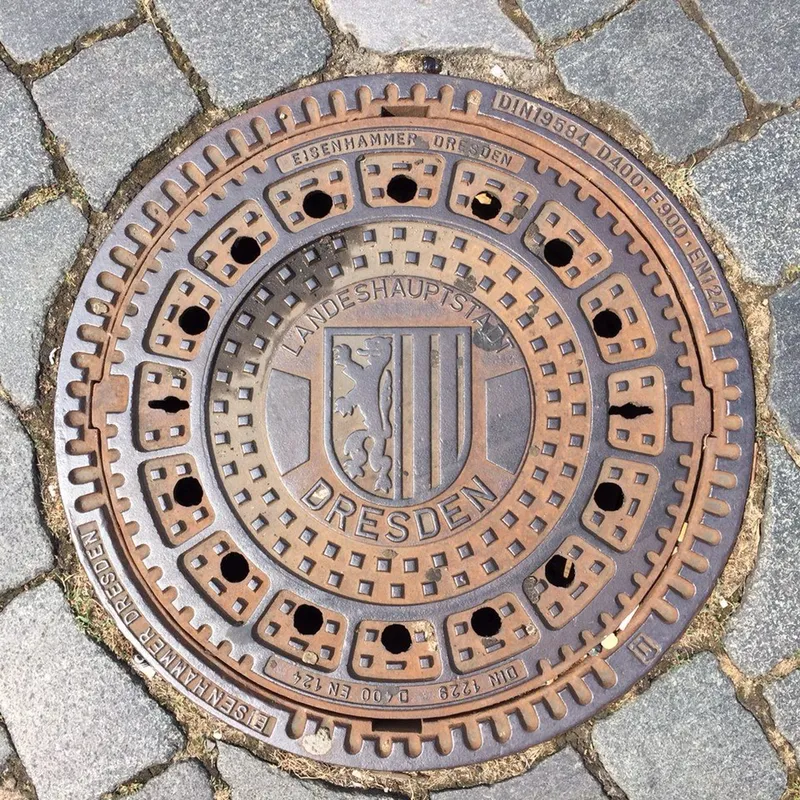
caryfukThe surface of this circular cast-iron specimen is dominated by the central coat of arms of the city of Dresden, surrounded by the text "LANDESHAUPTSTADT DRESDEN". The peripheral edge bears the technical specifications and the manufacturer's name "EISENHAMMER DRESDEN", indicating its origin and robust construction for urban infrastructure. This urban landscape artefact, carefully analysed by the Institute of Lidology, is a typical example of German engineering.
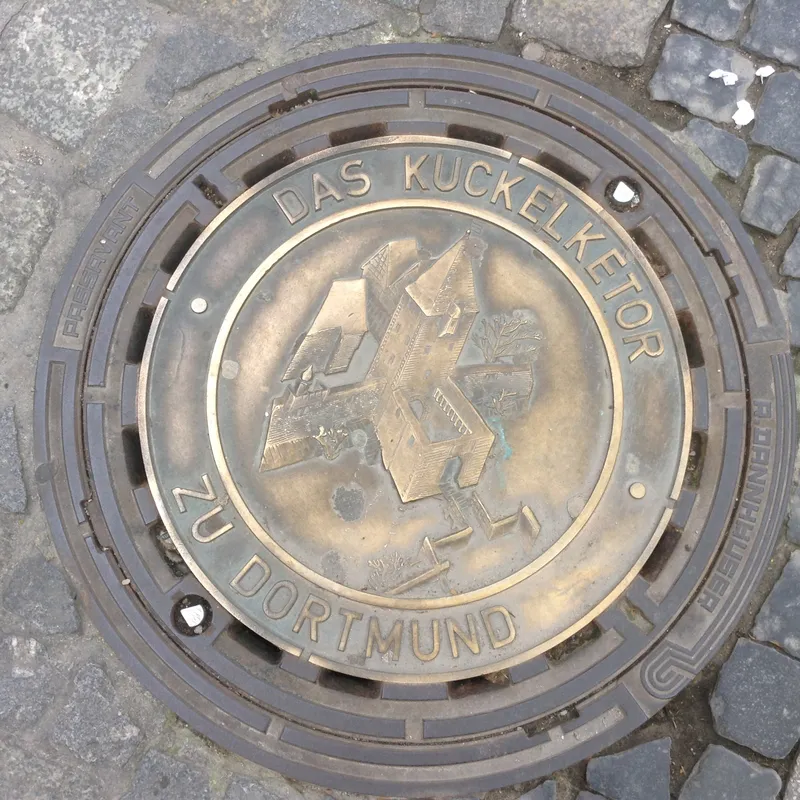
caryfukA detailed relief of the historic gate, apparently the Kuckelketor, dominates the central bronze disc, which is surrounded by the inscription "DAS KUCKELKETOR ZU DORTMUND". The outer cast-iron ring of this urban artefact bears further texts, including the name of the maker, providing valuable data for a philological analysis of its provenance and function.
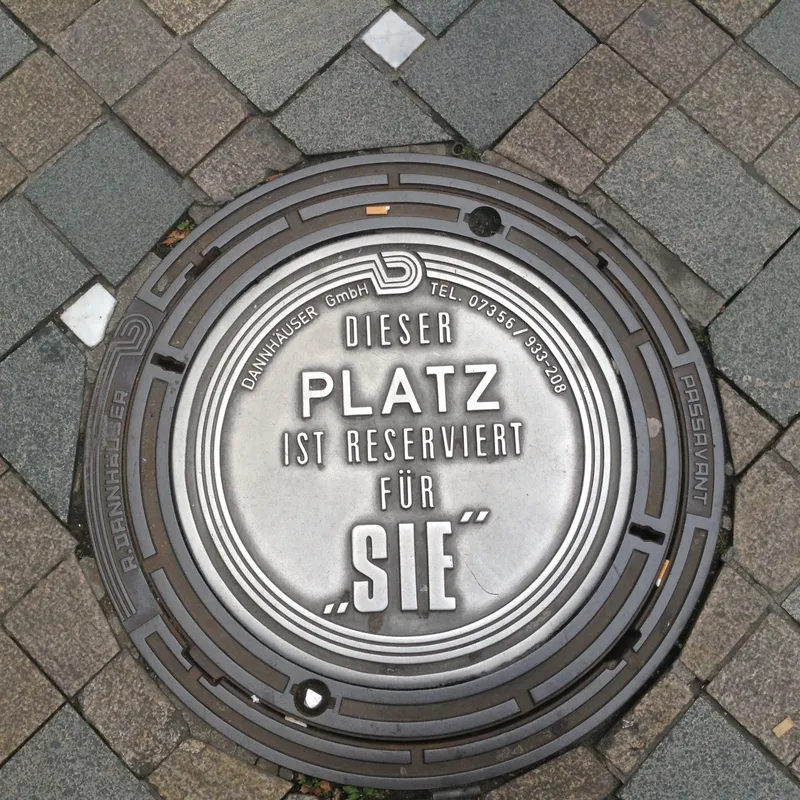
caryfukThe central inscription on this metal disc, apparently intended to cover the underground entrance, proclaims 'DIESER PLATZ IST RESERVT FÜR SIE', suggesting an unexpected level of personalisation of the public space. The surrounding paving of irregular stone blocks creates a contrasting yet harmonious framework for this example of urban infrastructure, whose functional design is enriched by a message of subtle humour.
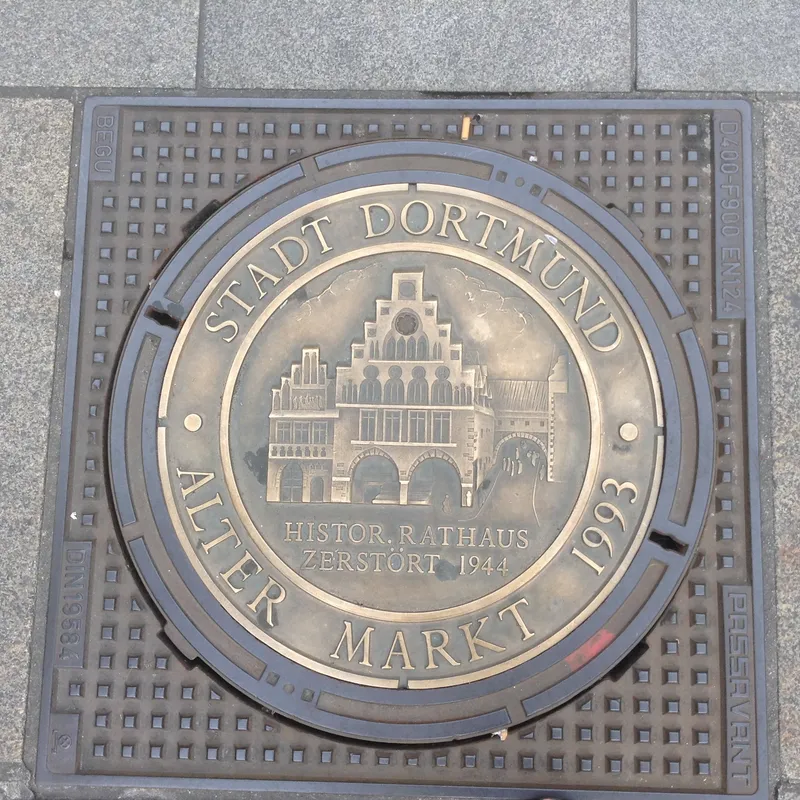
caryfukThe central medallion of this specimen depicts the historic town hall, which was destroyed in 1944, which is recorded in detail below the image. The surrounding inscriptions 'STADT DORTMUND' and 'ALTER MARKT' locate this artefact in a specific urban context. The dating 1993 indicates the year of manufacture, a key chronological marker for philological analysis.
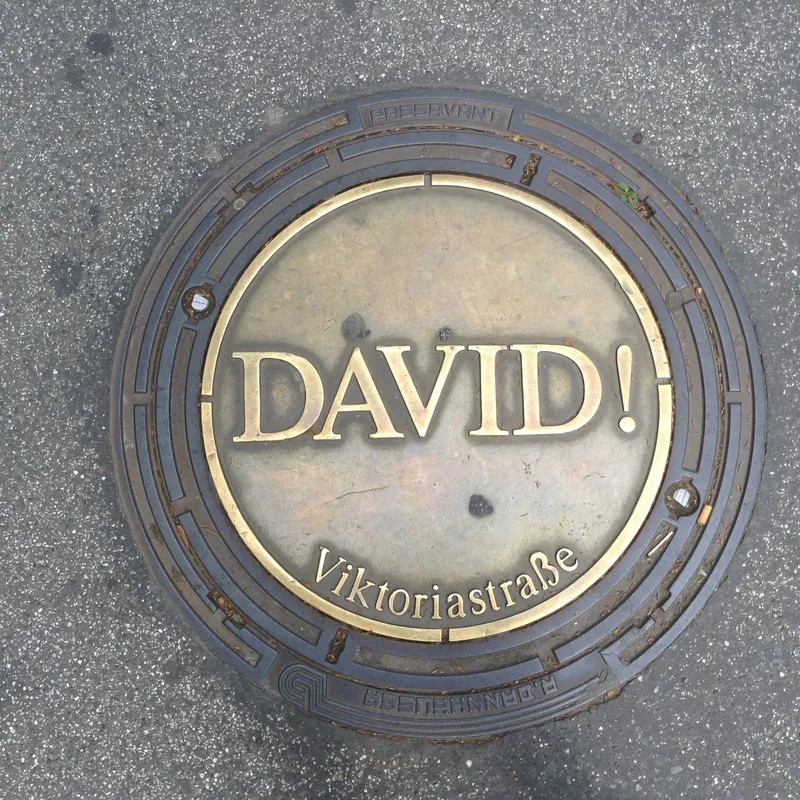
caryfukA central golden disc with the distinctive inscription "DAVID!" dominates this circular hatch, surrounded by a dark metal ring with a geometric pattern. Below the name is the elegantly curved text 'Viktoriastrasse', suggesting its locational function. This specimen, clearly the product of engineering work, shows signs of normal wear, but its inscriptions remain remarkably legible, allowing its taxonomic classification.
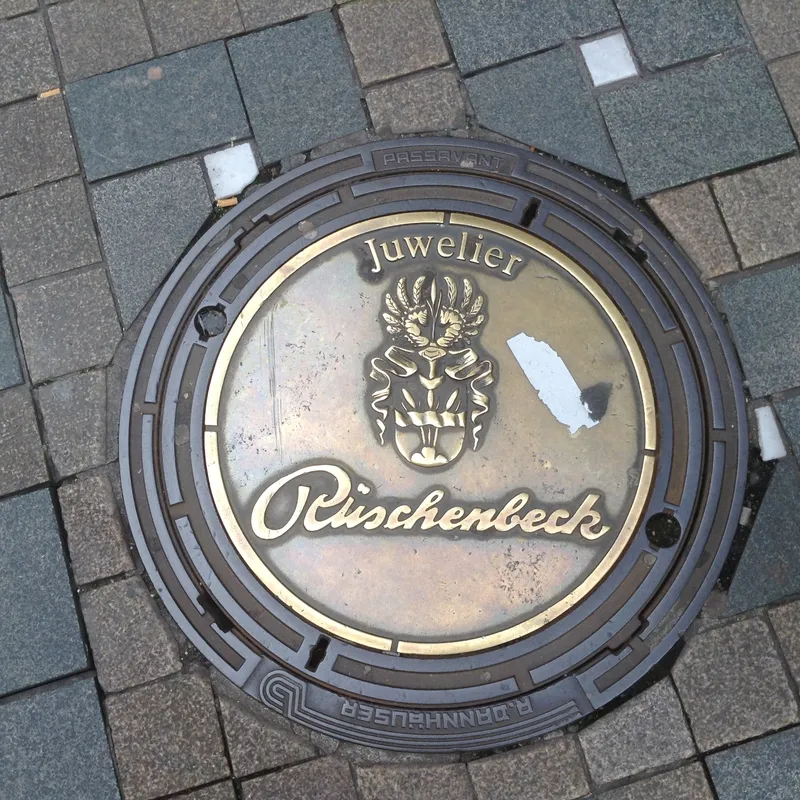
caryfukIn the centre of this specimen is a distinctive brass medallion with the inscription "Juwelier Rüschenbeck" and a stylised coat of arms, indicating its specific commercial provenance. The surrounding dark cast-iron frame shows a complex geometric pattern and is surrounded by tiles in shades of grey and blue-grey. According to a preliminary analysis by the Institute of Lidology, this is an unusual case of integrating corporate identity into a public space.
caryfukA rare example of urban infrastructure from the late 20th century reveals a detailed heraldic emblem of the Free and Hanseatic City of Hamburg. The circular hatch is set in a square frame with a repeating geometric pattern, which shows careful craftsmanship. The dating 1995 and the marking B125 confirm its provenance and sturdy construction, worthy of the archives of the Institute of Philology.
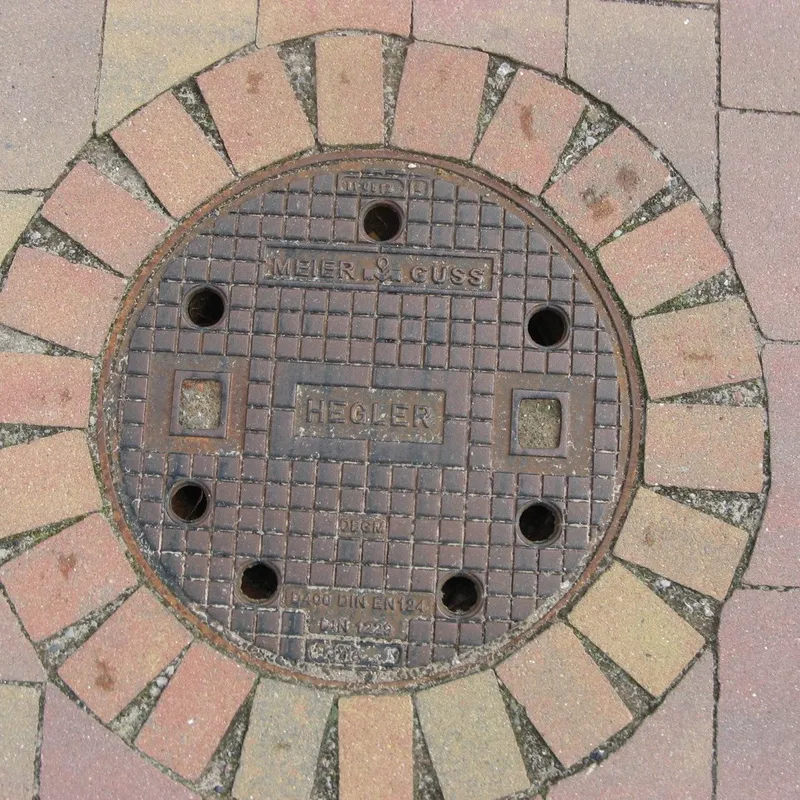
caryfukA robust grid pattern dominates the central area of this circular specimen, surrounded by clear inscriptions 'MEIER & GUSS' and 'HEGLER'. This artifact of urban infrastructure, classified as D400, exhibits typical signs of long-term use, yet its structural integrity remains remarkable.
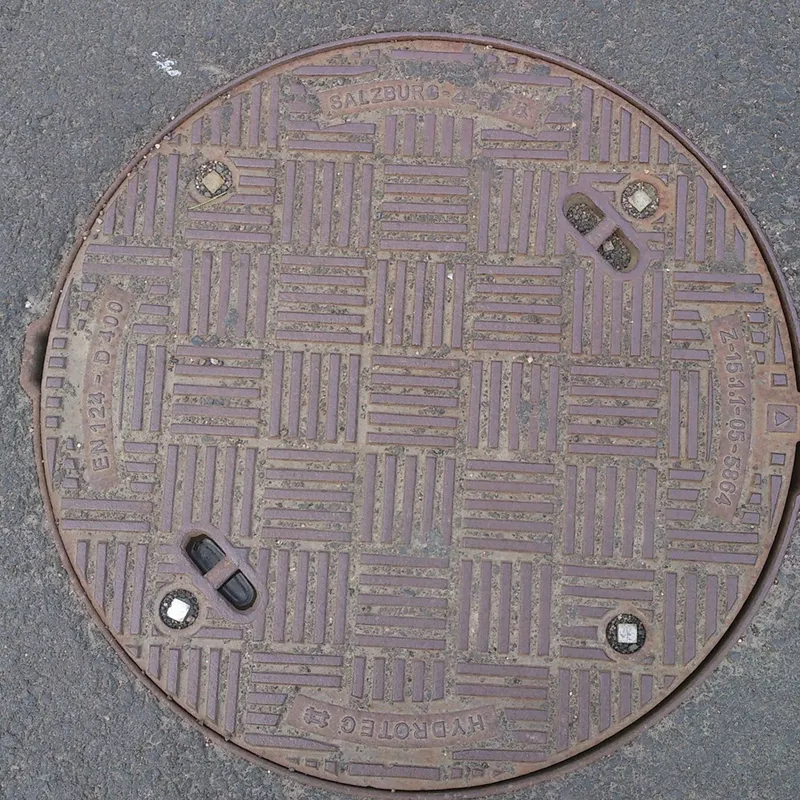
caryfukA complex geometric pattern of interlocking rectangular bars dominates this specimen, suggesting a robust heavy-duty construction. Inscriptions such as "SALZBURG" and "EN 124 - D 400" provide key taxonomic data, which the Institute of Philology has carefully recorded. Two elongated holes with handles and four smaller square inserts complete the functional design that is typical of this type of hatch.
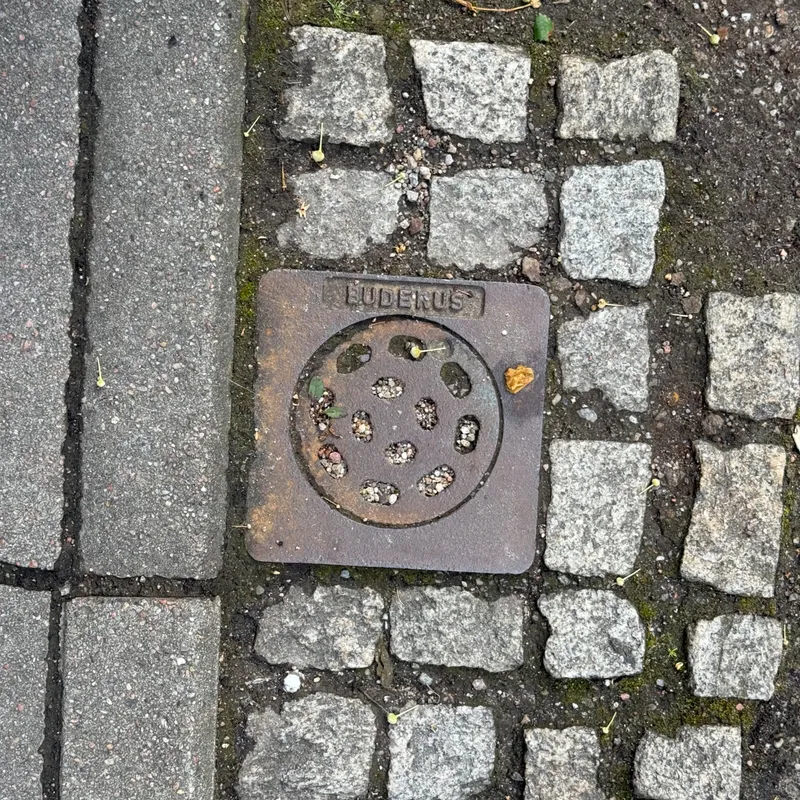
caryfukA rusted square manhole cover with a circular grate, partially filled with pebbles and leaves, bears the prominent inscription “BUDENUS.” Surrounded by granite cobblestones and a concrete curb, this specimen represents a typical element of urban drainage infrastructure, worthy of detailed documentation by the Institute of Ludology.
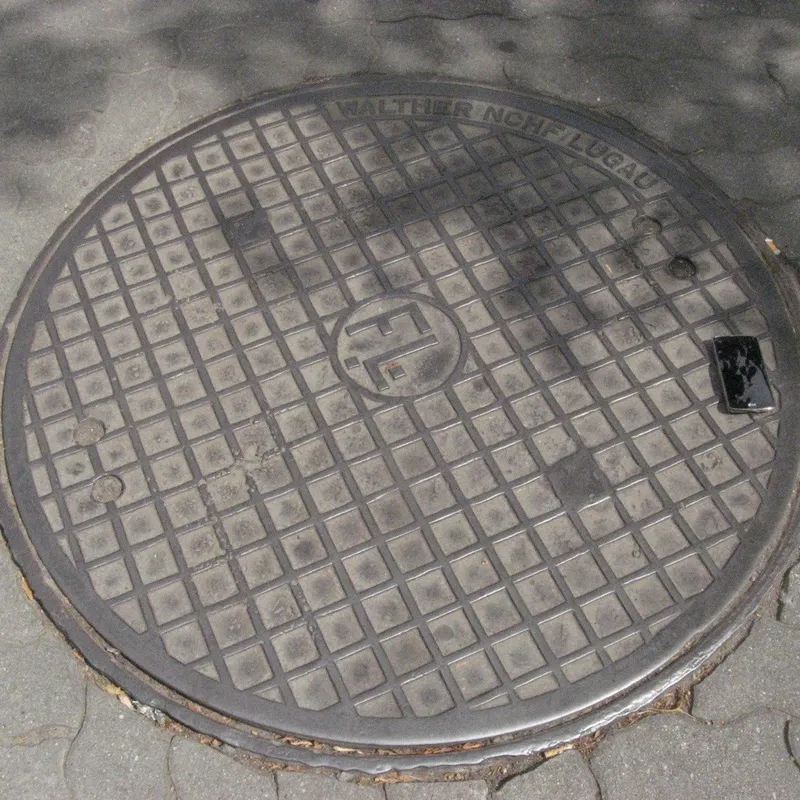
caryfukOn the surface of this specimen, a regular grid of rhombuses extends, in the center of which a circular logo with the initials 'FL' is placed. Along the perimeter, the inscription 'WALTHER NCHFL. LUGAU' is visible, indicating the origin of this artifact. The presence of a modern smartphone on its edge provides an interesting context for studying the timeline of human interactions with infrastructure.
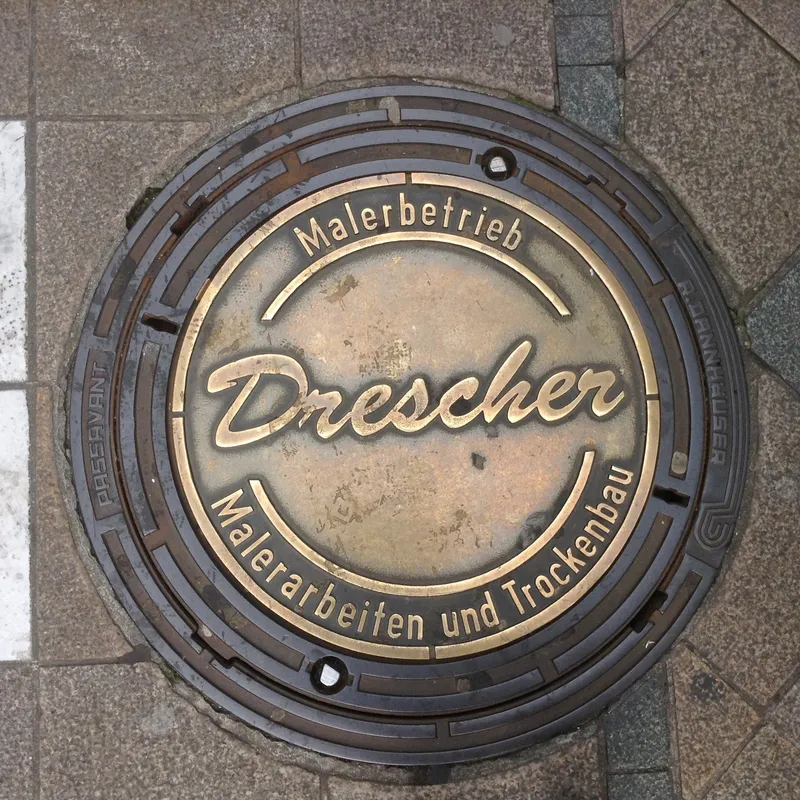
caryfukA central bronze disc with the inscription 'Drescher' dominates this example of urban infrastructure, surrounded by a cast-iron ring with company details. The inscriptions 'Malerbetrieb' and 'Malerarbeiten und Trockenbau' clearly identify its specific purpose as a painting and plastering firm. This artefact provides a valuable insight into local business activity and its integration into the public realm.
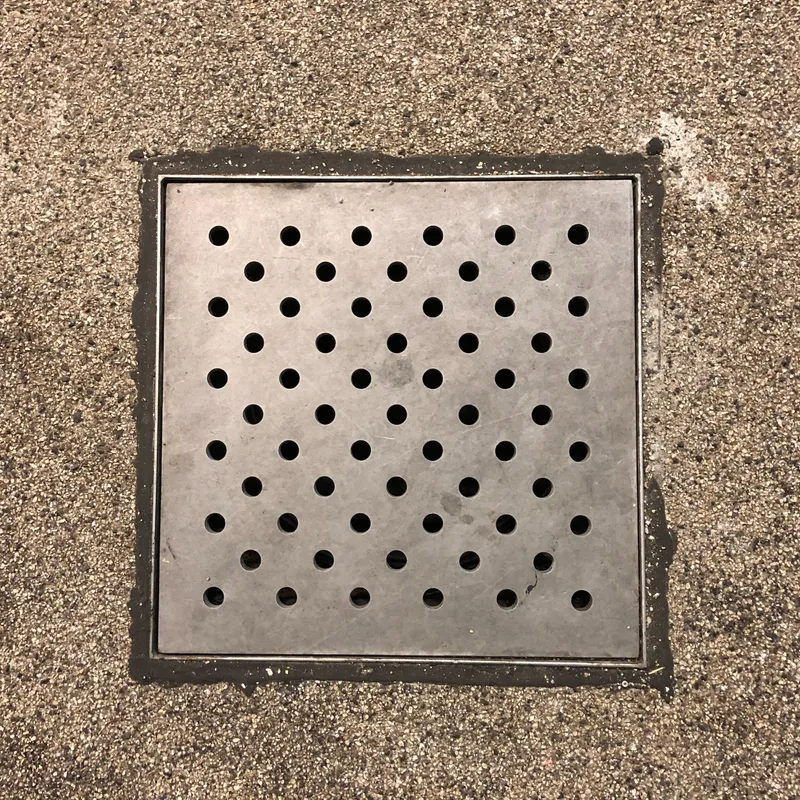
caryfukA grid of regularly spaced circular perforations, arranged in neat rows, represents a fascinating example of minimalist design in the field of urban hydrology. This specimen, embedded in coarse-grained aggregate, exhibits remarkable resistance to erosive processes, which testifies to the quality of the materials used and the precision of the installation.
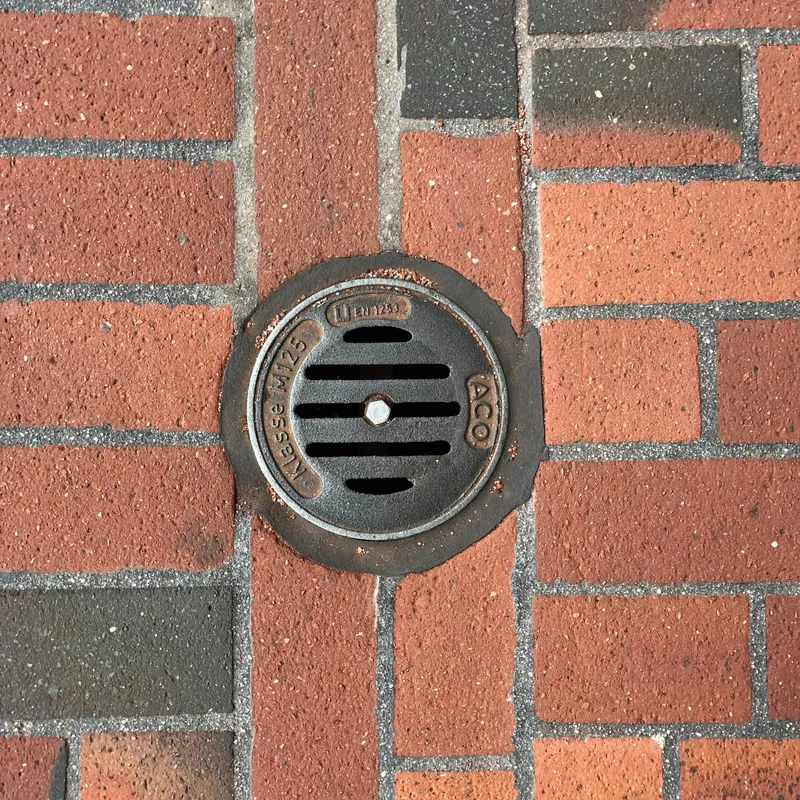
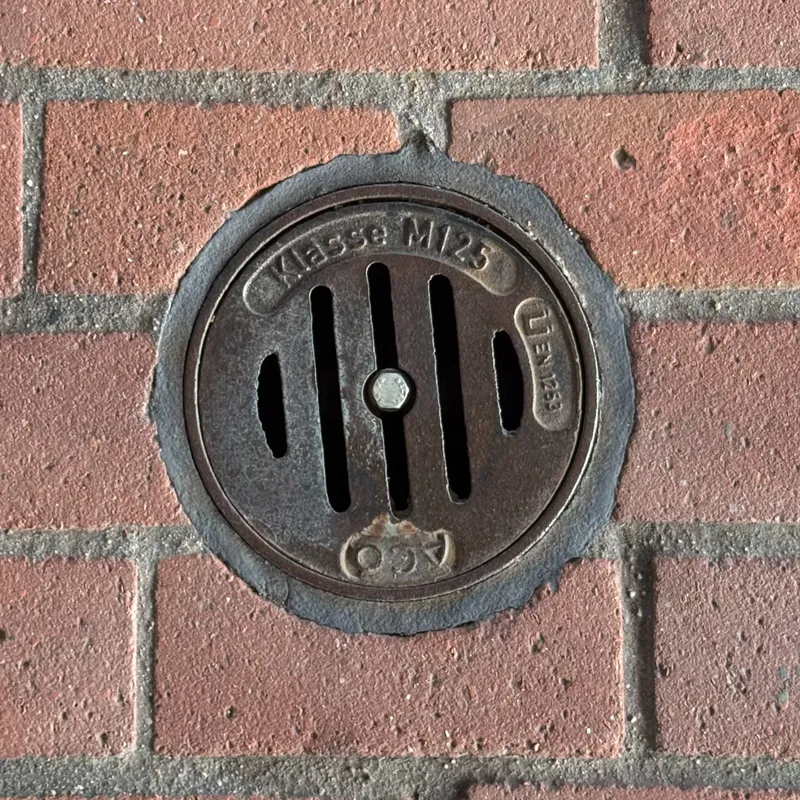
caryfukIn the centre of the brick paving, consisting mainly of reddish brown bricks with occasional darker ones, is a circular drainage feature. This specimen, apparently intended for drainage, bears a horizontal grid on its surface and several technical inscriptions, including 'Klasse M125' and 'EN 1253'. The surrounding joints are filled with grey, granular mortar, giving the whole a robust but aesthetically unpretentious character typical of urban infrastructure.
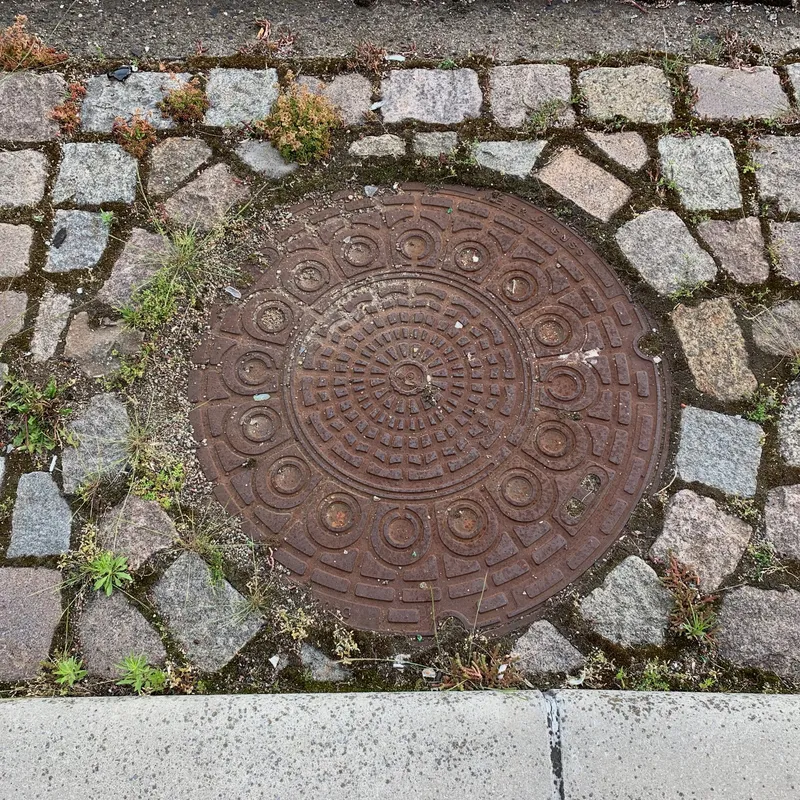
caryfukConcentric circular patterns, formed by radial segments and rings, dominate this example of urban infrastructure, whose surface is marked by patina rust and minor abrasions. The surrounding cobblestones, in places overgrown with vegetation, testify to the long-standing integration of this manhole into the local urban context, a subject of interest to the Institute of Lidology.
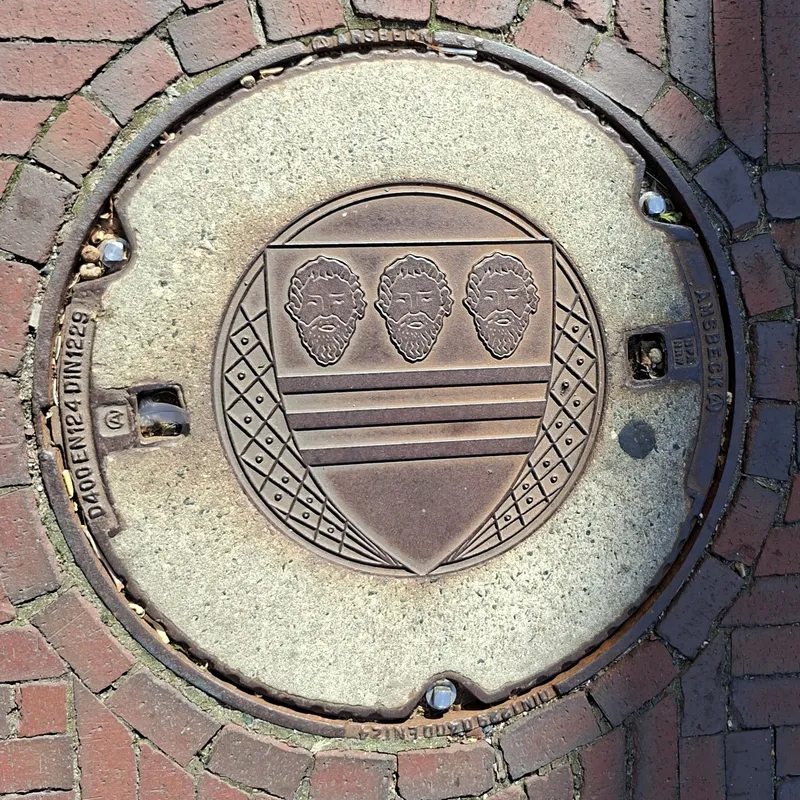
etienne-van-den-homberghThe image depicts the head of the Apostle Paul. According to this German Wikipedia page, the fact that his bearded head appears three times on the lid is linked to the town’s former coat of arms. That coat of arms featured the three birds of the Lords of Lohn. In the seventeenth century, the birds were replaced by the head of Paul, the patron saint of the Diocese of Münster. This design cleverly incorporated one of the legends associated with Paul. When he was beheaded on the orders of Emperor Nero, his head bounced three times on the ground. Springs of crystal-clear water gushed forth at the points where it bounced.
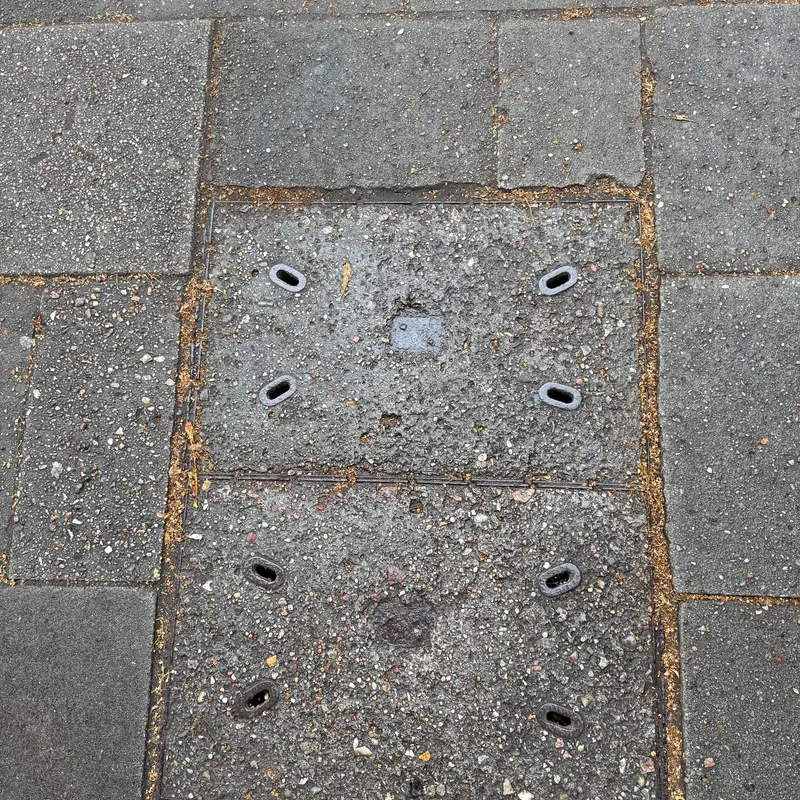
caryfukThe rough, gray texture of this specimen, composed of two rectangular segments, is a typical manifestation of functional design in urban infrastructure. The eight oval openings, arranged symmetrically, serve as key elements for handling this segment of the underground network. Tiny organic residues and water accumulation in the central depressions document its integration into the dynamic environment of the sidewalk, which is a subject of interest to the Institute of Ludology.
caryfukOn the brick wall, a circular drainage element is visible, its surface bearing the clear marking 'Klasse M125' and a reference to standard EN1253. This specification, carefully documented by the Institute of Lidology, indicates its functional classification within drainage systems. A central screw and vertical slots are characteristic of a robust, utilitarian design.