Skip to content

HUManhole covers in Hungary

caryfukcaryfuk
Szombathely, Hungary
Manhole cover in Szombathely, Hungary

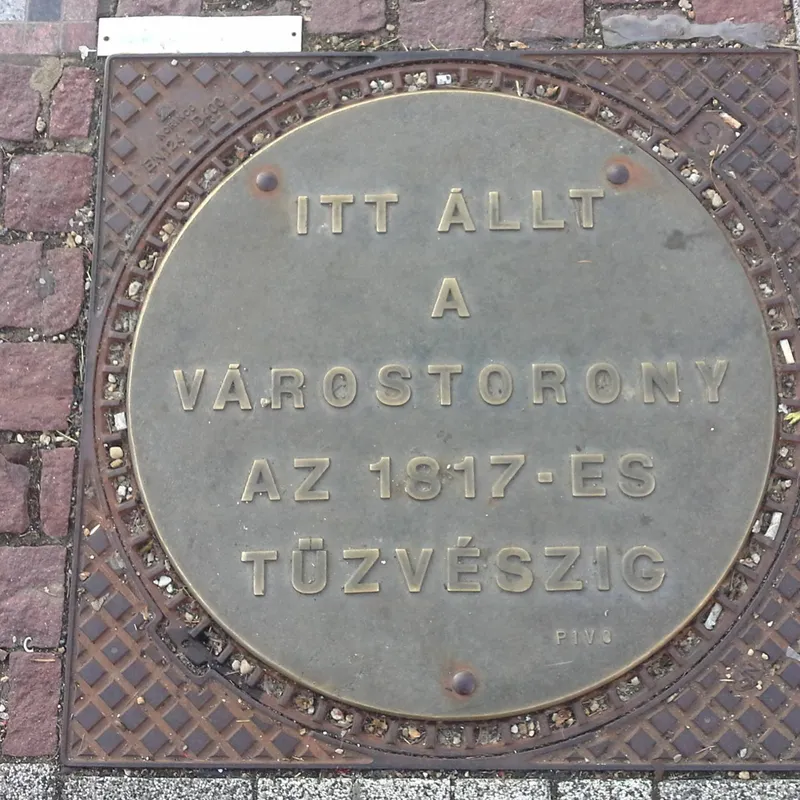
caryfukIn the middle of the paved path lies a circular brass plaque, which, with its inscription in Hungarian, commemorates a historical event. The golden surface of the plaque contrasts with the dark, geometrically patterned cast-iron frame that surrounds it. The entire object is a witness to the past, embedded in the stone paving.
caryfukcaryfuk
Budapest, Hungary
Manhole cover in Budapest, Hungary

1 like

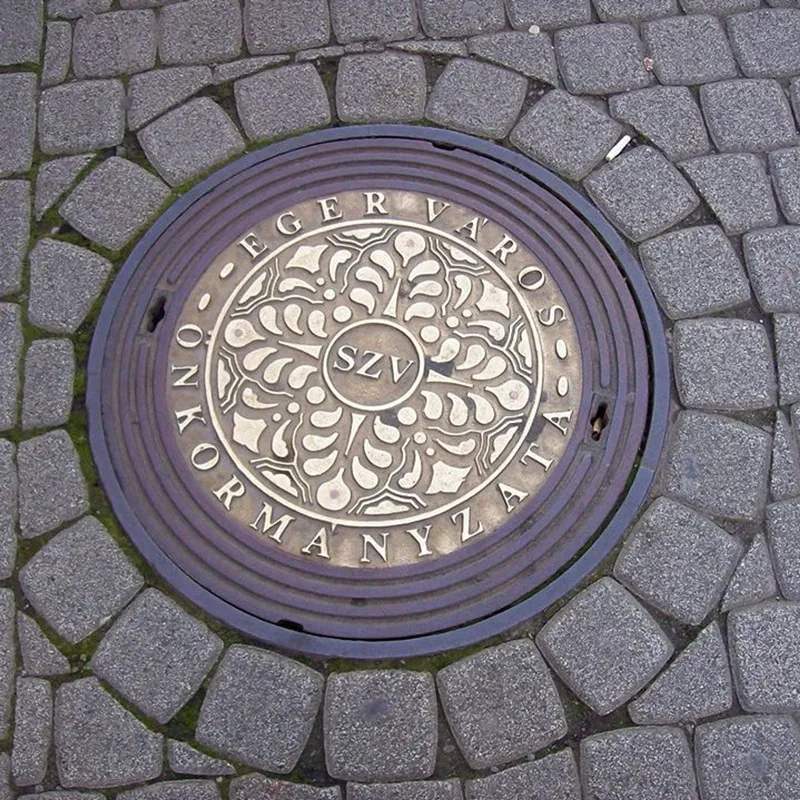
caryfukPaving stones with greenish moss form an irregular circle around a dark metal disk. Its center is adorned with an intricate, light-colored ornament resembling stylized leaves or branches. Along the perimeter, the inscription 'EGER VÁROS ÖNKORMÁNYZATA' is legible, and in the center of the circle, the abbreviation 'SZV'.

caryfukcaryfuk
Budapest, Hungary
Manhole cover in Budapest, Hungary

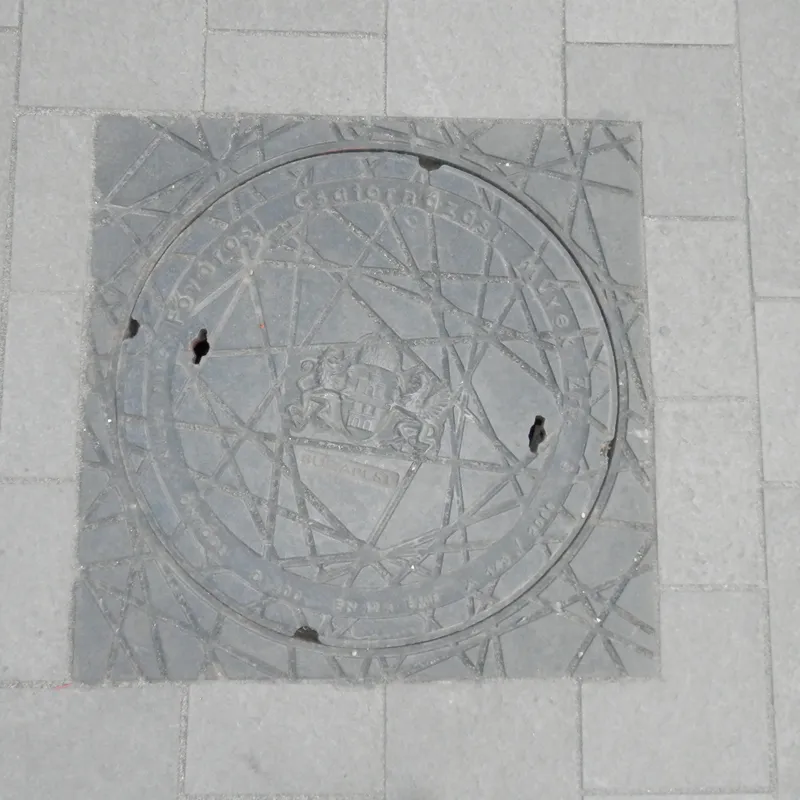
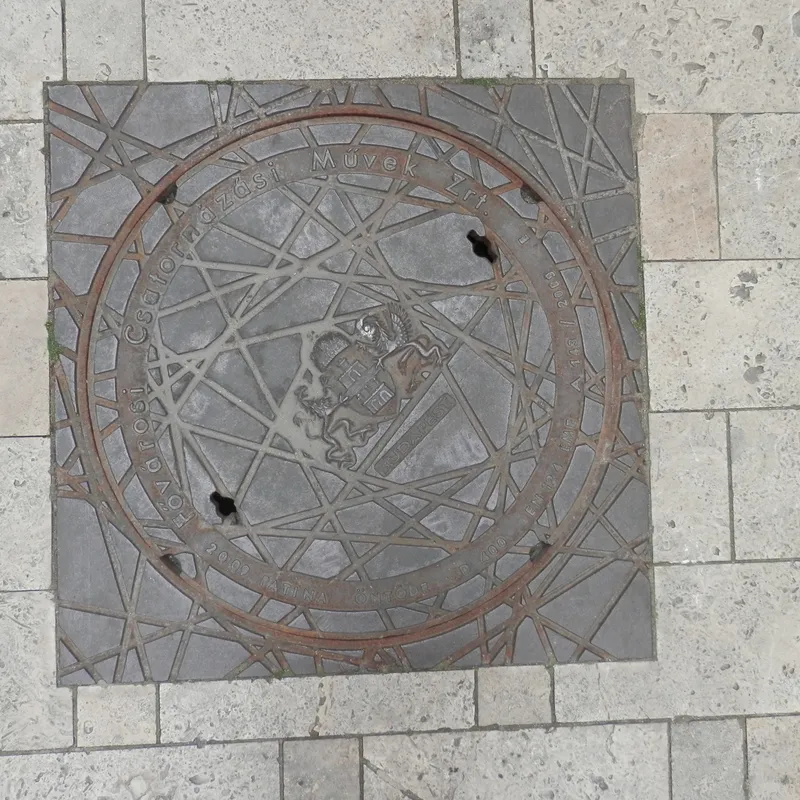
caryfukThe surface shows a complex geometric pattern, resembling a spider's web or star map, surrounding a central relief. The city emblem of Budapest is clearly depicted in the centre, which is always a delightful discovery for the philologist, as it provides valuable geographical and historical context. The year 2009 is prominently featured, suggesting that this is a relatively modern artifact of sewerage infrastructure, the study of which contributes to an understanding of the evolution of urban services.

caryfukcaryfuk
Budapest, Hungary
Manhole cover in Budapest, Hungary

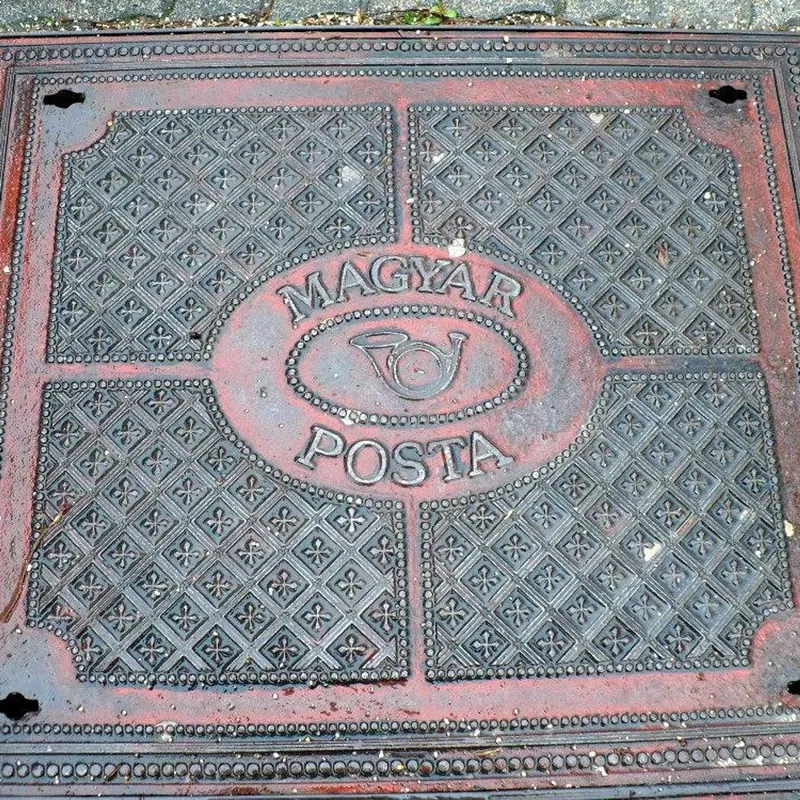
caryfukIn the centre of this square cast iron specimen is an oval emblem with the inscription 'MAGYAR POSTA' and a postal horn, surrounded by a complex geometric pattern of crosses in a grid. This artefact, according to the archives of the Institute of Philology, is a robust testament to early telecommunications infrastructure, with the patina of time giving it an unmistakable historical depth.

caryfukcaryfuk
Sopron, Hungary
Manhole cover in Sopron, Hungary

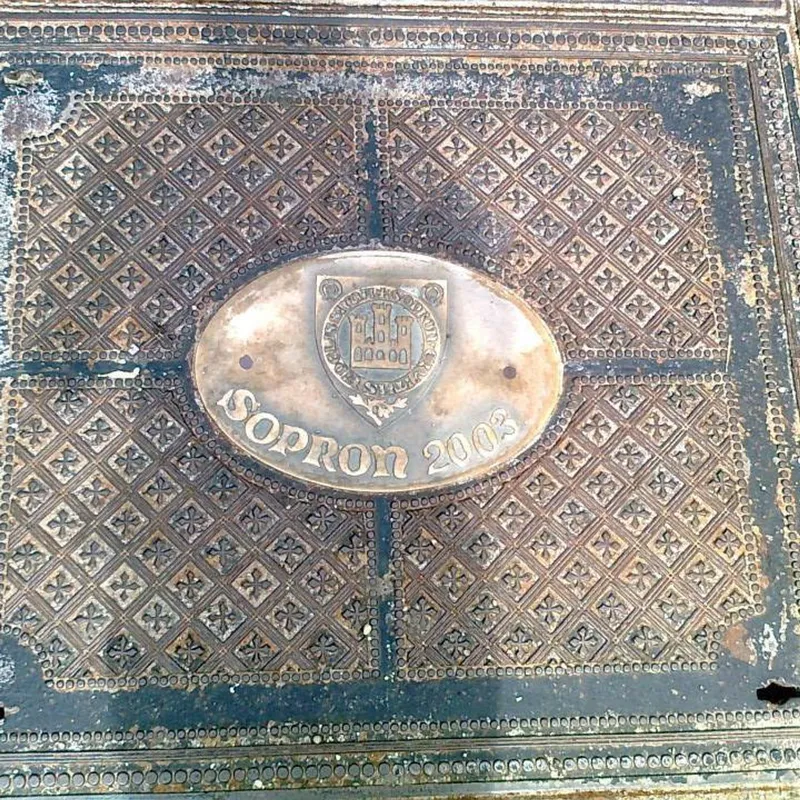
caryfukThe central oval emblem with the image of the castle and the inscription "SOPRON 2003" dominates this example of urban infrastructure. The surrounding area is decorated with a repeating geometric pattern of four-leaf clovers in a grid, suggesting careful design. The overall condition of the surface shows signs of considerable wear and oxidation, which is typical of artefacts of this kind.

caryfukcaryfuk
Szécsény, Hungary
Manhole cover in Szécsény, Hungary

caryfukThe central coat of arms, surrounded by rich Art Nouveau ornamentation, dominates this circular hatch. The inscriptions 'SZECHENYI' and 'FÜRDO' suggest its connection with the thermal baths, making it an interesting specimen for the study of urban infrastructure. The turquoise patina with hints of rust gives the artefact a historical character, as the Institute of Lidology would confirm.

caryfukcaryfuk
Győr, Hungary
Manhole cover in Győr, Hungary

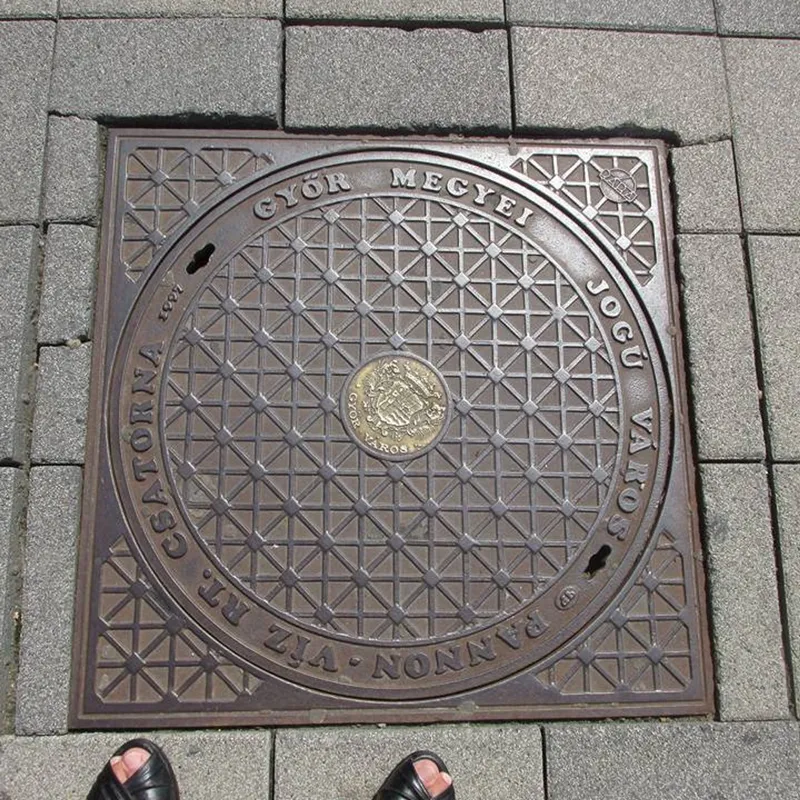
caryfukA complex geometric pattern, made up of a grid of squares and intersecting lines, dominates the surface of this example of a cast iron hatch. In the centre is the detailed coat of arms of the city of Győr, surrounded by the inscriptions 'CSATORNA' and 'PANNON VÍZ RT.', which clearly refer to its function in the sewerage network. The 1997 dating provides a precise chronological context for this piece of urban engineering, which is always a pleasing finding for the Institute of Lidology.

caryfukcaryfuk
Tihany, Hungary
Manhole cover in Tihany, Hungary

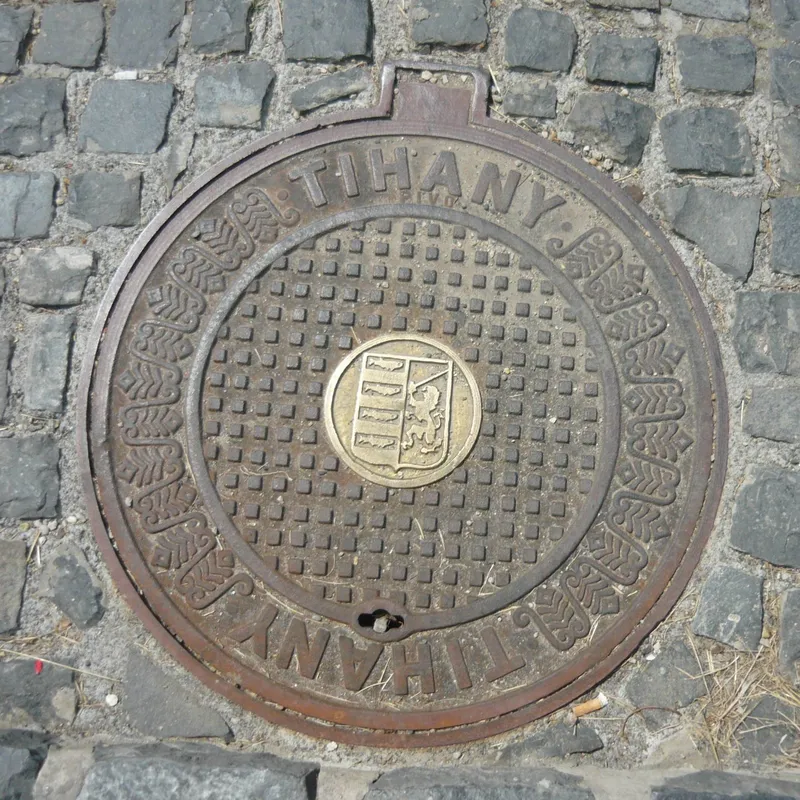
caryfukThe circular cast-iron surface, set in a pavement of rough stone blocks, bears the distinctive heraldic emblem of the municipality of Tihany. The central medallion, remarkable for its detailed depiction of a shield with stripes and a lion, is surrounded by a repeating decorative pattern, testifying to the meticulous craftsmanship of this example. The inscription 'TIHANY' is repeated twice, a typical sign for identifying territorial affiliation.

caryfukcaryfuk
Tihany, Hungary
Manhole cover in Tihany, Hungary

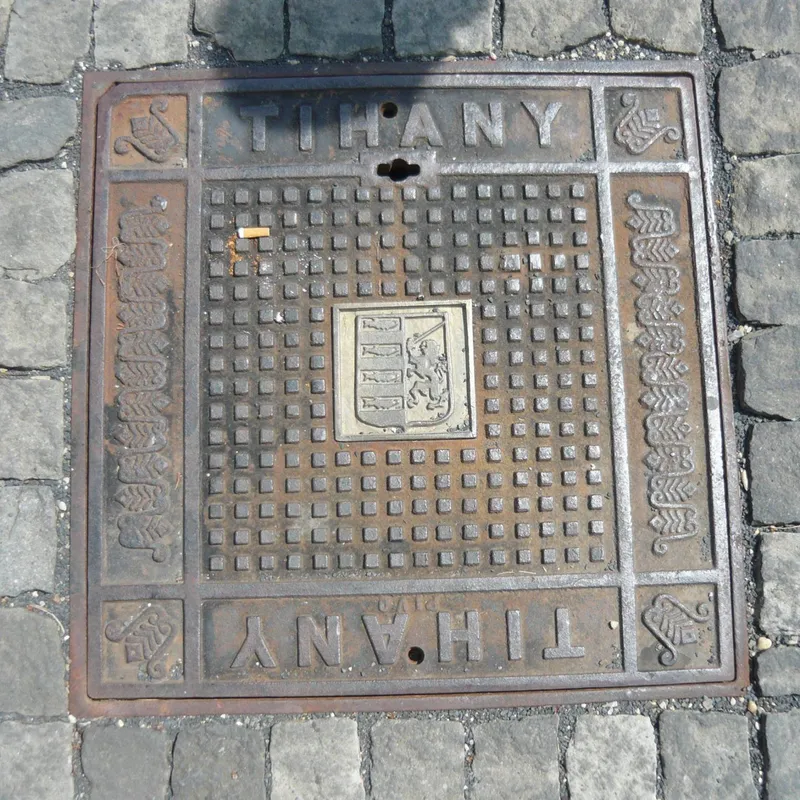
caryfukA central heraldic coat of arms with a lion, surrounded by a precise grid of small squares, forms the focal point of this square cast iron specimen. The inscription "TIHANY" is clearly legible at the top, while its mirror-reversed counterpart at the bottom presents a fascinating object for philological interpretation. The entire artefact, set in a pavement of stone blocks, shows signs of patina and rusting, indicating its long exposure in an urban environment.

caryfukcaryfuk
Miskolc, Hungary
Manhole cover in Miskolc, Hungary

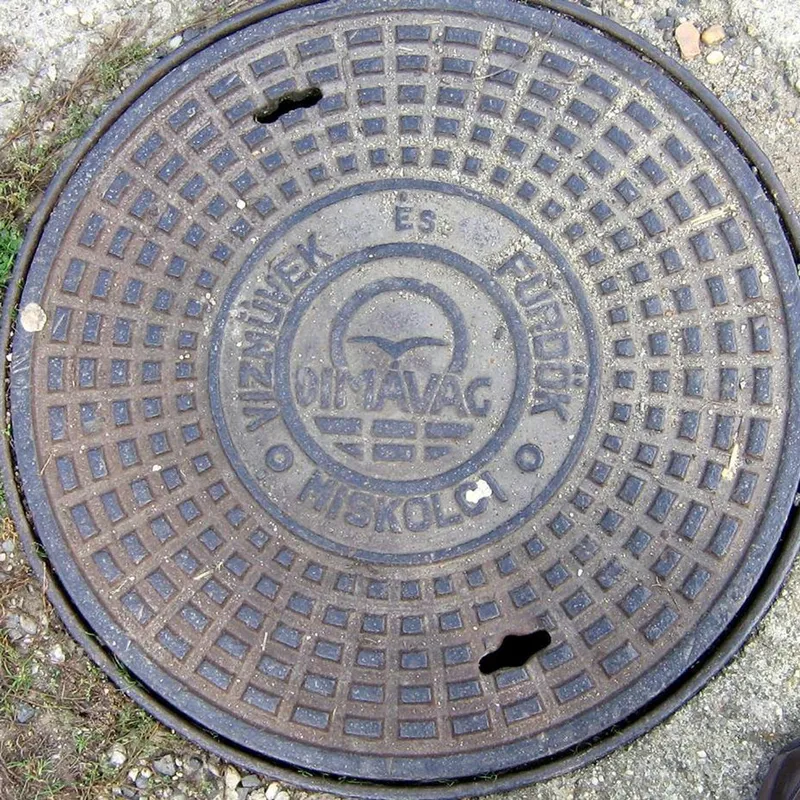
caryfukThe central circular motif of this specimen, surrounded by a grid pattern, bears the inscription 'OIMAVAG' and a stylized logo resembling a bird in flight. The surrounding text 'VIZMUVEK ES FÜRDÖK O MISKOLCI O' indicates its regional affiliation and functional purpose. The surface shows signs of considerable wear and corrosion, which is typical of urban infrastructure.

caryfukcaryfuk
Miskolc, Hungary
Manhole cover in Miskolc, Hungary

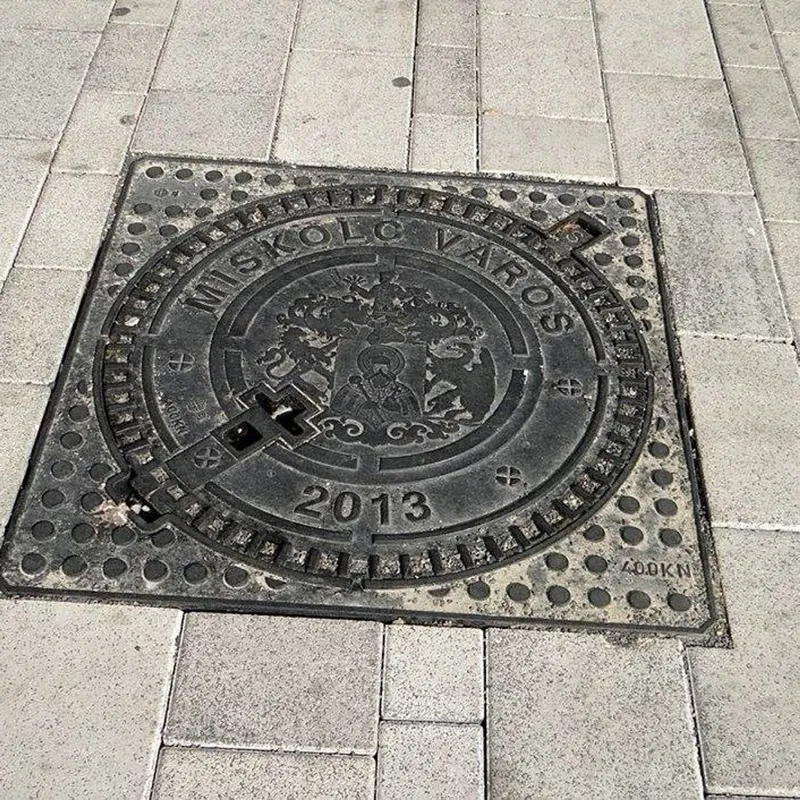
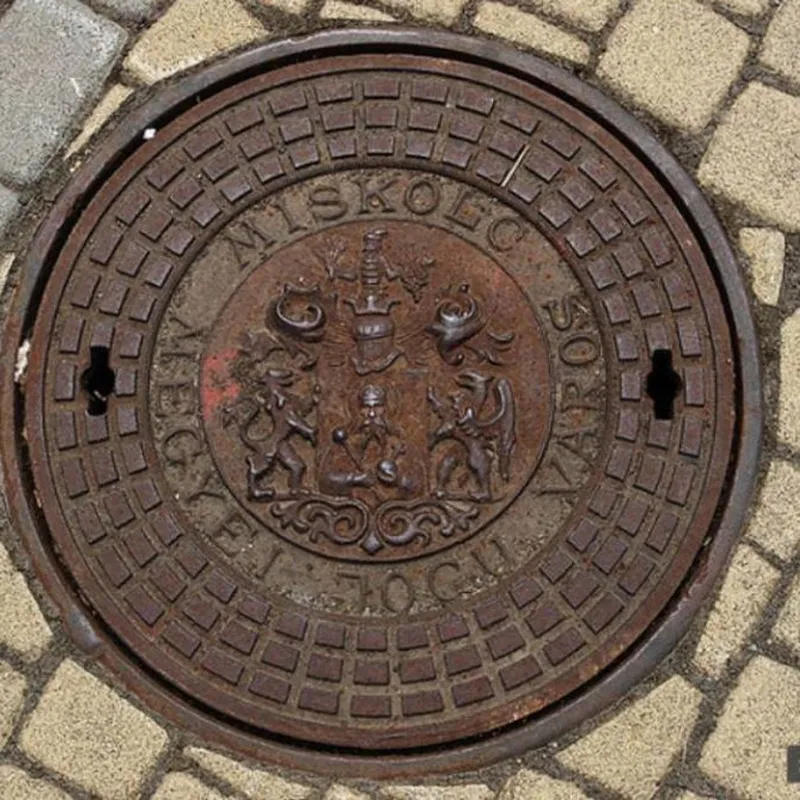
caryfukThe central circular relief of this specimen bears the municipal coat of arms and the inscription 'MISKOLC VAROS', indicating its municipal origin. The year 2013 is prominently marked, which allows the precise dating of this cast iron artefact. The Institute of Lidology would note that this is a robust example of the D400 class, as evidenced by the 400KN marking, which is key to understanding its functional role in the municipal infrastructure.

caryfukcaryfuk
Miskolc, Hungary
Manhole cover in Miskolc, Hungary

caryfukThe central relief coat of arms of Miskolc, surrounded by text, dominates this example of urban infrastructure. The patina of rust and wear gives this cast-iron artefact a characteristic historical appearance, which is always pleasing for the study of philology. It is clearly a robust structure, designed for long-term service in an urban environment.

caryfukcaryfuk
Budapest, Hungary
Manhole cover in Budapest, Hungary

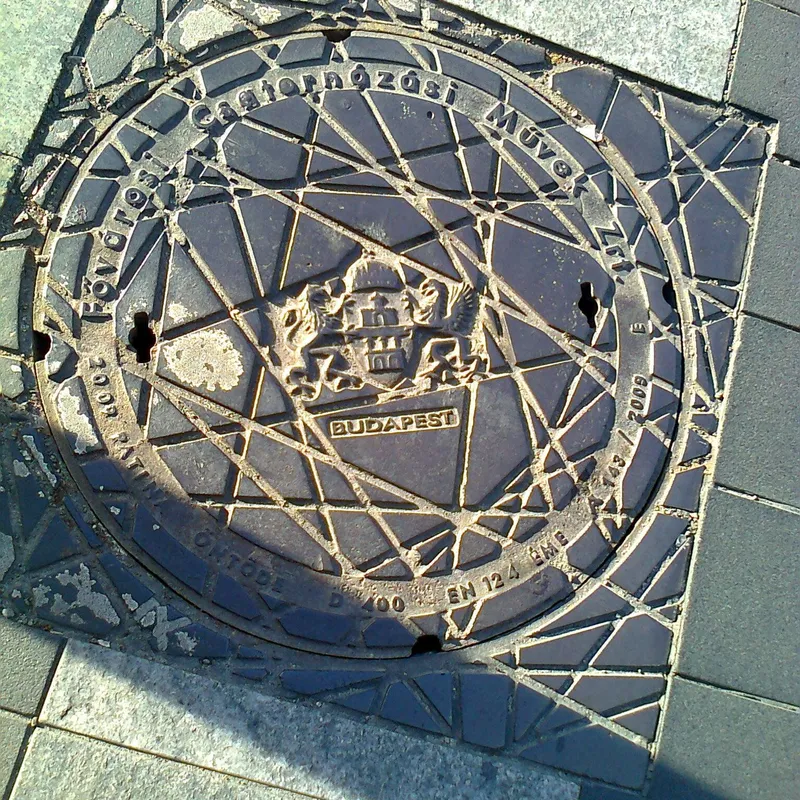
caryfukThe central coat of arms of the city of Budapest dominates this example of the hatch, surrounded by a complex geometric pattern resembling a star network. Inscriptions in Hungarian identify its affiliation with the city's sewer system, which is crucial for taxonomic classification in philology. The 2011 dating suggests a relatively modern origin for this functional artifact.

caryfukcaryfuk
Budapest, Hungary
Manhole cover in Budapest, Hungary

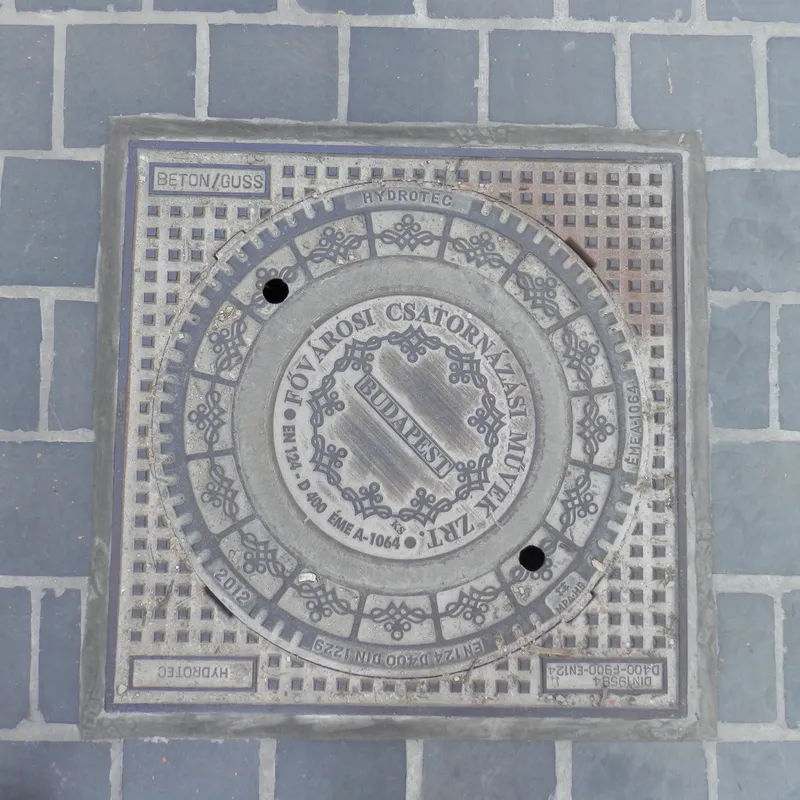
caryfukOn the grey pavement there is a circular hatch with a rich ornamental pattern and inscriptions in Hungarian, including the year 2012. The central section bears the name 'BUDAPEST', surrounded by the text 'FŐVÁROSI CSATORNÁZÁSI MŰVEK ZRT', identifying this specimen as part of the city's sewerage infrastructure. Visual analysis reveals a load classification of D400, indicating its robust construction for road traffic.

caryfukcaryfuk
Budapest, Hungary
Manhole cover in Budapest, Hungary

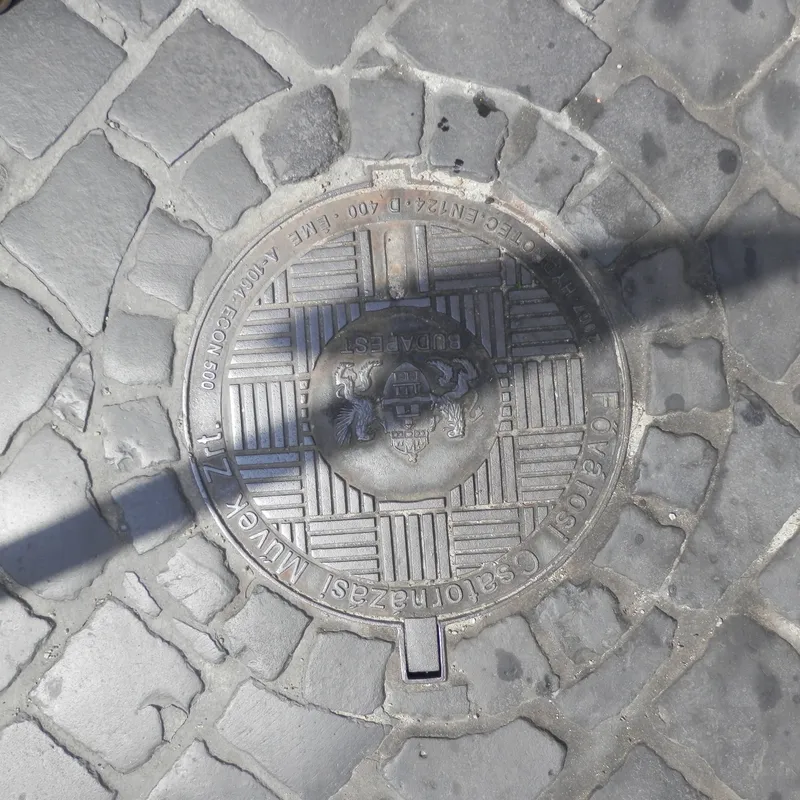
caryfukPaving made of irregular stone blocks surrounds this circular specimen of urban infrastructure. In the center is a clear coat of arms of the city of Budapest, surrounded by text specifying its function and manufacturing standards. This robust artifact, dated 2007, serves as a silent witness to the underground life of the metropolis.

caryfukcaryfuk
Budapest, Hungary
Manhole cover in Budapest, Hungary

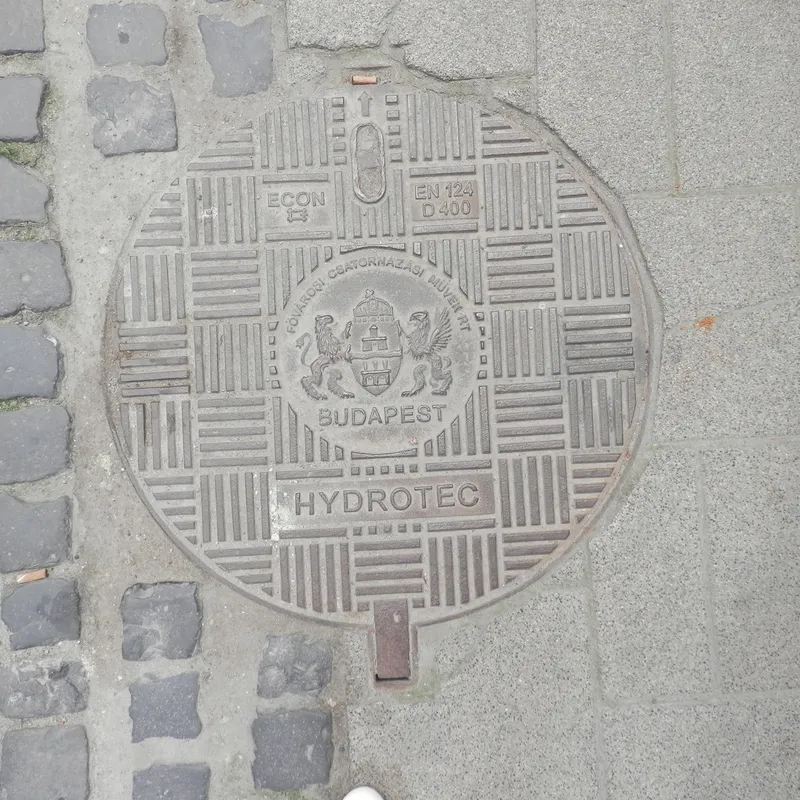
caryfukThe circular cast iron plaque, a remarkable example of urban infrastructure, is decorated with an intricate geometric grid pattern. The central coat of arms, supported by heraldic animals, proudly bears the inscription 'BUDAPEST', indicating its geographical origin. Detailed analysis, as the Institute of Lidology would confirm, reveals a standard load classification of D400, which is quite adequate for this type of hatch.

caryfukcaryfuk
Budapest, Hungary
Manhole cover in Budapest, Hungary

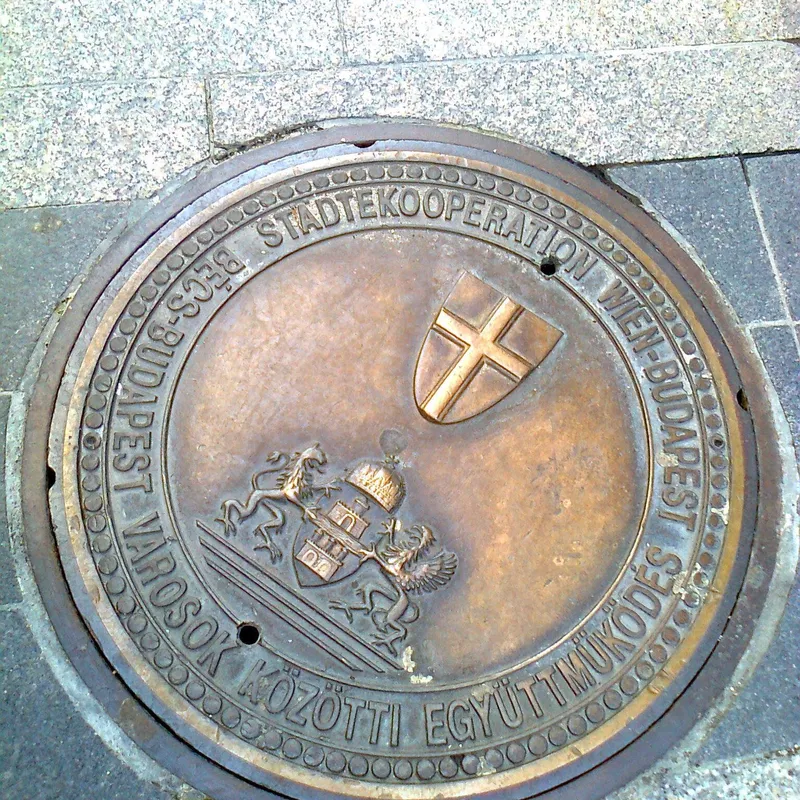
caryfukThis circular bronze disc majestically displays two coats of arms, one with a cross and the other with a crown and heraldic animals, indicating a significant urban partnership. A bilingual inscription in German and Hungarian winds around the circumference with meticulous precision, declaring the cooperation between Vienna and Budapest. The Institute of Lidology would certainly classify this specimen as an example of sophisticated intercity diplomacy materialized in metal.

caryfukcaryfuk
Budapest, Hungary
Manhole cover in Budapest, Hungary

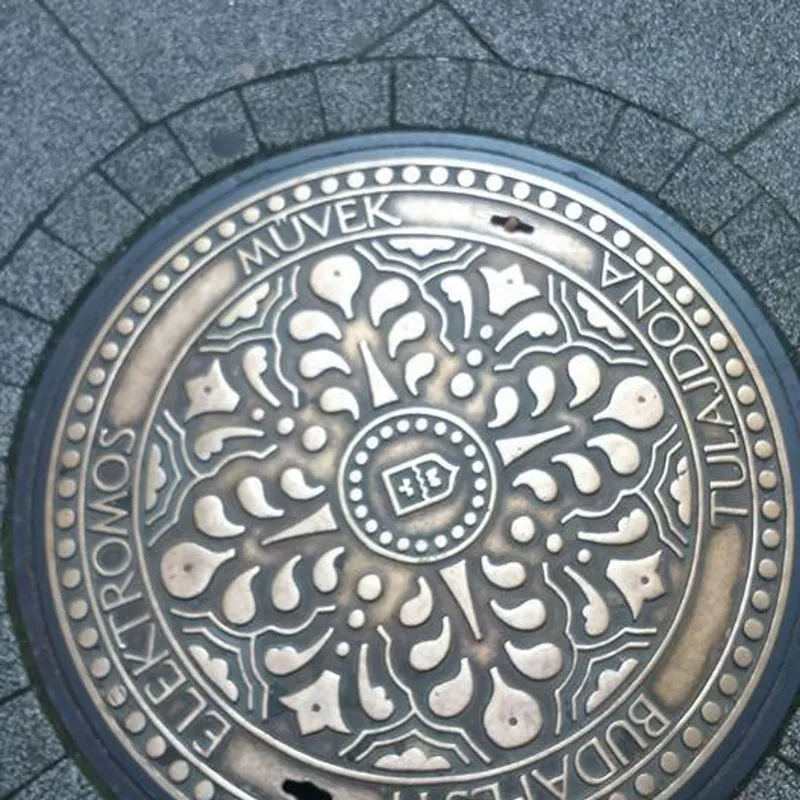
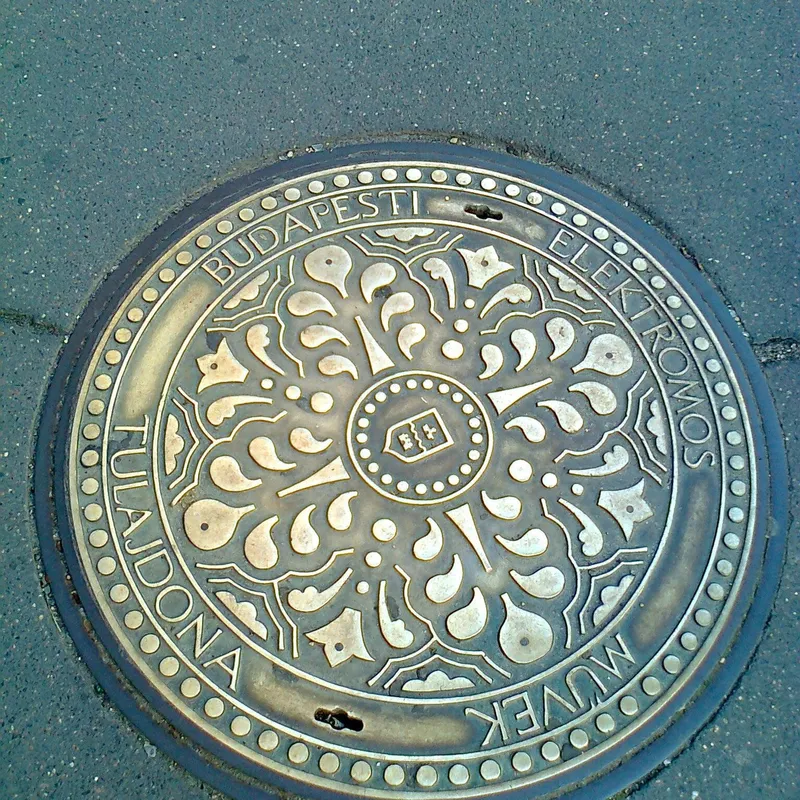
caryfukA complex ornamental pattern, reminiscent of Art Nouveau motifs, dominates this circular specimen, surrounding a central emblem with a pair of lightning bolts. Inscriptions around the perimeter clearly declare its affiliation with Budapest's electrical networks, which is a valuable document for the Institute of Lidology regarding the historical marking of utility networks.

caryfukcaryfuk
Budapest, Hungary
Manhole cover in Budapest, Hungary

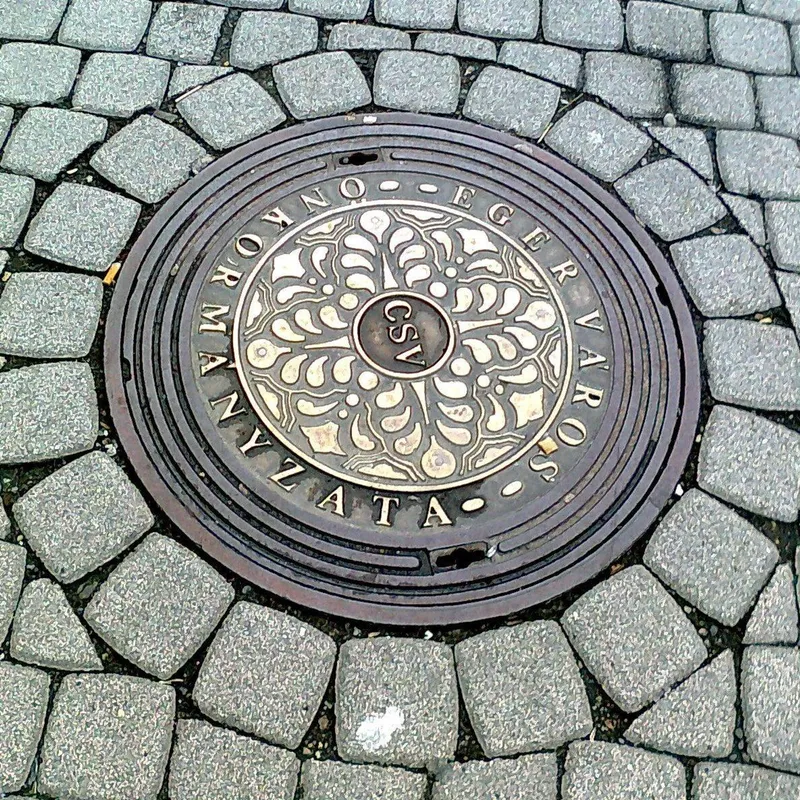
caryfukGrey cobblestones form concentric circles around this remarkable example of urban infrastructure. The central ornament inscribed 'CSV' is surrounded by the text 'EGER VÁROS ÖNKORMÁNYZATA', suggesting its municipal origins. The Institute of Lidology would classify this artefact as a visual record of public administration with an aesthetic overlay.

caryfukcaryfuk
Budapest, Hungary
Manhole cover in Budapest, Hungary

caryfukA central heraldic emblem with a castle and lions, surrounded by a star-shaped geometric pattern, dominates this specimen. The edge bears inscriptions referring to urban infrastructure and technical specifications, indicating its functional classification within the urban system. The surface shows signs of common wear and tear, characteristic of long-term exposure.

caryfukcaryfuk
Budapest, Hungary
Manhole cover in Budapest, Hungary

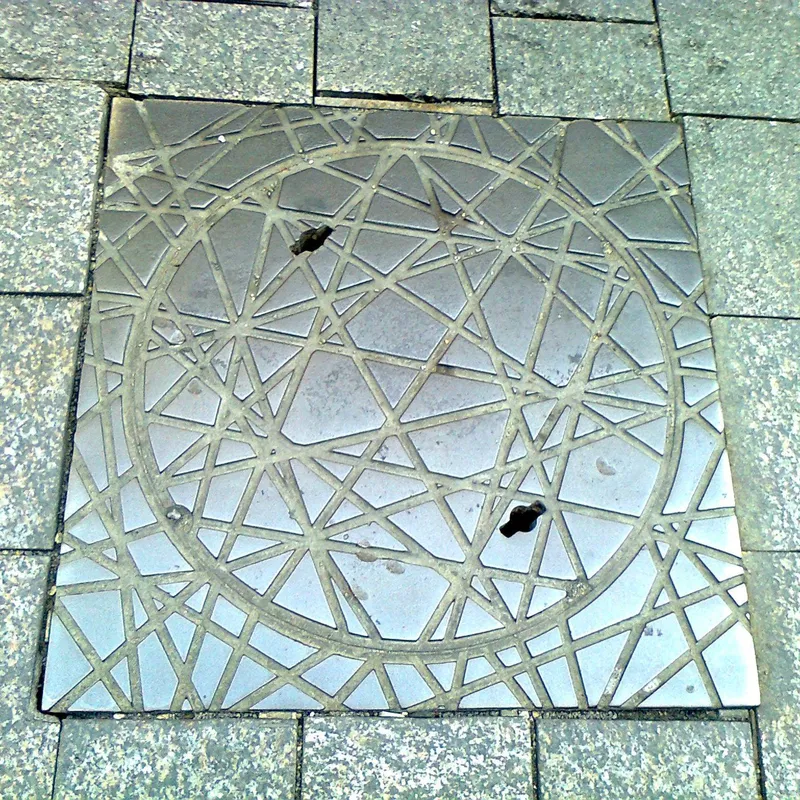
caryfukA complex geometric pattern, resembling an intricate net or a fragment of a cosmic map, dominates this square specimen. The Institute of Lidology would gladly note that this is a visually stimulating element of the urban landscape, where utilitarian function combines with abstract art, albeit with a few minor artifacts on the surface.

caryfukcaryfuk
Budapest, Hungary
Manhole cover in Budapest, Hungary

caryfukAn intricate ornamental pattern with a central coat of arms dominates this circular manhole cover. Inscriptions in Hungarian identify its affiliation with Budapest's electric works, making it an interesting example of urban infrastructure. The detailed relief work suggests careful craftsmanship, typical of the early period of electrification.