caryfukA wavy geometric pattern covers most of the surface of this specimen, surrounding a central coat of arms with a depiction of a castle. According to the EN 124-2005-D400 standard, this hatch is classified for high loads, indicating its robust construction. The inscriptions on it refer to Budapest and the sewerage works, allowing us to classify this artefact as urban infrastructure.
SKManhole covers in Slovakia
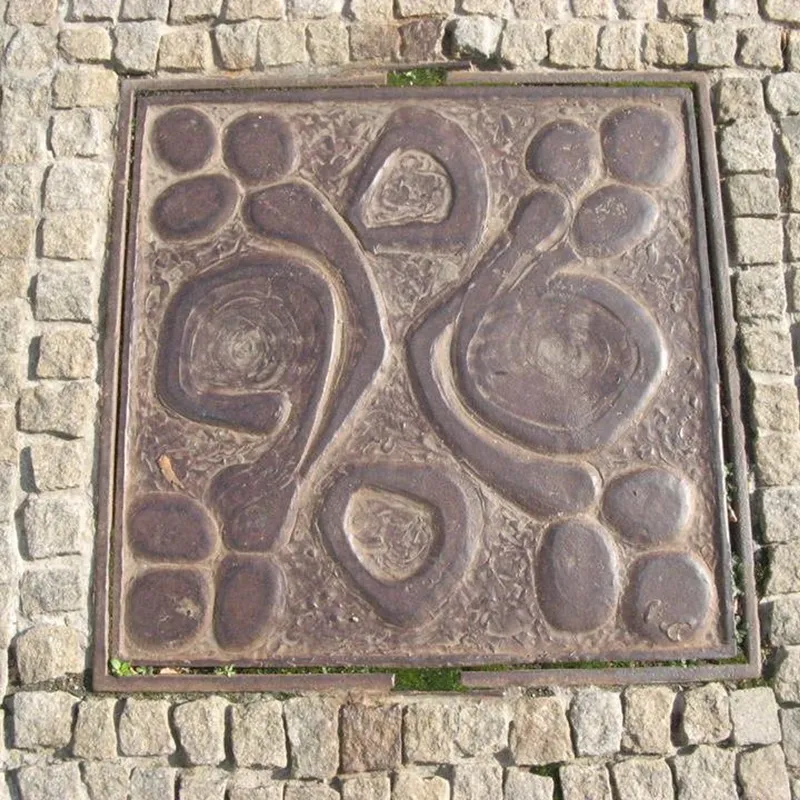
caryfukOn the surface of this specimen, a complex abstract pattern unfolds, resembling stylized organic forms or anthropomorphic silhouettes, arranged symmetrically around a central axis. This decorative composition, embedded in a paved surface, represents an interesting example of urban art, whose visual narrative remains a subject of humanistic inquiry.
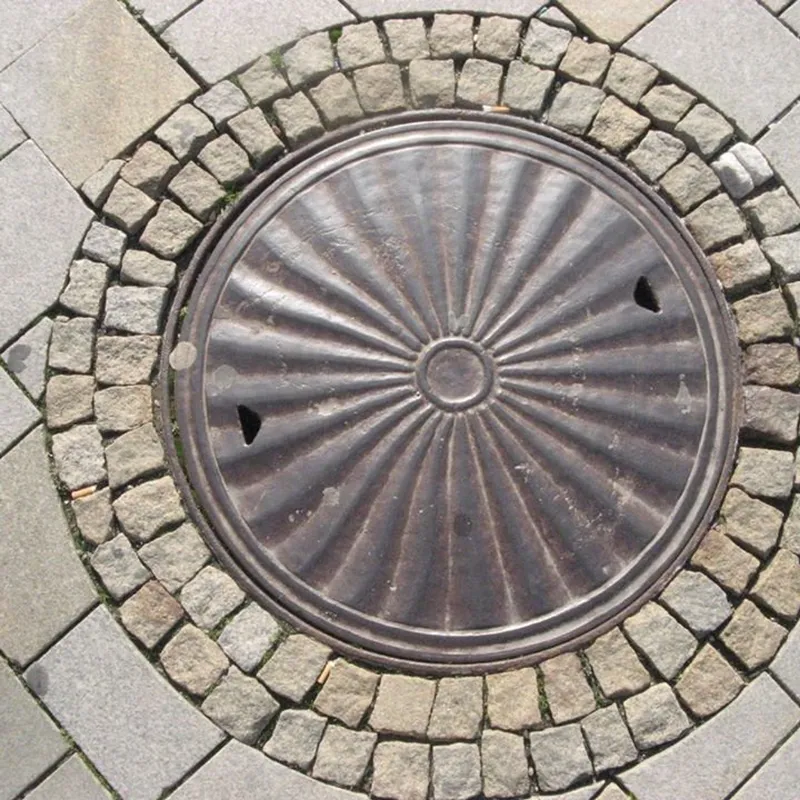
caryfukA radial pattern, reminiscent of sun rays, dominates this metal specimen, which is set into a paved surface. Two triangular holes disrupt its otherwise symmetrical design, a detail worthy of further philological analysis. The surrounding paving of small cubes and larger squares forms an interesting contrast to its circular form.
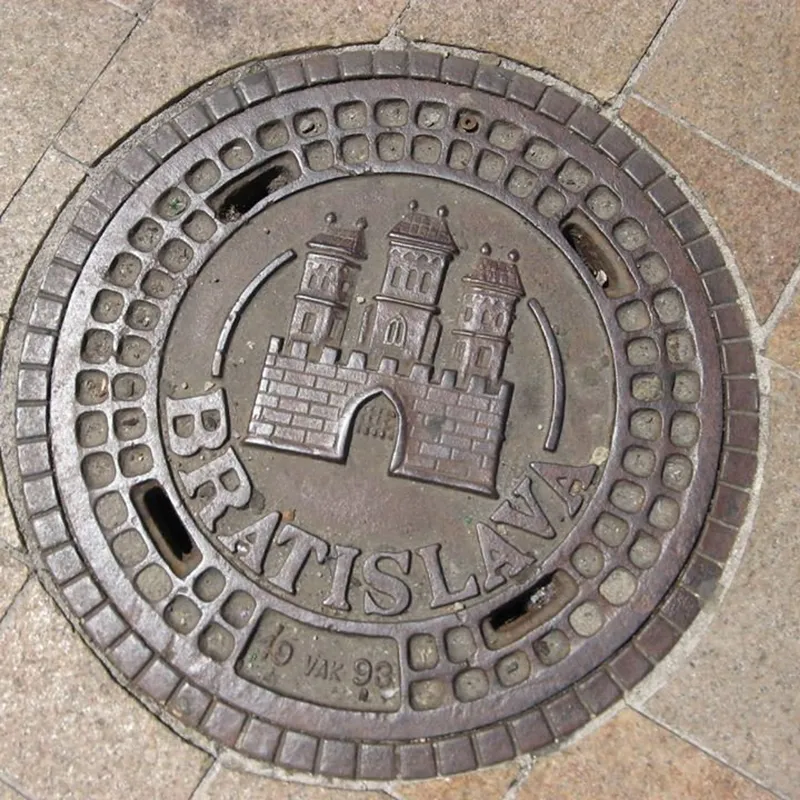
caryfukA relief depiction of Bratislava Castle dominates this circular hatch, surrounded by the inscription "BRATISLAVA" and the year of production '93. The surrounding sandstone paving hints at the urban environment where this specimen serves its purpose. The Institute of Lidology would note that such an artistic representation of urban identity is a fascinating example of utilitarian design with cultural overtones.
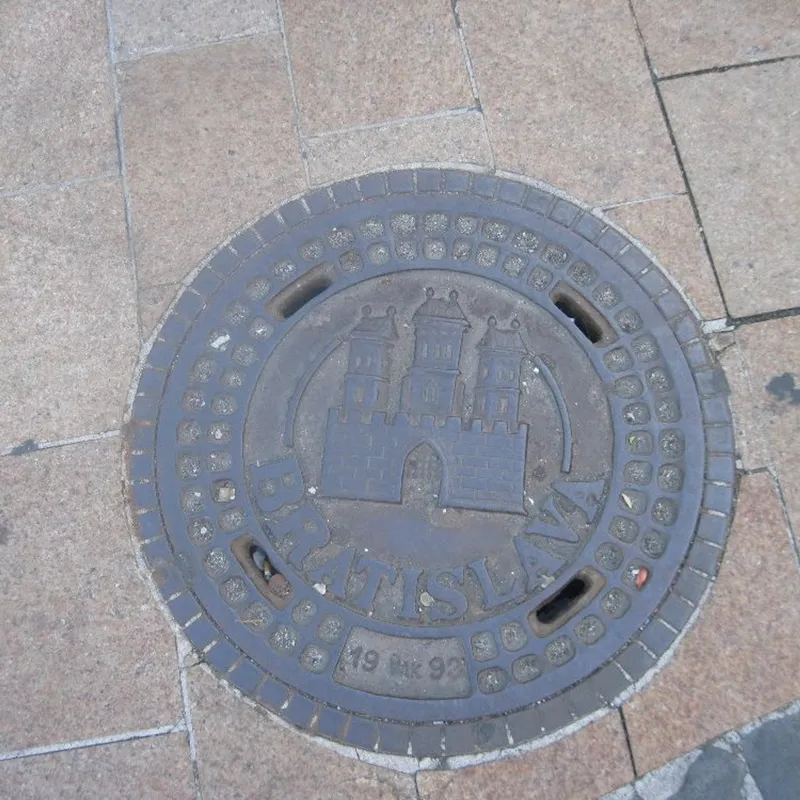
caryfukA castle with a trio of towers majestically emerges from a circular relief, surrounded by the name of the city it guards. Below it, a year is hidden, a silent witness to the past, carved into rough metal. The entire scene is set into the paving, where history merges with every daily step.
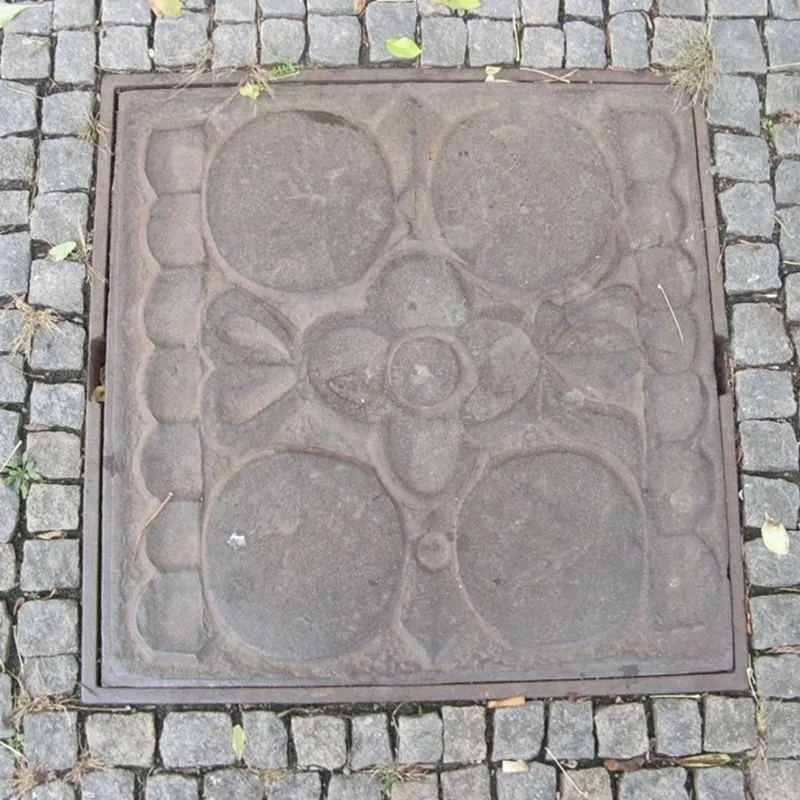
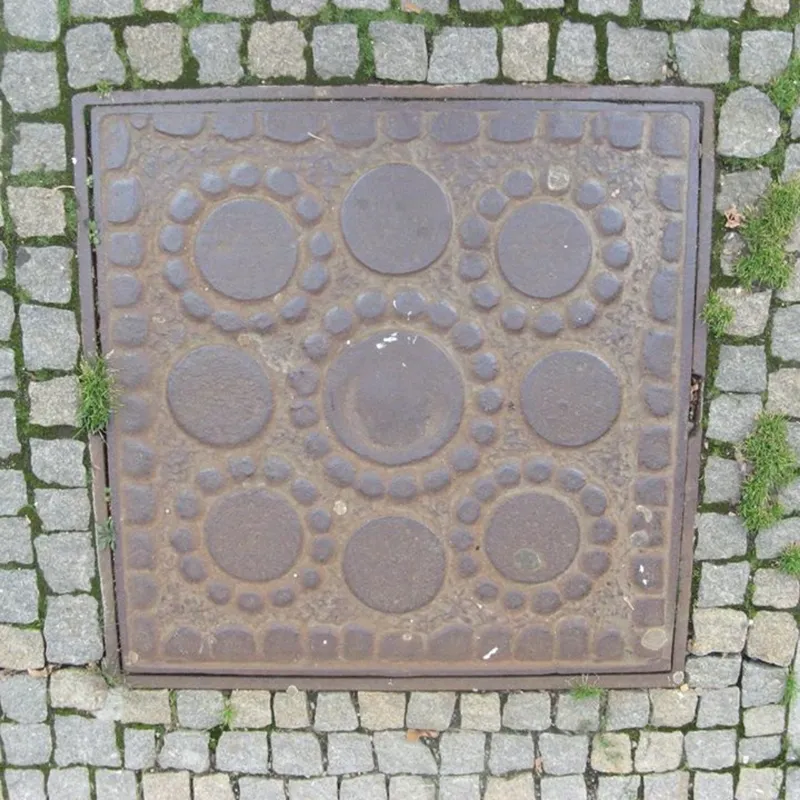
caryfukOn the surface of this specimen a complex geometric pattern is spread out, consisting of seven large circles, each surrounded by a wreath of smaller, regularly spaced circular elements. This repetitive structure, set within a square frame, shows signs of atmospheric corrosion, giving the material the patina of time. The surrounding paving of small cobbles with interspersed grass suggests its integration into the urban environment.
caryfukThis rare example of cast iron art, decorated with a ray pattern, is located just a few steps from the Old Theatre in Nitra. Its central medallion and two triangular openings testify to the meticulous work of an unknown foundry, whose masters obviously valued both aesthetics and functionality. The surrounding paving, carefully arranged in curves, emphasises the monumental character of this artefact of urban infrastructure.
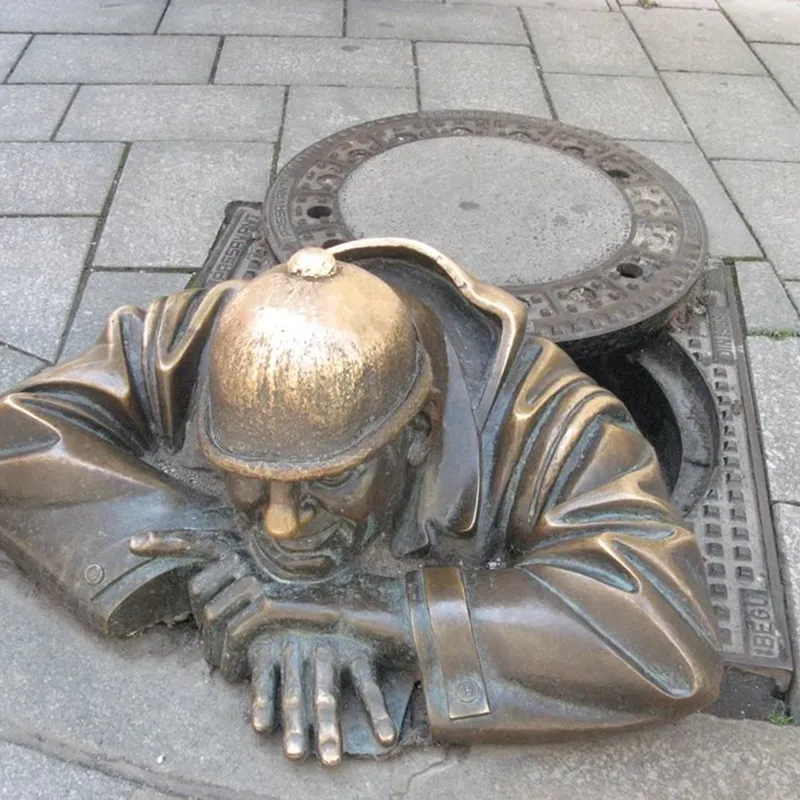
caryfukNext to the bronze statue of a man emerging from the hole lies a round grey hatch with a rough texture. A circular pattern with small holes is visible around the perimeter of this example of urban infrastructure, suggesting its functional design. The frame of the hatch, which is partially visible, bears inscriptions that would merit more detailed philological analysis.
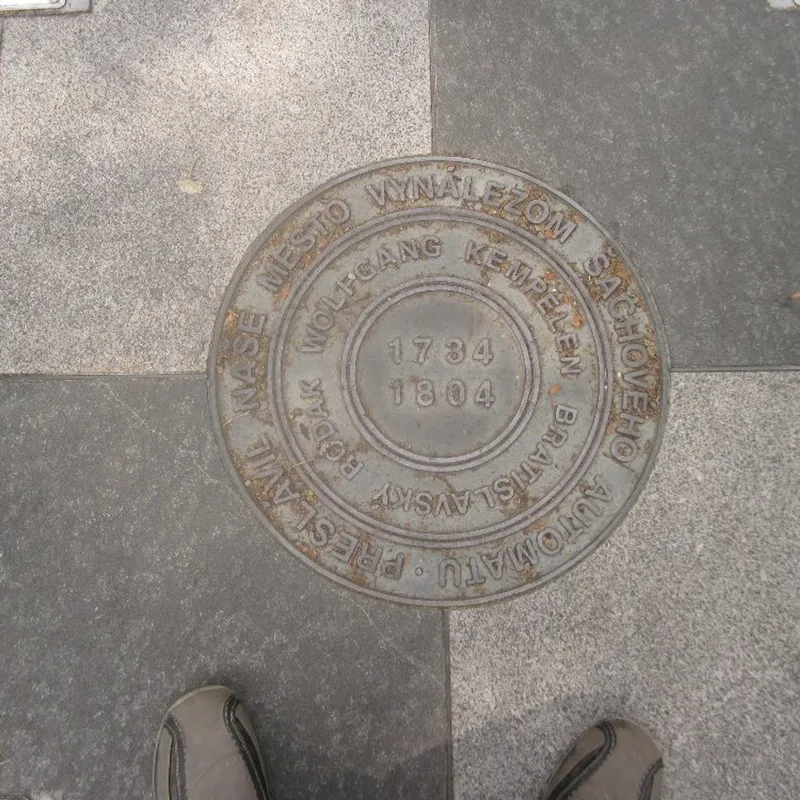
caryfukA circular commemorative plaque, engraved into the pavement, tells the story of Wolfgang von Kempelen, a native of Bratislava, and his chess automaton. The age and patina of the metal lend a profound weight to the years 1734 and 1804, as if time itself had left its imprints on this historical testimony.