Skip to content

PLManhole covers in Poland

caryfukcaryfuk
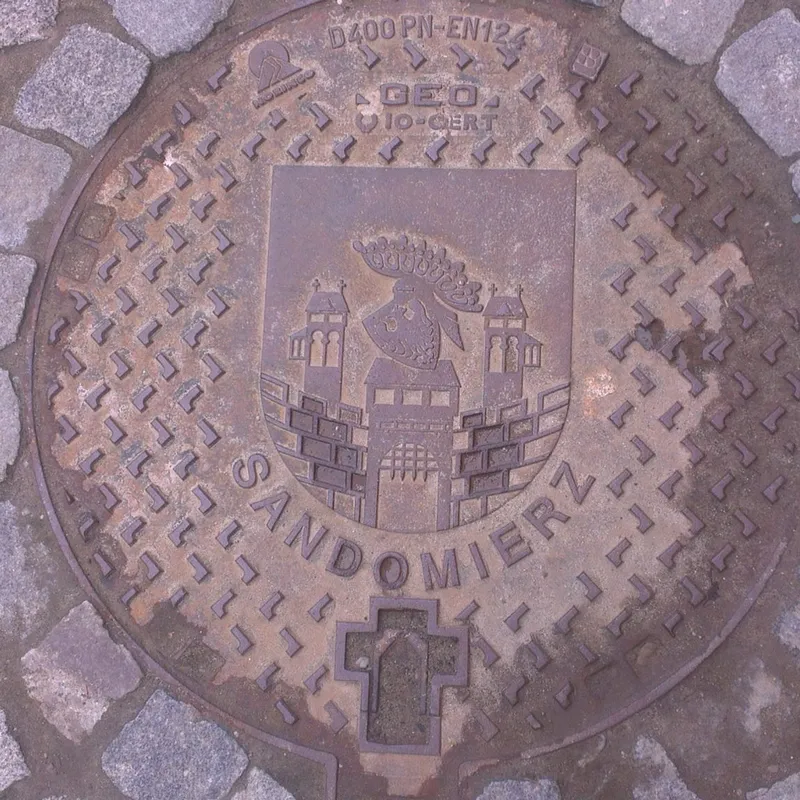
Sandomierz, Poland
Manhole cover in Sandomierz, Poland

caryfukThe central armorial shield depicts stylized city walls with towers and a crowned eagle, a heraldic element characteristic of the historic Polish city of Sandomierz. The surrounding relief pattern consists of repeating geometric shapes, which give this specimen a functional aesthetic. At the top, technical specifications are visible, classifying its load capacity for road traffic.
caryfukcaryfuk
Kudowa-Zdrój, Poland
Manhole cover in Kudowa-Zdrój, Poland

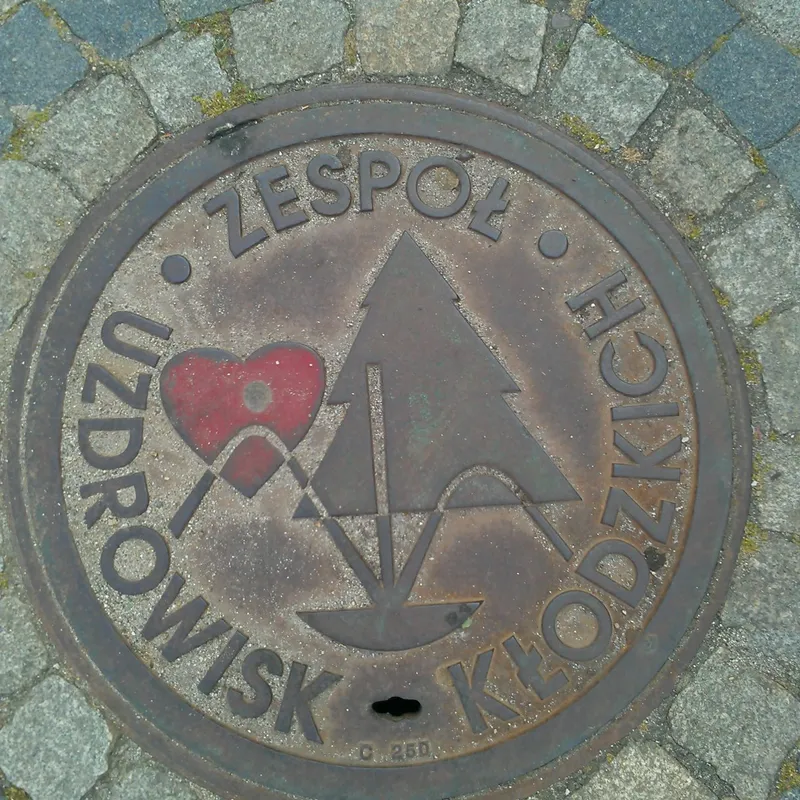
caryfukThe central relief of this specimen depicts a stylized coniferous tree and a heart, suggesting a connection with nature and health. Around the perimeter, the inscription "ZESPÓŁ UZDROWISK KŁODZKICH" is visible, identifying its affiliation with the spa complex. Analysis of the surrounding cobblestone paving indicates its integration into urban infrastructure with a historical character.

caryfukcaryfuk
Kraków, Poland
Manhole cover in Kraków, Poland

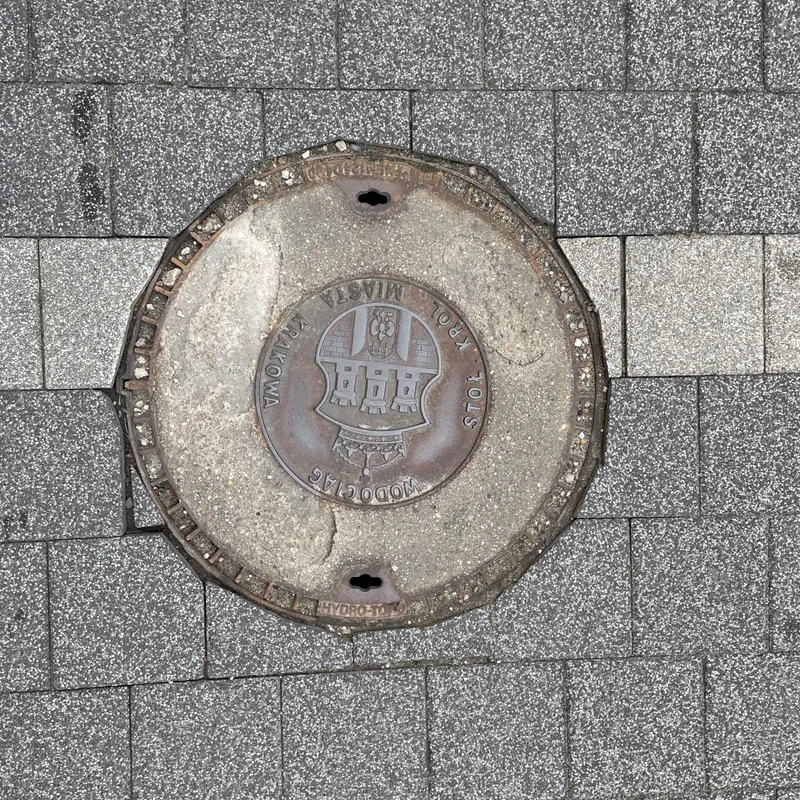
caryfukThe central heraldic motif, the coat of arms of the city of Kraków, dominates this example of a cast iron hatch artifact. A circular inscription around it identifies its origin and purpose, while the surrounding paving of small stones creates a contrasting texture. The Institute of Lidology would note that the slight corrosion adds a patina of historical authenticity to the surface.

caryfukcaryfuk
Wrocław, Poland
Manhole cover in Wrocław, Poland

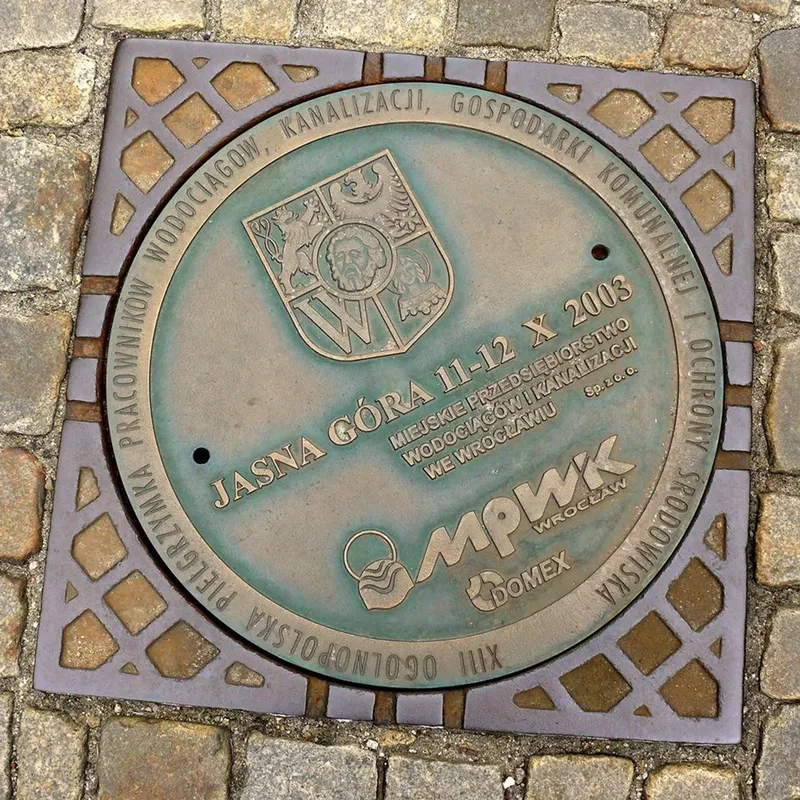
caryfukThe patinated surface of the circular hatch is dominated by inscriptions in Polish, commemorating the XIIIth All-Polish Pilgrimage of Water Supply and Sewerage Workers in 2003. In the centre is a distinct coat of arms with the head of a bearded man and the letter 'W', suggesting a connection with the town of Wrocław. This specimen, as the Institute of Lidology would note, is a fascinating artefact of municipal history and engineering, carefully set into the cobblestones.

caryfukcaryfuk
Wrocław, Poland
Manhole cover in Wrocław, Poland

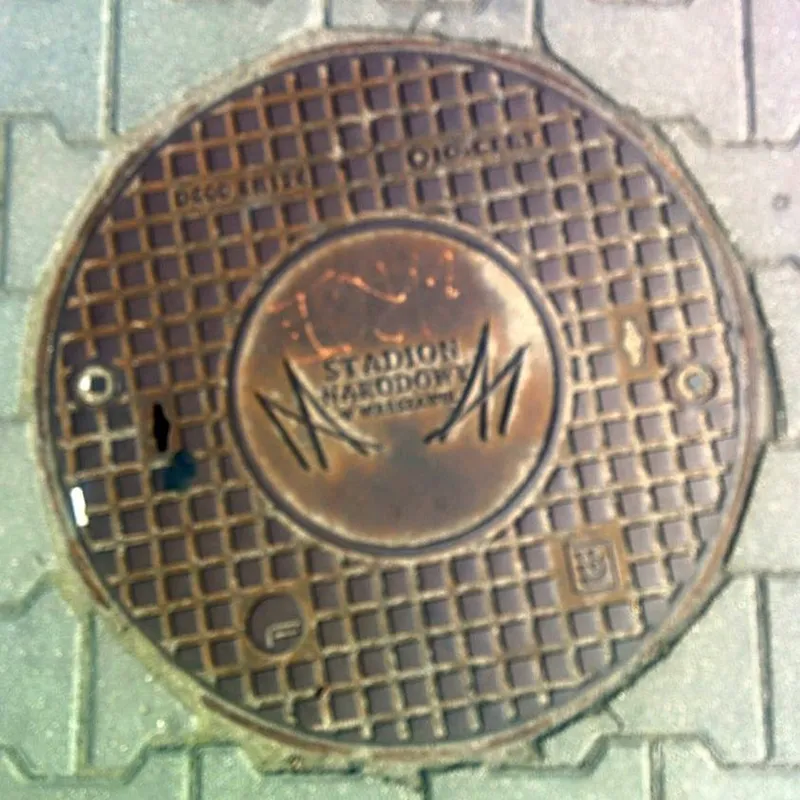
caryfukThe central circular medallion of this specimen bears the distinctive inscription 'STADION NARODOWY W WARSZAWIE' surrounded by stylised initials, indicating its specific location. The surrounding grid pattern, typical of urban infrastructure, is complemented by smaller text fragments such as 'DECO KRIZE' and 'Q10.CEE'. Lidological analysis reveals a robust cast iron structure that shows signs of atmospheric corrosion.

caryfukcaryfuk
Kudowa-Zdrój, Poland
Manhole cover in Kudowa-Zdrój, Poland

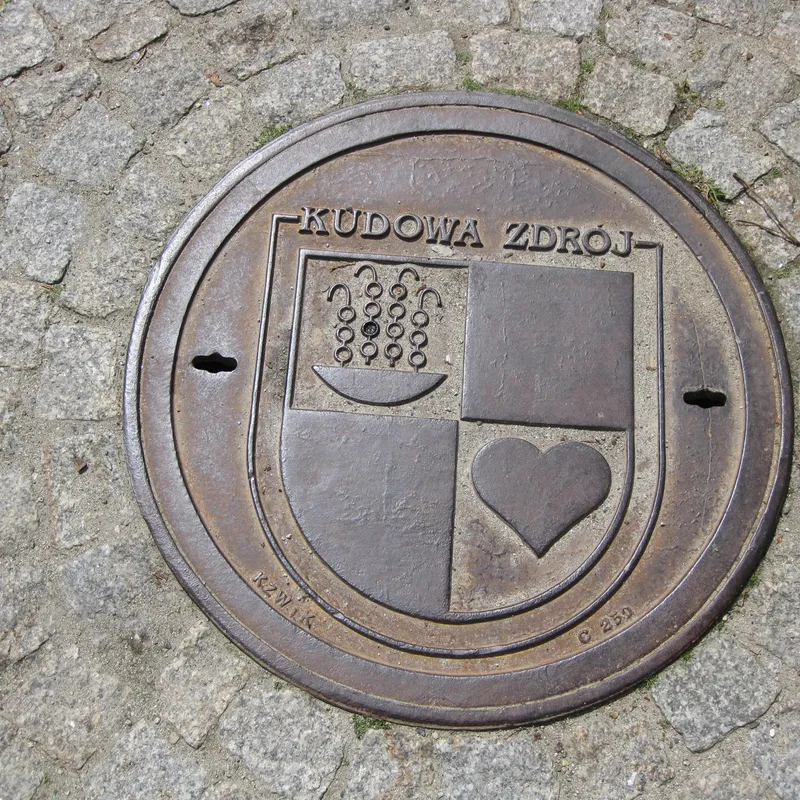
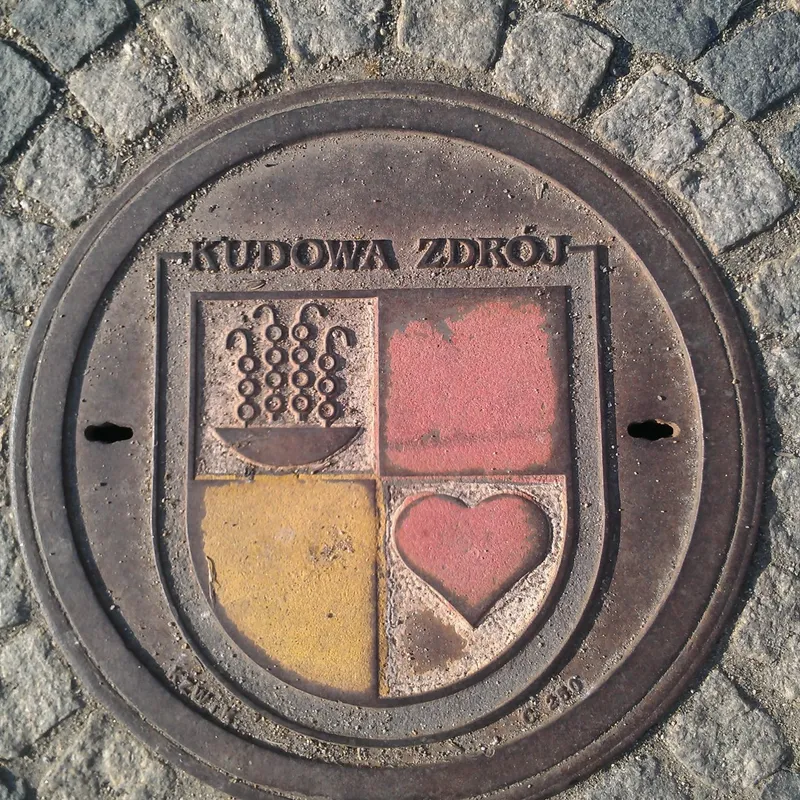
caryfukThe central element of this specimen is a detailed municipal coat of arms, divided into four fields, with a distinctive depiction of four stylized water springs in the upper left part and a heart in the lower right part. The inscription 'KUDOWA ZDRÓJ', referring to the spa town in Poland, is clearly engraved around the coat of arms, as well as the indication 'C 250' for the weight class. The entire hatch is set in a paved area of irregular stone blocks, which emphasises its historical and functional character.

caryfukcaryfuk
Kudowa-Zdrój, Poland
Manhole cover in Kudowa-Zdrój, Poland

caryfukA clear inscription 'KUDOWA ZDRÓJ' dominates the upper part of this circular specimen, surrounded by cobblestones. The central shield, divided into four fields, depicts grapes or bubbles, two monochrome fields, and a stylized heart, suggesting heraldic significance. The Institute of Lidology could speculate on the symbolism of the heart as an expression of local identity.

caryfukcaryfuk
Środmieście, Poland
Manhole cover in Środmieście, Poland

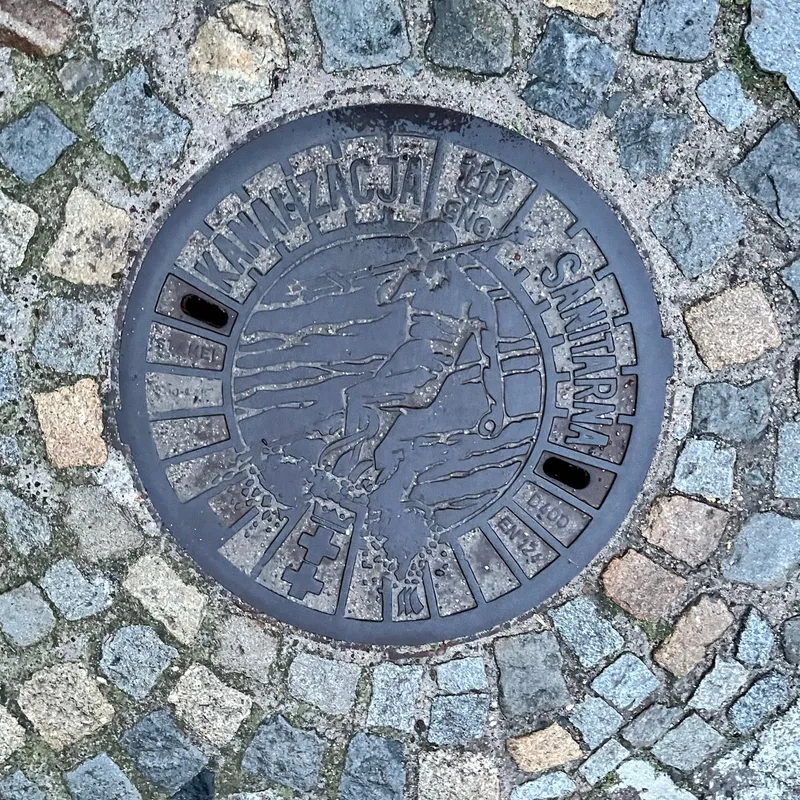
caryfukA circular specimen with a distinctive central motif of a figure on waves, surrounded by radial segments, appears on the surface of the cobbled path. One of these segments bears the symbol of a double cross, suggesting potential heraldic significance for the site. The inscriptions 'SANITARNA KANALIZACJA' clearly identify its functional classification, always a pleasing finding for the philologist.

caryfukcaryfuk
Żabianka-Wejhera-Jelitkowo-Tysiąclecia, Poland
Manhole cover in Żabianka-Wejhera-Jelitkowo-Tysiąclecia, Poland

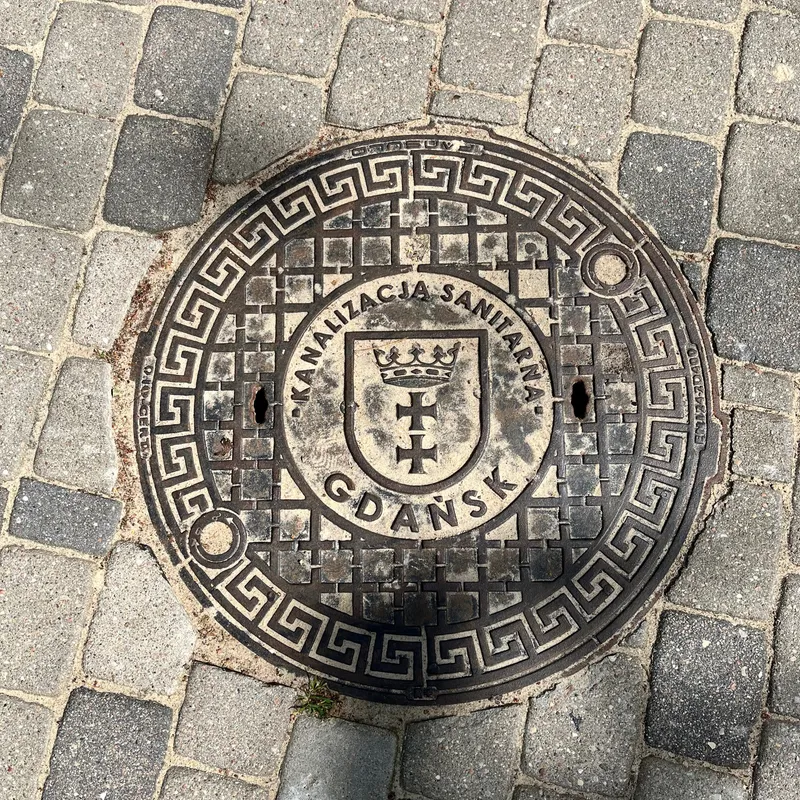
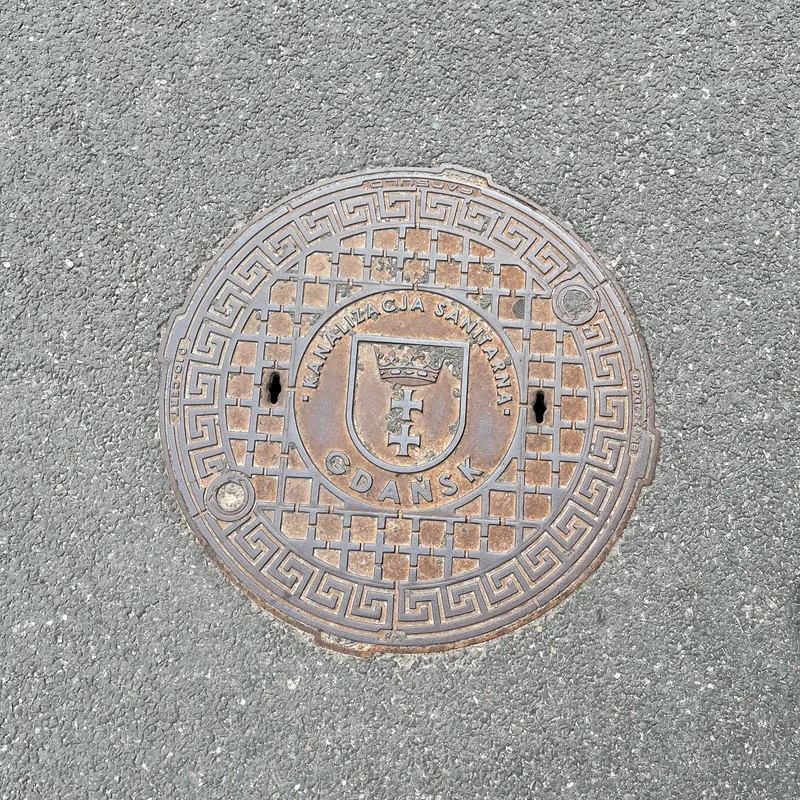
caryfukThe circular lid is bordered by a classic meander pattern, which surrounds a central coat of arms with a crown and two crosses, typical for the city of Gdańsk. The inscription "KANALIZACJA SANITARNA" clearly identifies its function, making it a valuable specimen of urban infrastructure for the Institute of Lidology. The surrounding cobblestones suggest a historical environment.

caryfukcaryfuk
Wrocław, Poland
Manhole cover in Wrocław, Poland

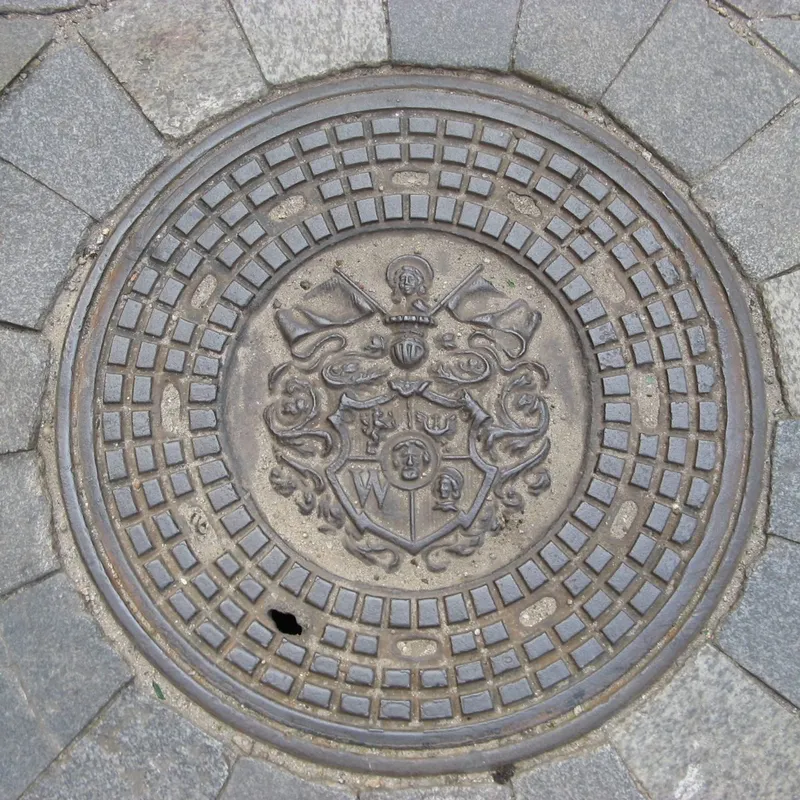
caryfukIn the centre of this specimen is a richly decorated coat of arms, surrounded by a regular square grid, which gives the surface a functional texture. The central shield with the letter 'W' and stylised faces is crowned and flanked by flags, suggesting its urban or historical significance. The Institute of Lidology classifies this artefact as a notable example of early urban heraldry on infrastructure.

caryfukcaryfuk
Środmieście, Poland
Manhole cover in Środmieście, Poland

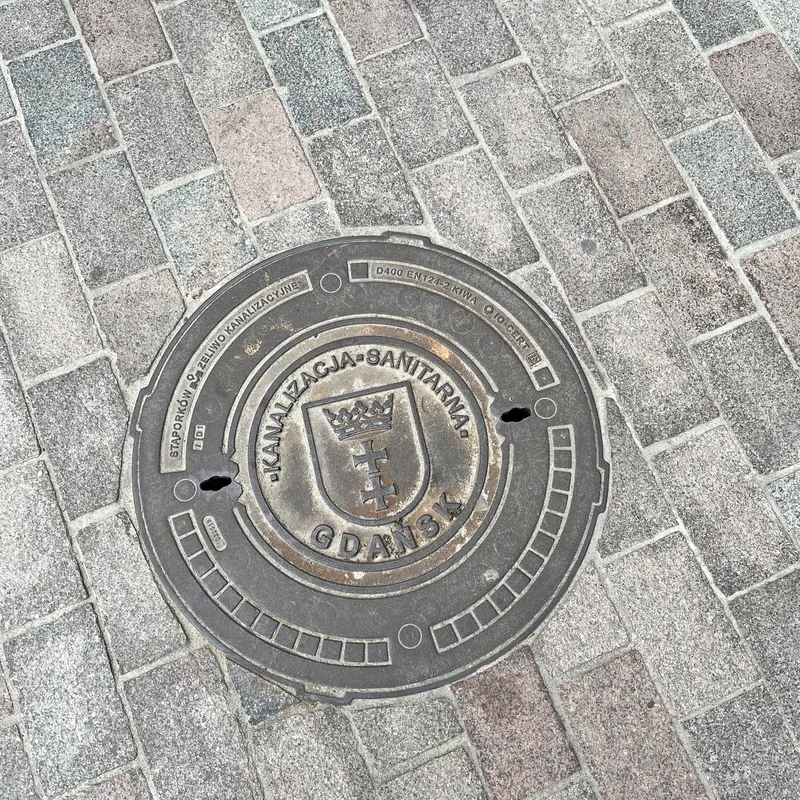
caryfukThe circular metal disc, an exemplar of urban infrastructure, is set in a matrix of grey and reddish cobblestones. Its central field proudly bears the coat of arms of the city of Gdańsk, surrounded by inscriptions specifying its function as a sanitary sewer, which is typical of D400 class manhole covers. This specimen shows signs of normal wear, but its structural integrity remains intact.

caryfukcaryfuk
Środmieście, Poland
Manhole cover in Środmieście, Poland

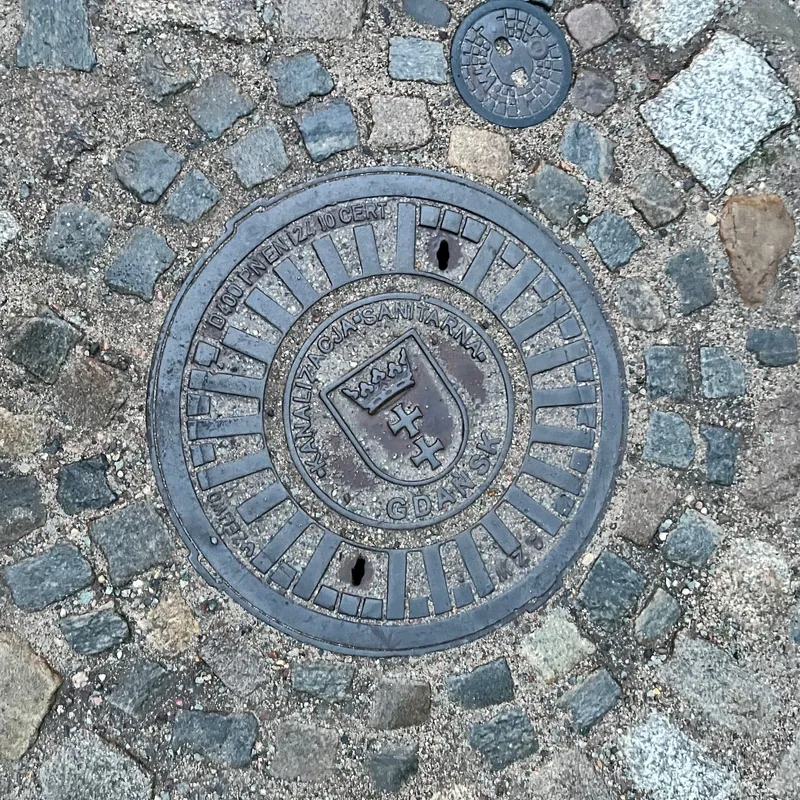
caryfukThe central coat of arms of the city of Gdansk, with its characteristic crosses and crown, dominates this example of the hatch, which is surrounded by irregular paving stones. The radial pattern and inscriptions such as 'KANAŁY SANITARNA' and 'D 400' suggest its functional classification and origin. A smaller, circular manhole with a grid pattern is located to the left, which adds to the overall composition of the terrain, as the Institute of Lidology would note.

caryfukcaryfuk
Środmieście, Poland
Manhole cover in Środmieście, Poland

caryfukThe central coat of arms of the city of Gdansk, with a crown and two crosses, dominates this example of a cast iron hatch, which is a fascinating artefact of the city's infrastructure. The rim is decorated with an intricate geometric meander pattern, which is surrounded by the inscription "KANALIZACJA SANITARNA" and a clear indication of the D400 stress class. The surface exhibits a characteristic patina that testifies to its long-term exposure to the elements and provides valuable insight into the typology of manhole covers in the region.

caryfukcaryfuk
Środmieście, Poland
Manhole cover in Środmieście, Poland

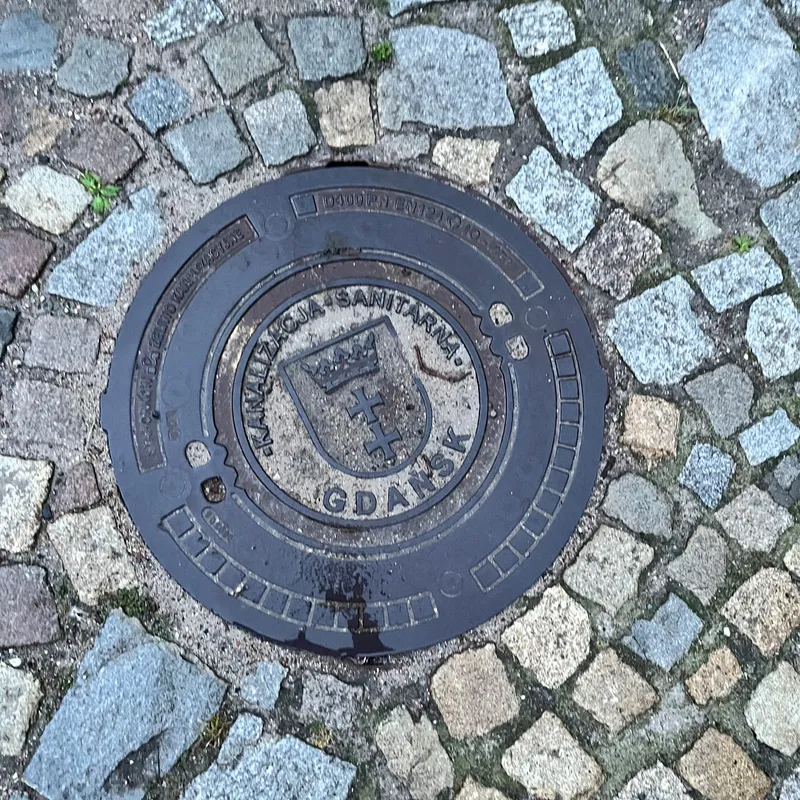
caryfukIn the centre of the circular specimen, the heraldic emblem of the city of Gdansk, crowned and with two crosses, surrounded by inscriptions in Polish, stands out majestically. This artefact, obviously intended for sanitary sewers, is set in a pavement of irregular stone blocks. The Institute of Lidology would note that the load class D400 indicates its robust construction for road traffic.
caryfukcaryfuk
Łódź, Poland
Manhole cover in Łódź, Poland

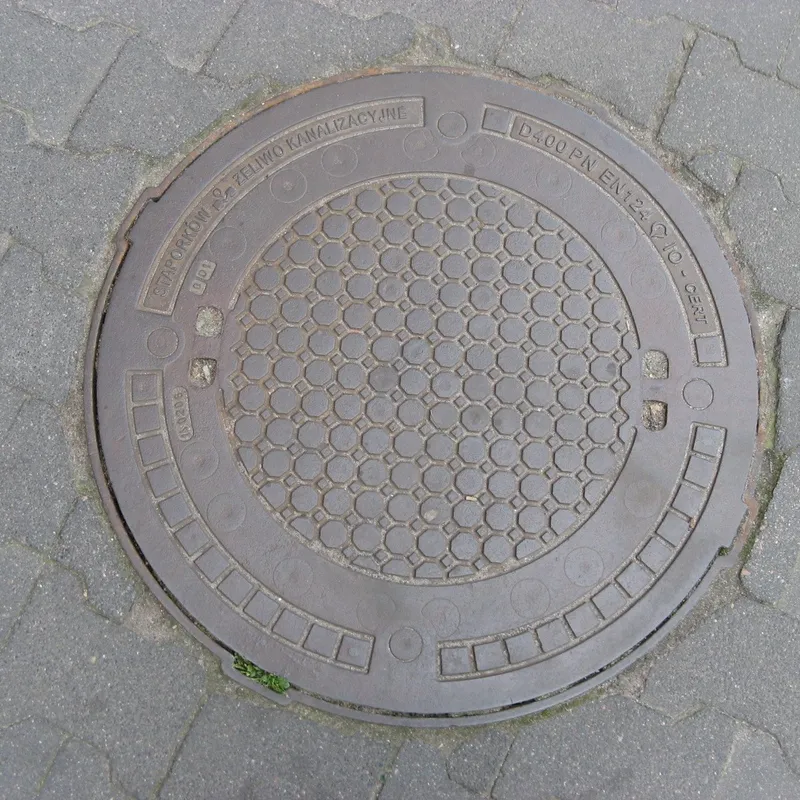
caryfukThe central part of this example of urban infrastructure shows a precise hexagonal pattern, surrounded by a ring of circular and square segments. Around the outer edge, the technical specifications and the manufacturer's markings are clearly embossed, allowing it to be classified within the hatch typology. The Institute of Lidology would appreciate the robust construction and clear identification of purpose.

caryfukcaryfuk
Gdańsk, Poland
Manhole cover in Gdańsk, Poland

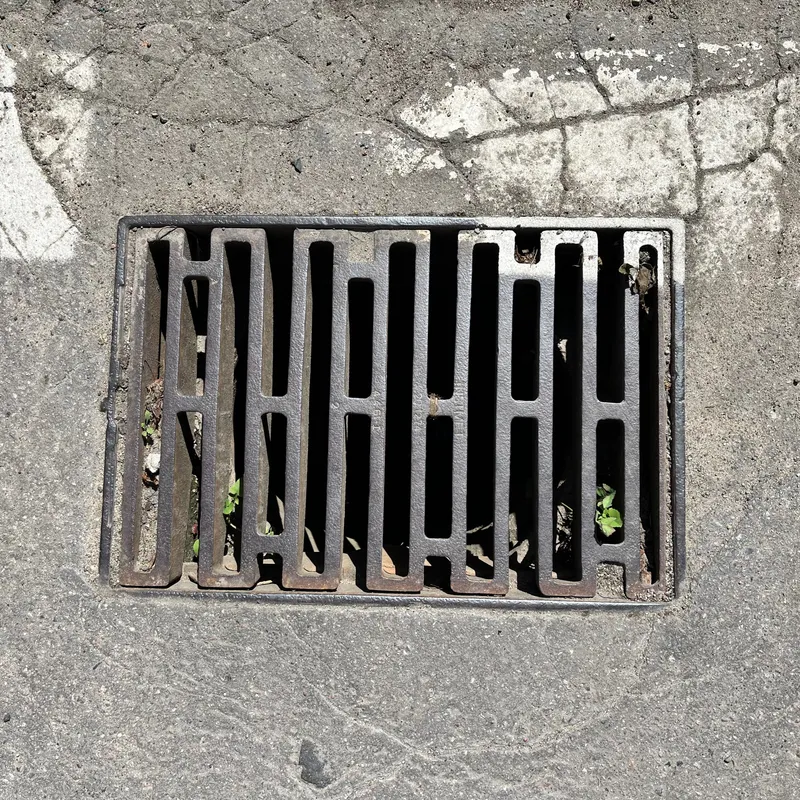
caryfukThe grey concrete surface, strewn with small stones, surrounds a rectangular grid that serves as a drain. A few green plants snake their way between the sturdy steel slats, suggesting that this specimen has been part of the urban landscape for some time. The distinct inscriptions 'INSTMET', '201274' and 'T-977' provide valuable data for the philological classification of this particular artefact.

caryfukcaryfuk
Żabianka-Wejhera-Jelitkowo-Tysiąclecia, Poland
Manhole cover in Żabianka-Wejhera-Jelitkowo-Tysiąclecia, Poland

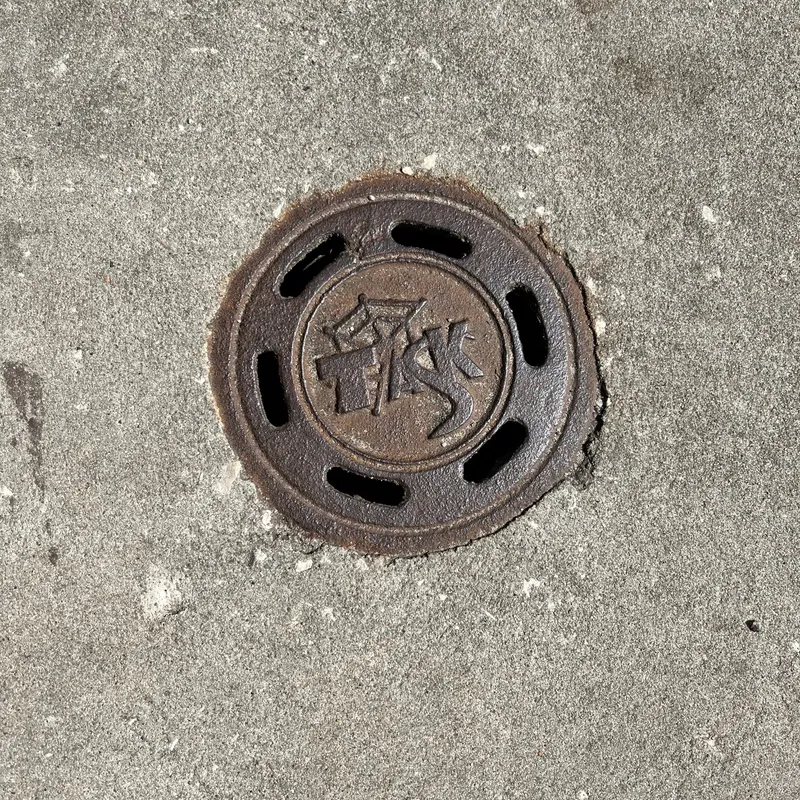
caryfukA circular cast-iron artifact rests on a rough concrete surface, its central disk bearing stylized Japanese characters which the Institute of Lidology identified as '下水'. A rusty patina indicates long-term exposure to atmospheric influences, which is entirely typical for this type of urban specimen.

caryfukcaryfuk
Wrocław, Poland
Manhole cover in Wrocław, Poland

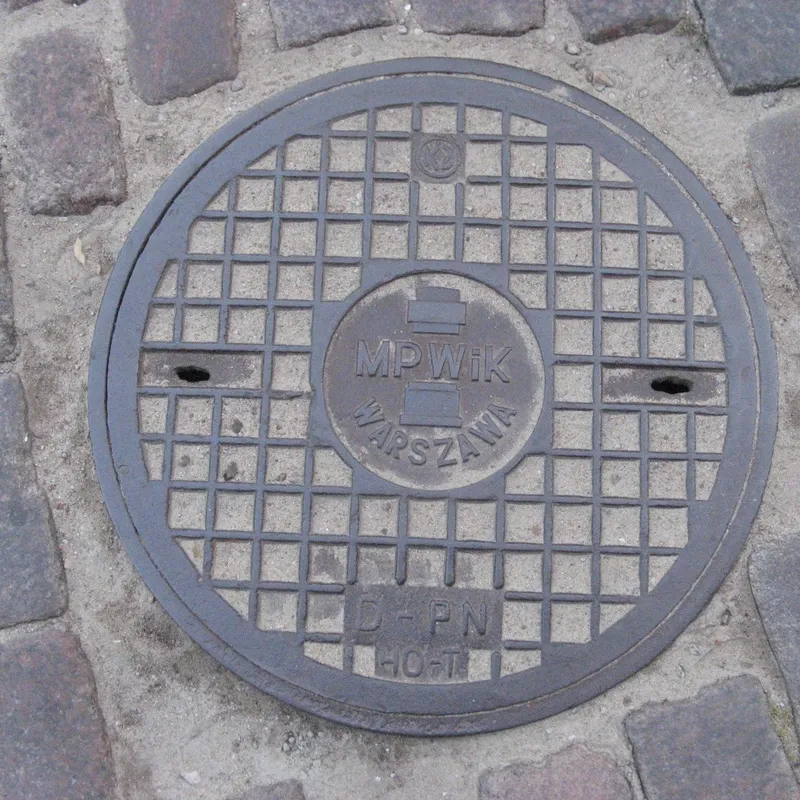
caryfukThe central circular emblem of this specimen bears the inscription 'MPWiK WARSZAWA', indicating its affiliation with the city's water supply and sewerage network. The grid pattern, typical of cast iron manhole covers, is complemented by the specific alphanumeric designation 'D-PN HO-T' at the bottom, which could refer to its load capacity or internal classification. The Institute of Lidology would categorise this artefact as a functional urban infrastructure element with a regional specification, with its wear indicating long-term exposure to urban traffic.

caryfukcaryfuk
Bydgoszcz, Poland
Manhole cover in Bydgoszcz, Poland

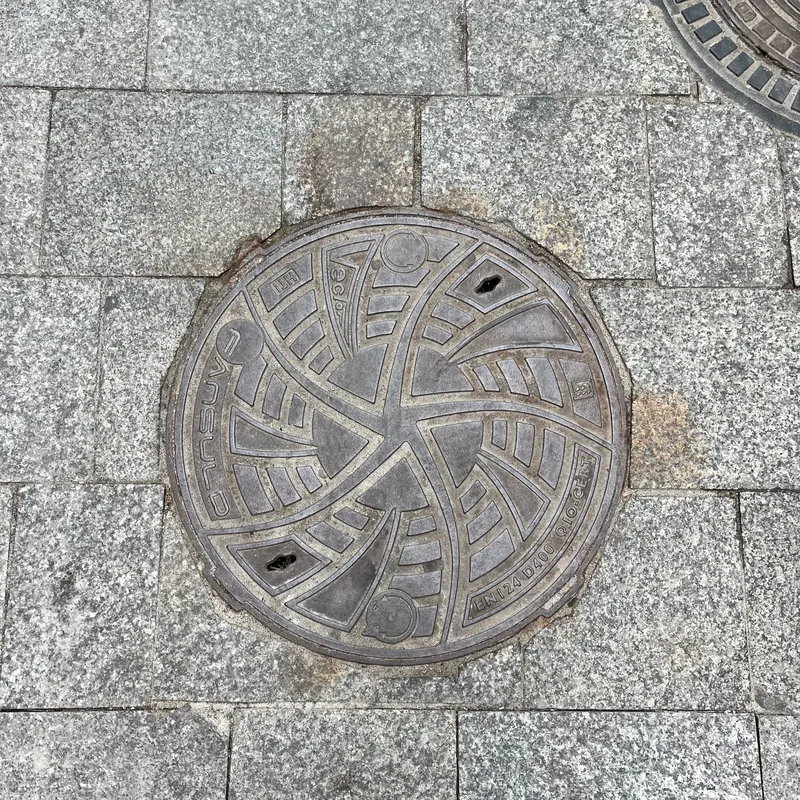
caryfukA complex geometric pattern resembling a stylized star dominates the surface of this circular specimen, set against a background of finely textured grey granite paving stones. Inscriptions like "JAGSULA" and "EN124 D400" provide key data for its classification in the field of lidology. Two small holes suggest functional elements that warrant further study.

caryfukcaryfuk
Bydgoszcz, Poland
Manhole cover in Bydgoszcz, Poland

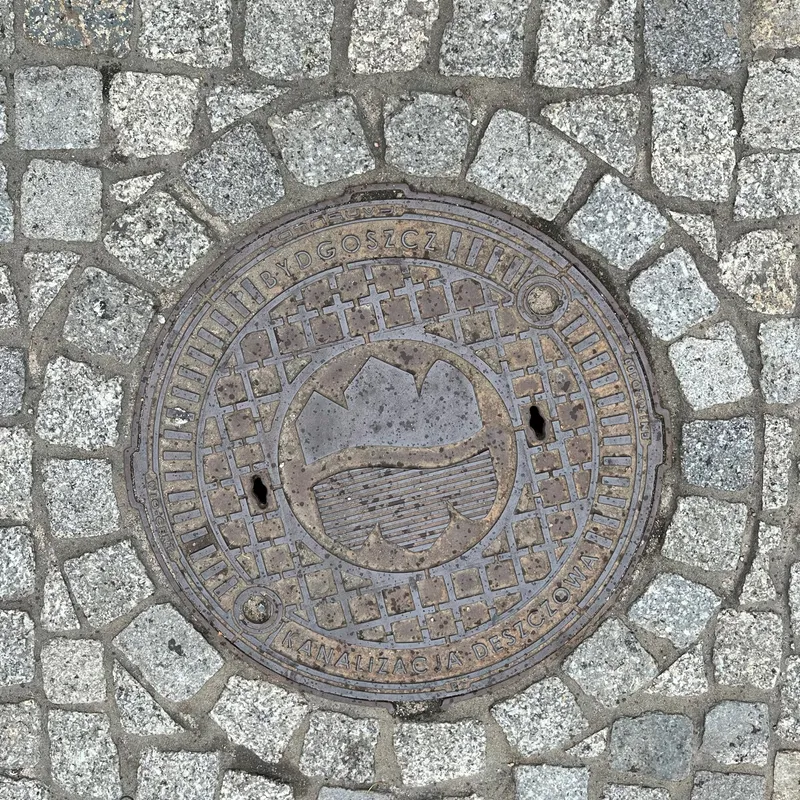
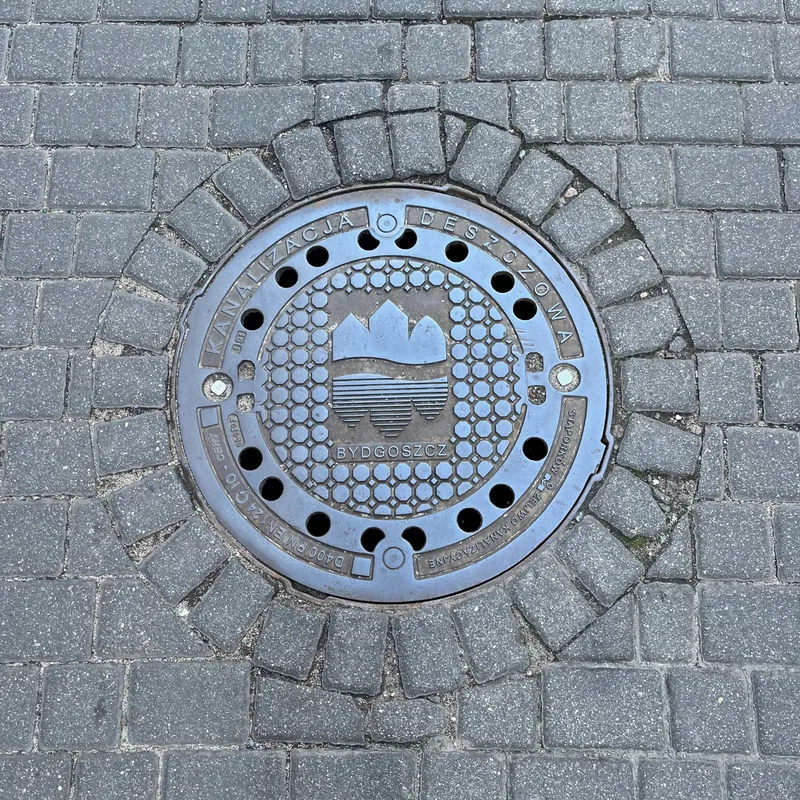
caryfukAround the circular metal hatch are irregular grey paving stones. The central emblem depicts a stylised river or watercourse, accompanied by the inscriptions 'KANALIZACJA DESZCZOWA' and 'BYDGOSZCZ' around the perimeter. This specimen, set in a paved area, represents a typical element of urban infrastructure, carefully documented by the Institute of Lidology.

caryfukcaryfuk
Bydgoszcz, Poland
Manhole cover in Bydgoszcz, Poland

caryfukThe central circular element, set within a rectangular concrete panel, displays a stylised symbol that could be interpreted as the letter 'K' or an electric lightning bolt. The surrounding paving consists of large rectangular blocks and smaller, irregular granite blocks, creating an interesting contrast of textures. This specimen represents typical urban infrastructure, carefully integrated into the pavement.

caryfukcaryfuk
Gdynia, Poland
Manhole cover in Gdynia, Poland

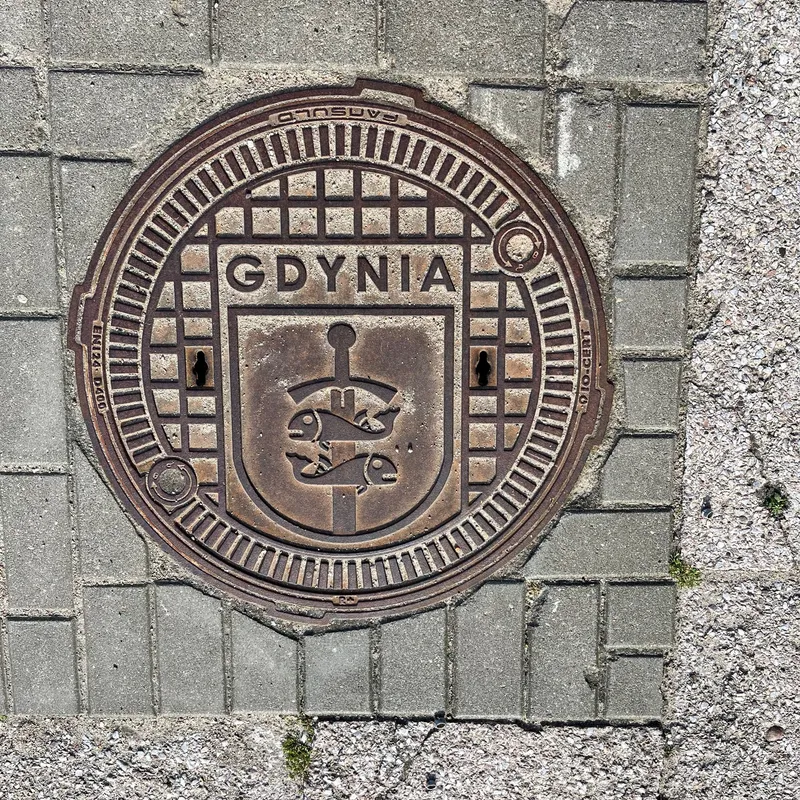
caryfukThe central emblem of this example of urban infrastructure, with two stylised fish on a vertical pole, clearly refers to the maritime identity of Gdynia. Surrounding geometric patterns and inscriptions such as 'FANSULD' and 'EN124-D400' provide key data for its taxonomic classification. The presence of two keyholes is also notable, suggesting the need for specific access to this underground system.

caryfukcaryfuk
Gdańsk, Poland
Manhole cover in Gdańsk, Poland

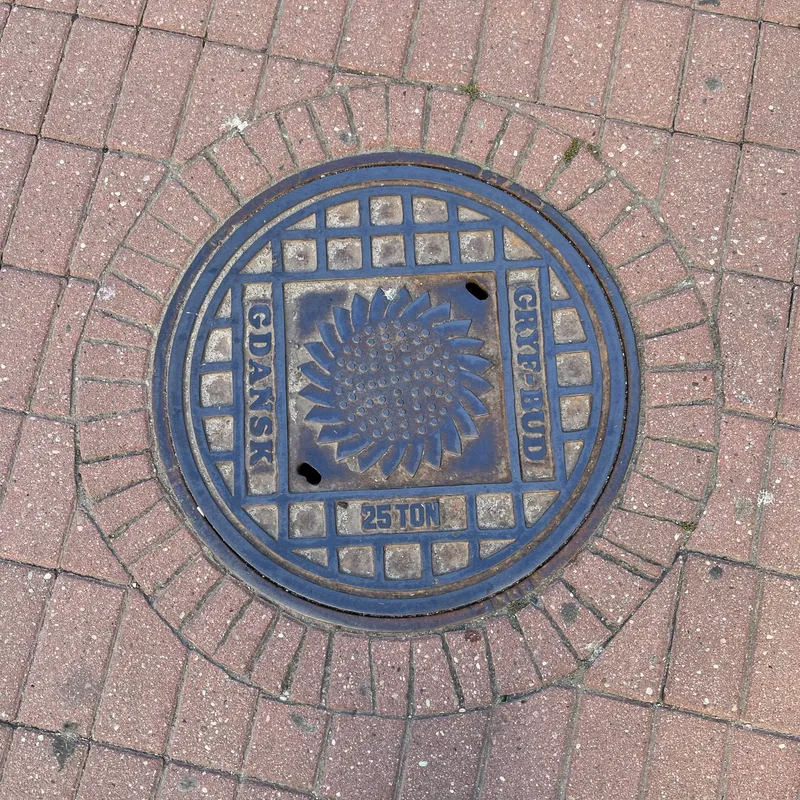
caryfukThe central motif of this specimen, resembling a stylized sunflower, is surrounded by a grid pattern and inscriptions. The inscriptions 'GDAŃSK' and 'GRIP-BUD', accompanied by the specification '25 TON', provide valuable data for the taxonomic classification of the Institute of Lidology. This robust structure is set in red brick paving, indicating its integration into the urban environment.

caryfukcaryfuk
Gdańsk, Poland
Manhole cover in Gdańsk, Poland

caryfukThe central emblem of this specimen reveals stylized mountains above a body of water, surrounded by a repetitive octagonal pattern. The inscription 'BYDGOSZCZ' clearly identifies the geographical origin, which is crucial for the Institute of Lidology when cataloging urban artifacts. The surrounding paving of grey blocks creates a contrasting texture.

caryfukcaryfuk
Bydgoszcz, Poland
Manhole cover in Bydgoszcz, Poland

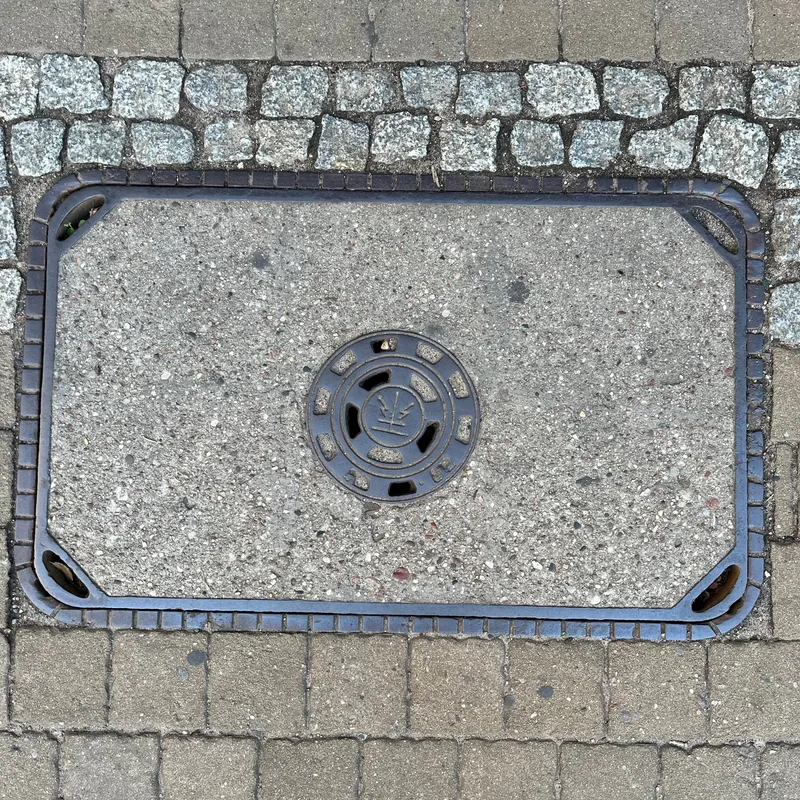
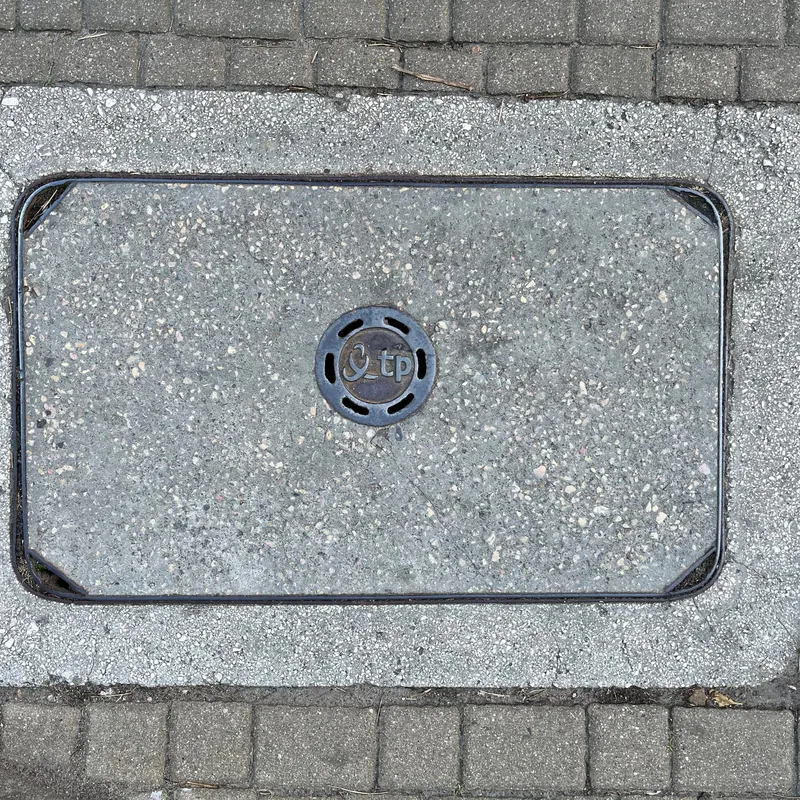
caryfukA rectangular concrete slab, bordered by a dark metal frame, presents itself as an exemplar of urban infrastructure. Its surface, a mosaic of grey aggregate, is centrally interrupted by a circular metal insert bearing the inscription 'CEP'. The Institute of Lidology would classify this artifact as functional, with minimal aesthetic ambitions, yet with robust construction.

caryfukcaryfuk
Bydgoszcz, Poland
Manhole cover in Bydgoszcz, Poland

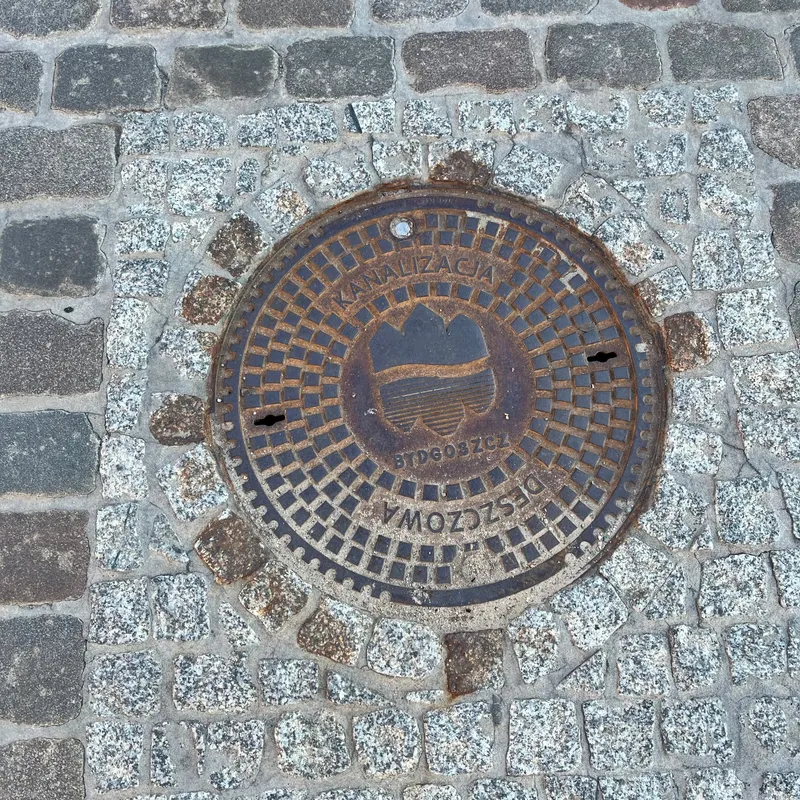
caryfukCobblestones of rough granite surround this circular cast-iron specimen, whose surface is decorated with a geometric pattern and distinctive lettering. The inscriptions KANALIZACJA and BYDGOSZCZ clearly identify its regional affiliation and primary function. The central emblem with waves and stylised mountains, typical of urban heraldry, adds an unexpected visual depth to this functional element, which is always a pleasing discovery for the study of philology.