Skip to content

NLManhole covers in Netherlands

Manhole cover in The NetherlandsNewTOP

etienne-van-den-homberghThe coats of arms of Dutch municipalities are all described on the Wikipedia page “Coats of Arms from A to Z,” including that of the municipality of Weert. Here is a brief explanation of two notable elements. In heraldry, the inverted V is called a chevron, and in the textile world, a chevron is a weaving pattern. Weert had a thriving cloth industry in the late Middle Ages. The three horns above the chevron refer to the Counts of Horn, who ruled Weert for a long time. One of these counts is all too well known in the Netherlands from our national history: in 1568, he was beheaded on the Grand Place in Brussels for rebelling against Philip II.
etienne-van-den-homberghetienne-van-den-hombergh
Echt, Netherlands
Manhole cover in Echt, NetherlandsNewTOP

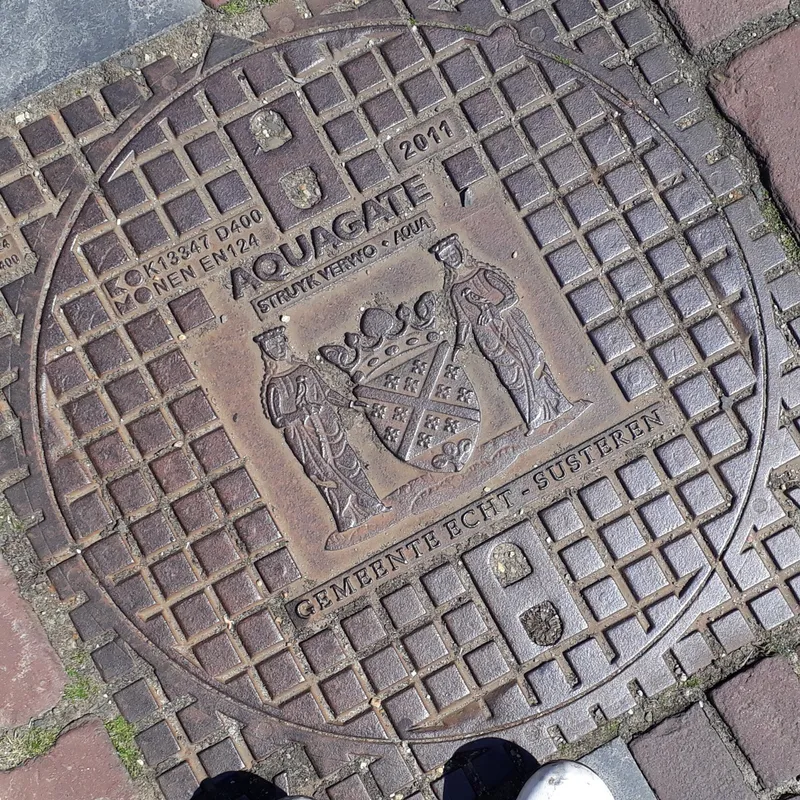
etienne-van-den-homberghHeraldry of the World points out that this is a merger coat of arms. In 2003, the municipalities of Echt and Susteren merged. The elegant sisters from Susteren were given a dominant place in the new design. Very subtly, the alder cones are also under the shield. Echt provided the shield with the large St. Andrew's cross and the twelve small crosses.

etienne-van-den-homberghetienne-van-den-hombergh
Grubbenvorst, Netherlands
Manhole cover in Grubbenvorst, NetherlandsNewTOP

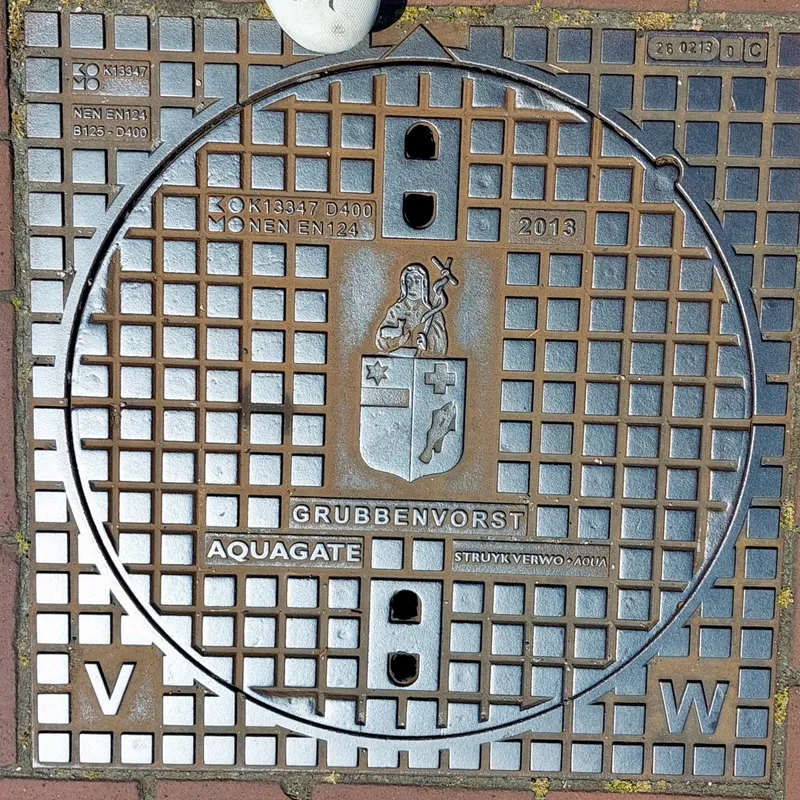
etienne-van-den-homberghThe coat of arms is depicted a bit small on the lid, which is a shame because there are quite a few symbols and figures on the coat of arms itself. The fish is striking. That is a perch. Behind and above the shield is John the Baptist with the lamb on his arm. There is a dedicated Wikipedia page for the coat of arms of Grubbenvorst.

etienne-van-den-homberghetienne-van-den-hombergh
Oostrum, Netherlands
Manhole cover in Oostrum, NetherlandsNewTOP

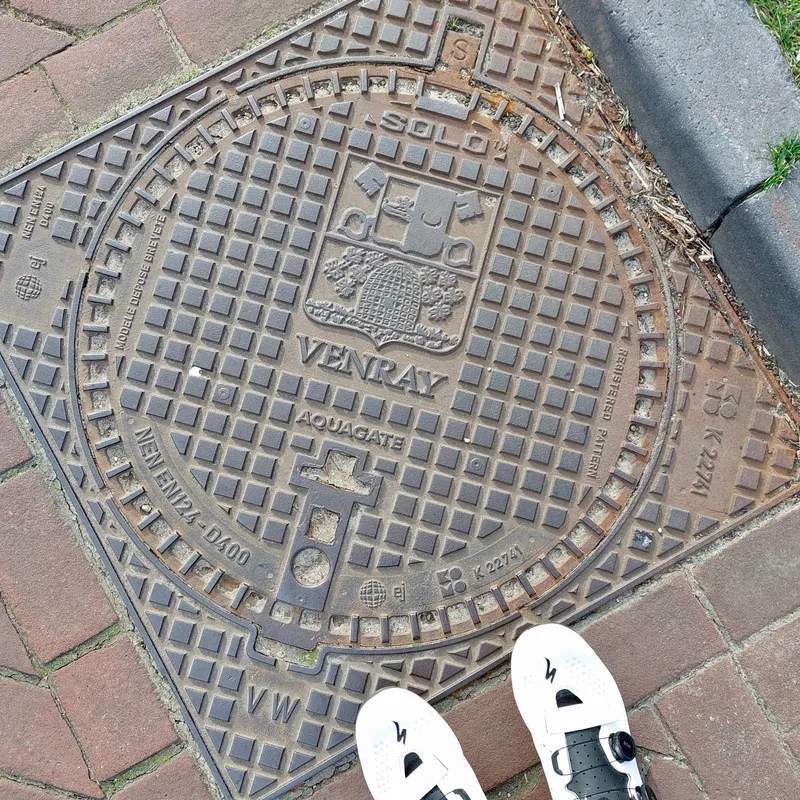
etienne-van-den-homberghThe municipality of Venray has designed a very fascinating coat of arms. The beehive symbolizes the beekeeping that once characterized the region. Ten bees buzz around the hive, representing the municipality’s ten villages—Oostrum is one of them. According to Venray’s Coat of Arms Wiki, there has been quite a bit of debate about the other elements of the design. The keys, of course, represent the local patron saint, Saint Peter. That curious little head between the keys might just be the head of the Gelderland lion. The small mark next to it represents a waxing moon or a “wassenaar,” and it was added in reference to the Roermond chapter.

etienne-van-den-homberghetienne-van-den-hombergh
Boxmeer, Netherlands
Manhole cover in Boxmeer, NetherlandsNewTOP

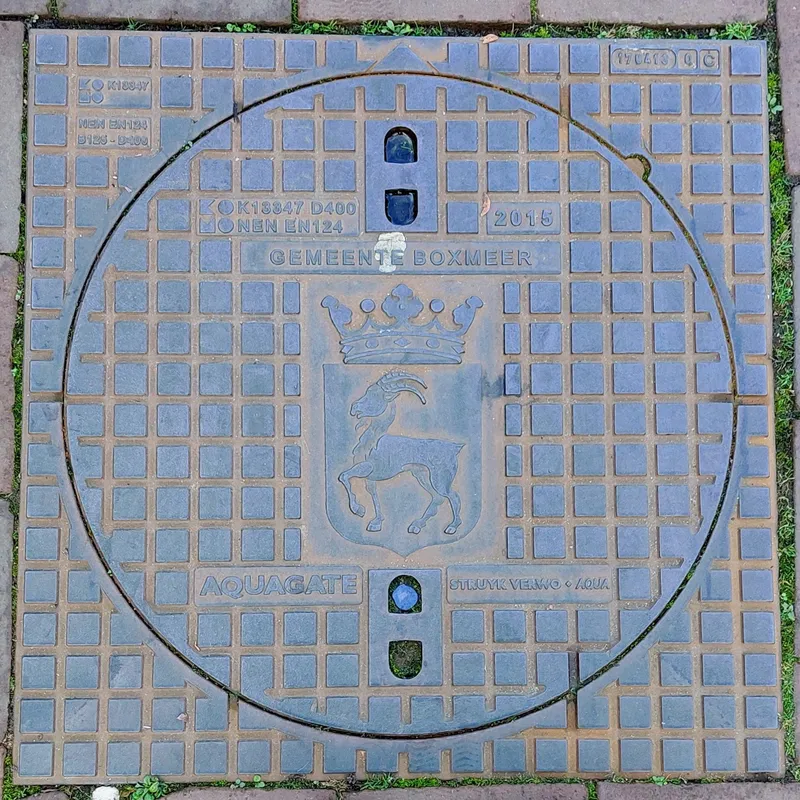
etienne-van-den-homberghSince 2022, Boxmeer has been part of the municipality of Land van Cuijk; prior to that, it was an independent municipality that used this coat of arms. Incidentally, the coat of arms appeared in various versions, but always featured a goat. The goat refers to Jan Bok, the first free lord of Boxmeer. It’s a fine example of a “speaking” coat of arms. There’s actually something interesting about one of this goat’s legs. Curious to know what it is? Read more on Wikipedia.

etienne-van-den-homberghetienne-van-den-hombergh
Oldenzaal, The Netherlands
Manhole cover in Oldenzaal, The NetherlandsNewTOP

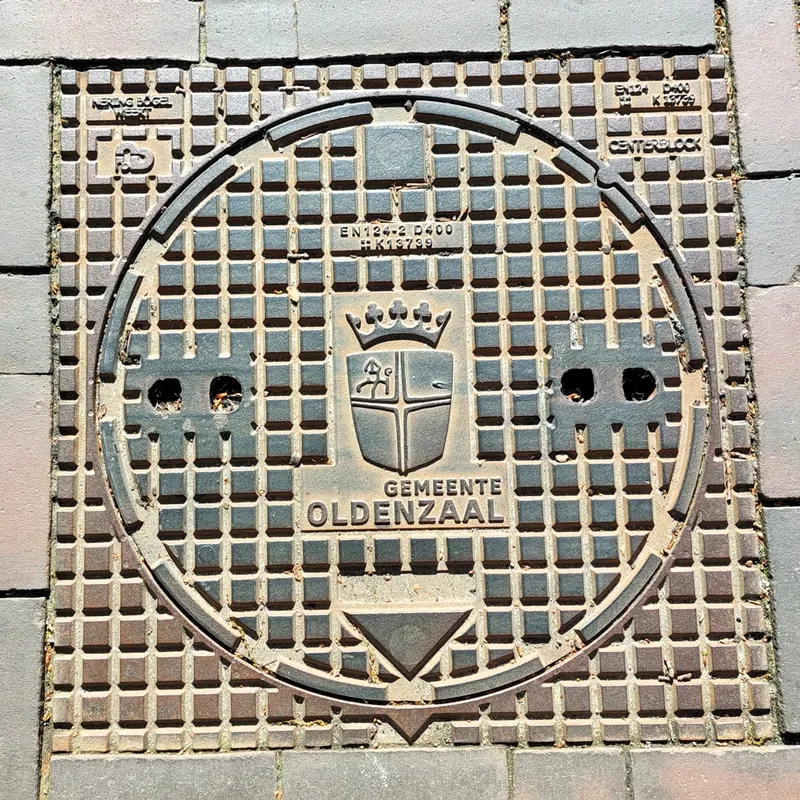
etienne-van-den-homberghDe Wapenwiki wijst de lezer er duidelijk op dat het Oldenzaalse wapen van de gemeente is en niet van de stad Oldenzaal. Het verschil zit hem in de kleuren. De afgebeelde geestelijke in het eerste kwartier is voor gemeente en stad wel dezelfde. Aangenomen wordt dat het bisschop Balderik van Utrecht is. In 954 bracht hij relieken van de heilige Plechelmus naar Oldenzaal en stichtte er een kapittel. Op de deksel staat Balderik er wat vervormd bij.