Skip to content

Manhole covers in Porto

caryfukcaryfuk
Porto, Portugal
Manhole cover in Porto, Portugal

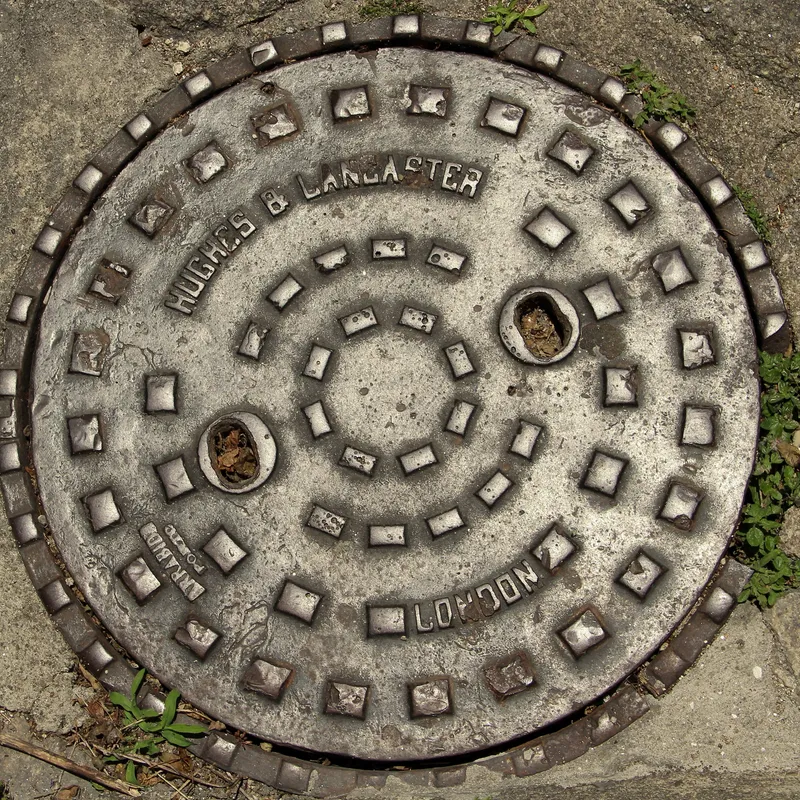
caryfukThe metal surface is dotted with concentric circles of raised rectangular blocks, creating a robust yet aesthetically interesting pattern. The inscriptions 'HUGHES & LANCASTER' and 'LONDON' testify to British engineering, while the partially visible word 'ARABIA' suggests the fascinating geographical scope of this example's original destination. The Institute of Lidology would certainly appreciate this visual chronicle of industrial history.
caryfukcaryfuk
Porto, Portugal
Manhole cover in Porto, Portugal

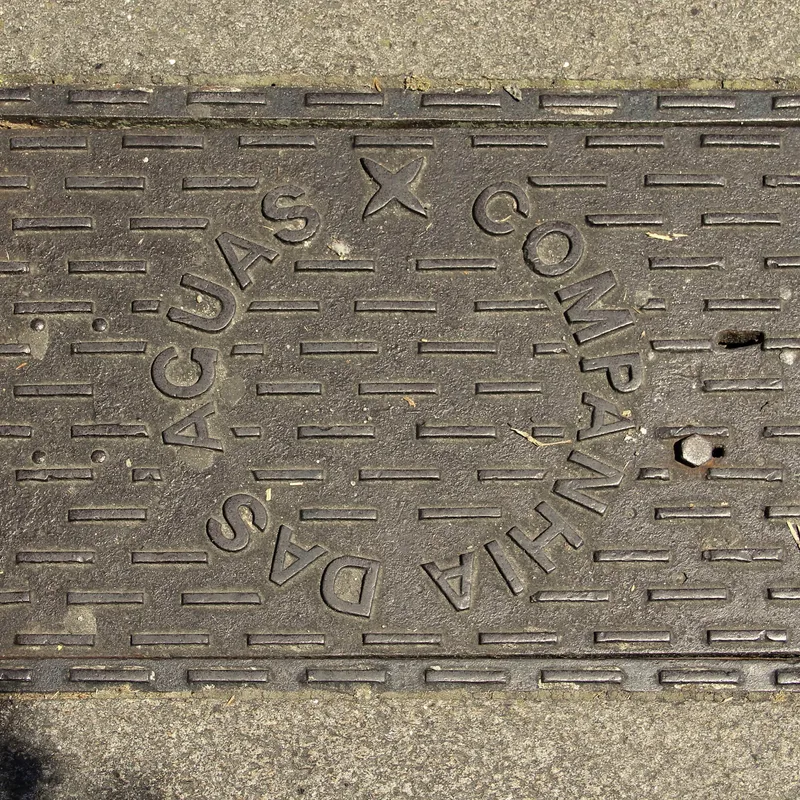
caryfukA circular inscription 'AGUAS X COMPANHIA DAS' dominates this manhole cover specimen, surrounded by a regular grid of short horizontal stripes. Morphological analysis of the surface reveals signs of long-term exposure to atmospheric influences, which is typical for urban infrastructure.

caryfukcaryfuk
Porto, Portugal
Manhole cover in Porto, Portugal

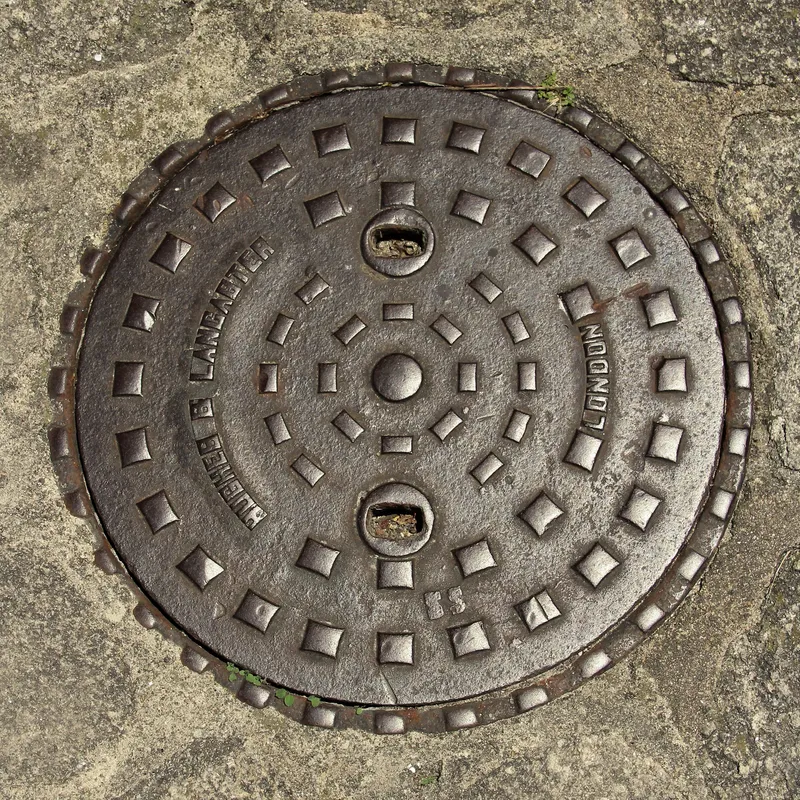
caryfukA circular metal plate with a distinctive geometric pattern, formed by concentric circles of square protrusions, rests in a rough concrete pavement. The inscriptions 'HUGHES & LANCASTER' and 'LONDON' indicate the British provenance of this example, which the Institute of Lidology is pleased to include in its collection. The obvious wear and the date '85 evoke a rich history of engineering, probably dating from the late 19th century.

caryfukcaryfuk
Porto, Portugal
Manhole cover in Porto, Portugal

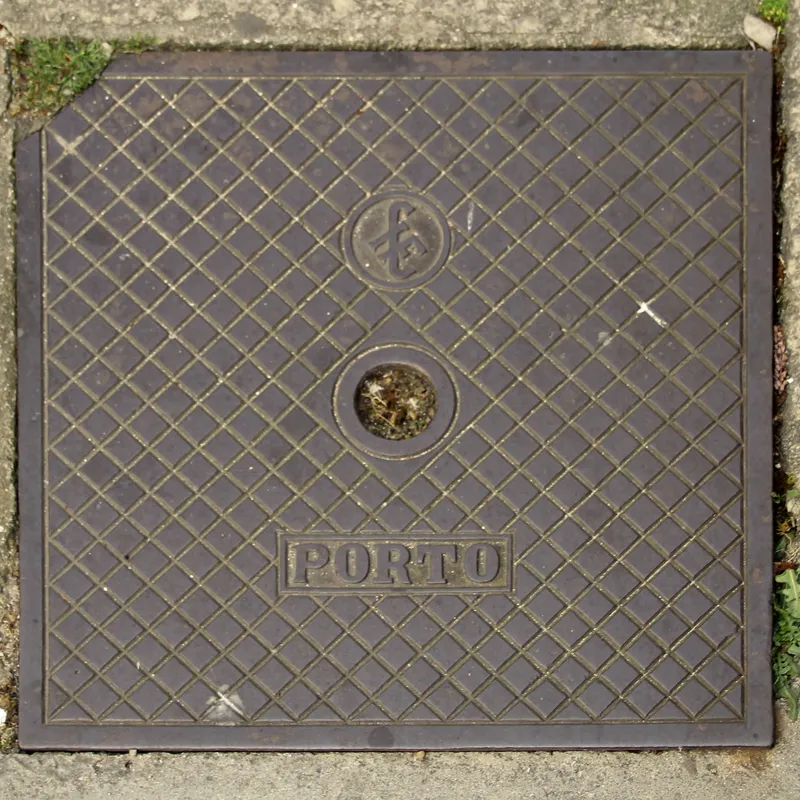
caryfukA grid pattern with diamonds covers the entire surface of this specimen, indicating its functional, non-slip nature. The centrally placed logo, resembling the stylised letters 'EP' or 'FP', and the inscription 'PORTO' in a rectangular frame identify its geographical and probably utilitarian origin. This combination of design elements provides valuable data for the study of urban infrastructure, as the Institute of Lidology would confirm.

caryfukcaryfuk
Porto, Portugal
Manhole cover in Porto, Portugal

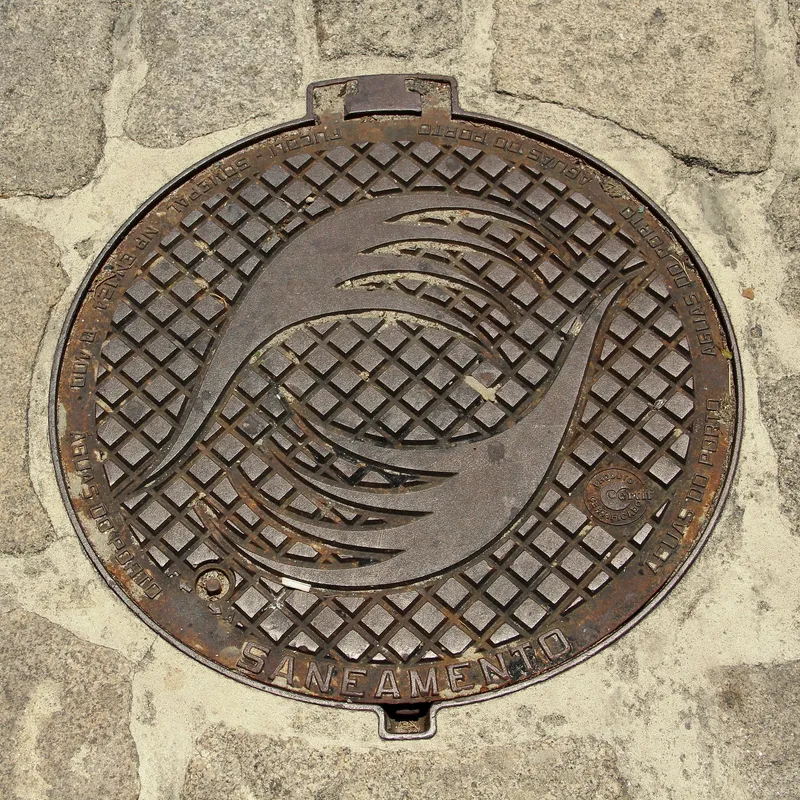
caryfukOn this specimen, the dominant central motif is stylized waves, surrounded by a diamond-patterned grid. The edge bears a series of inscriptions documenting its origin and technical specifications. The surface exhibits significant patina, testifying to its long-term exposure in an urban environment.