Skip to content

Manhole covers in Copenhagen

caryfukcaryfuk
Copenhagen, Denmark
Manhole cover in Copenhagen, Denmark

1 like

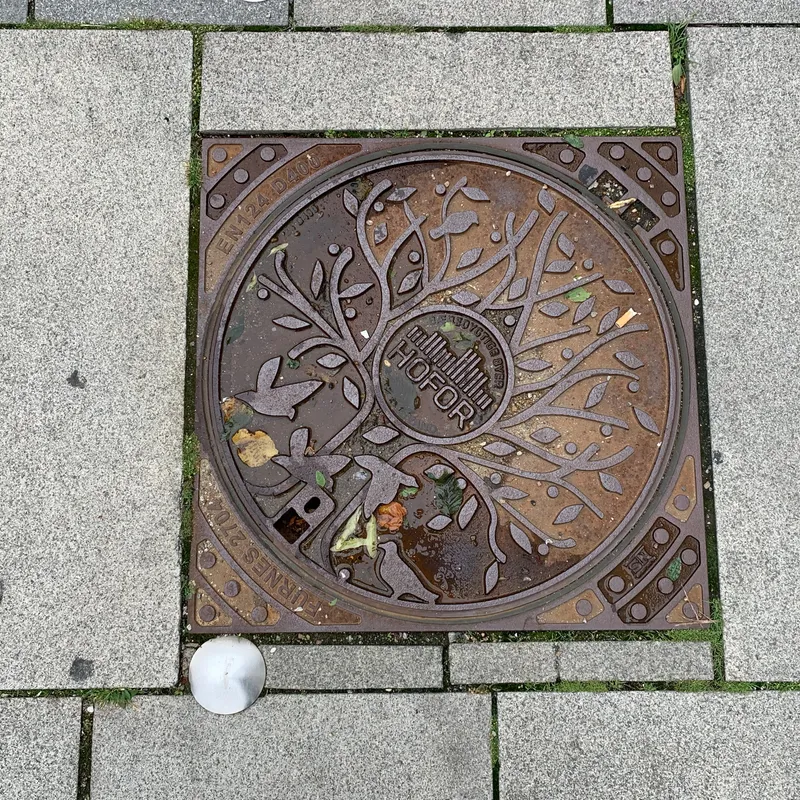
caryfukThis example of cast iron infrastructure is dominated by a complex tree motif with branching roots and leaves, suggesting a deep connection to nature or ecological principles. The central circular element bears the inscription 'HOFOR' and 'VEDYGTIGE BYER', which could refer to sustainable urban solutions. The perimeter is marked with the standards 'EN 124 D400' and the identifier 'FURNES 2704', which is key to the Institute of Lidology's classification.
caryfukcaryfuk
Copenhagen, Denmark
Manhole cover in Copenhagen, Denmark

1 like

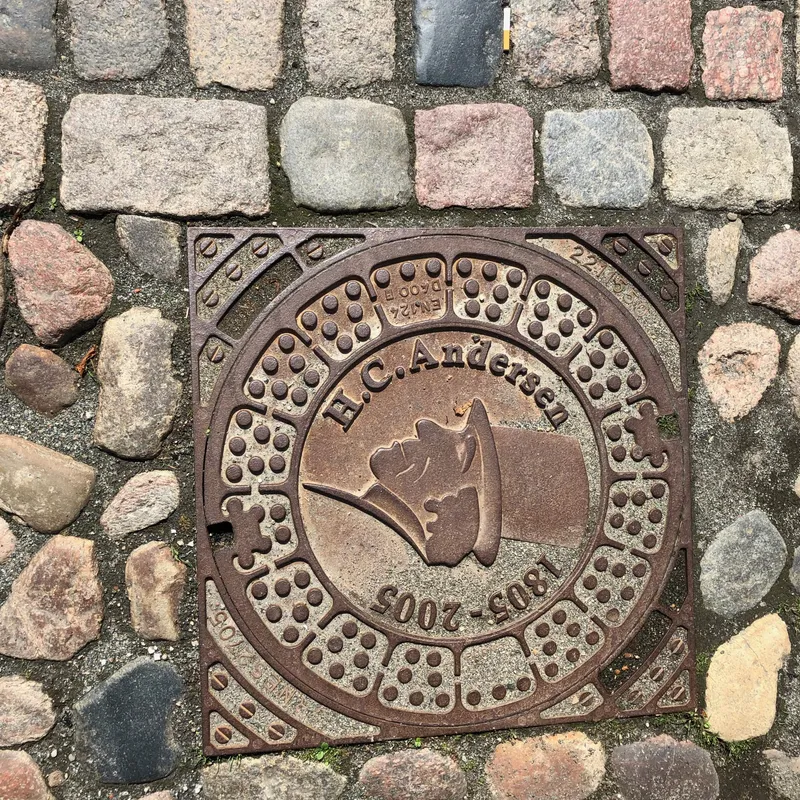
caryfukRelief portrait bust, probably H.C. Andersen, dominates this example of a cast-iron hatch set into a cobbled path. The surrounding cobblestones, varied in color and shape, suggest the historical context of the placement. The Institute of Lidology would note that the 1805-2005 dates on the hatch clearly refer to significant anniversaries, making it a commemorative artefact rather than a mere functional piece of infrastructure.

caryfukcaryfuk
Copenhagen, Denmark
Manhole cover in Copenhagen, Denmark

1 like

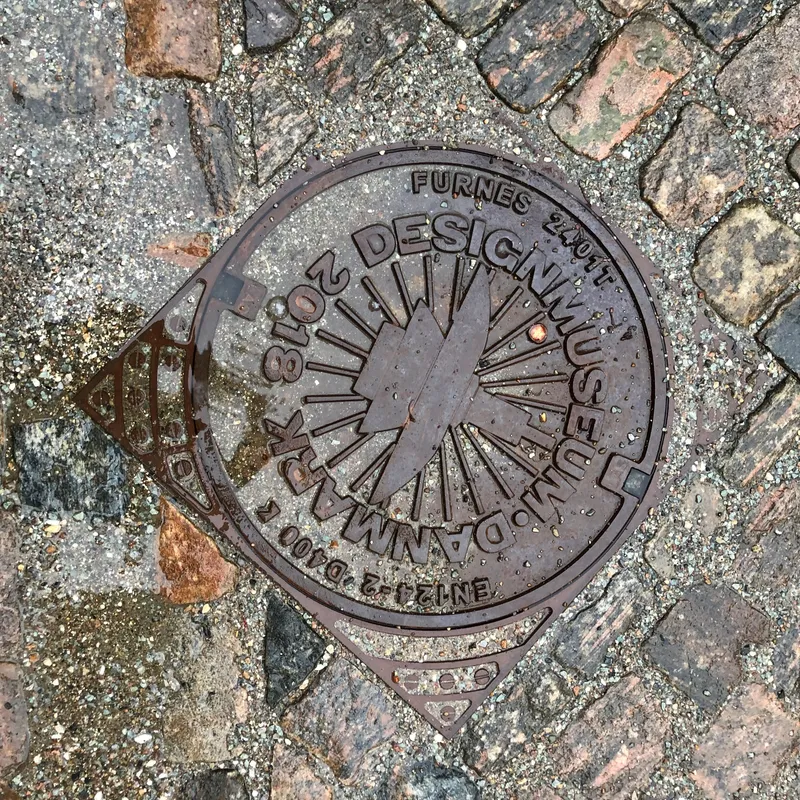
caryfukThe circular metal disc, set in wet pavement, bears an intricate embossed design with a central motif of a stylised sun or star. The inscriptions 'DESIGNMUSEUM DANMARK 2018' and 'FURNES' wind around it, making this example one of the most remarkable examples of urban art cast. The Institute of Lidology would certainly appreciate its aesthetic and functional integrity, despite its noticeable patina.

Manhole cover in DenmarkNewTOP

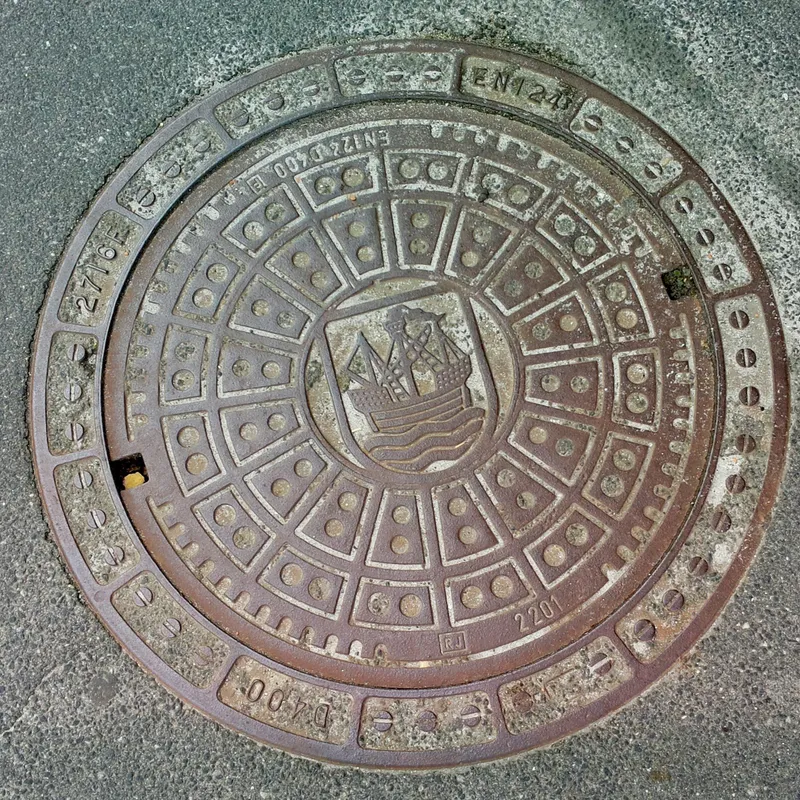
etienne-van-den-homberghThe coat of arms consists of a ship. The deeper meaning according to Heraldry of the World is that a ship also refers to the patron saint of the city AND patron of the boatmen's guild, and that is Olaf or Olof as he is called in the Netherlands.

caryfukcaryfuk
Copenhagen, Denmark
Manhole cover in Copenhagen, Denmark

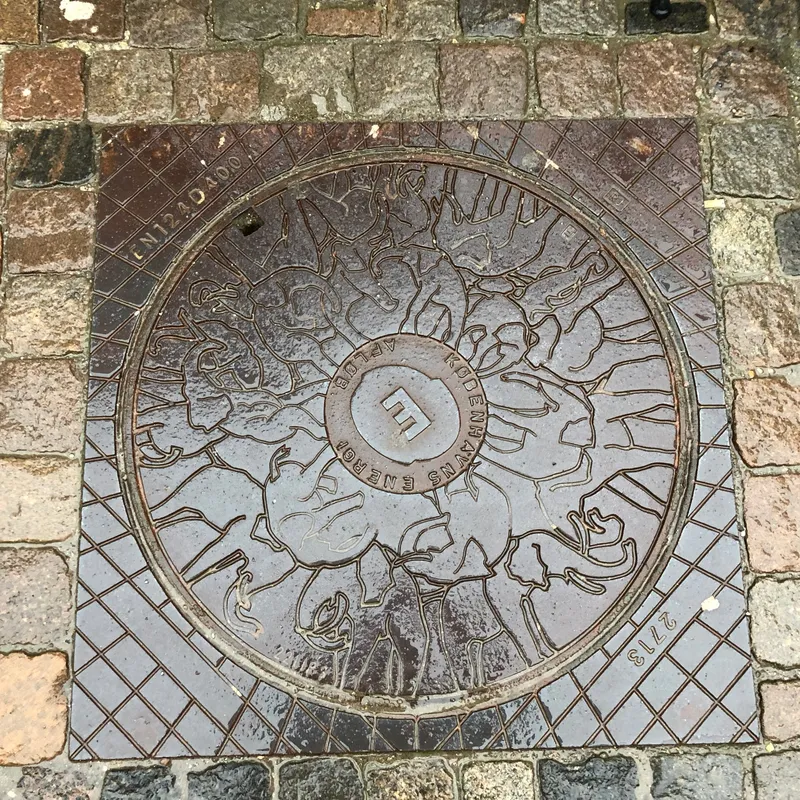
caryfukAn intricate relief of wild pigs spreads across the surface of this specimen, presenting an unexpected but visually captivating interpretation of urban fauna. The central circle bears the inscription 'KØBENHAVNS ENERGI AFLØB' and the designation 'EN124 D400', which, according to the analysis of the Institute of Humanology, confirms its robust construction and specific purpose in Copenhagen's infrastructure. The number '2713' at the bottom gives this artefact a unique identification.

caryfukcaryfuk
Copenhagen, Denmark
Manhole cover in Copenhagen, Denmark

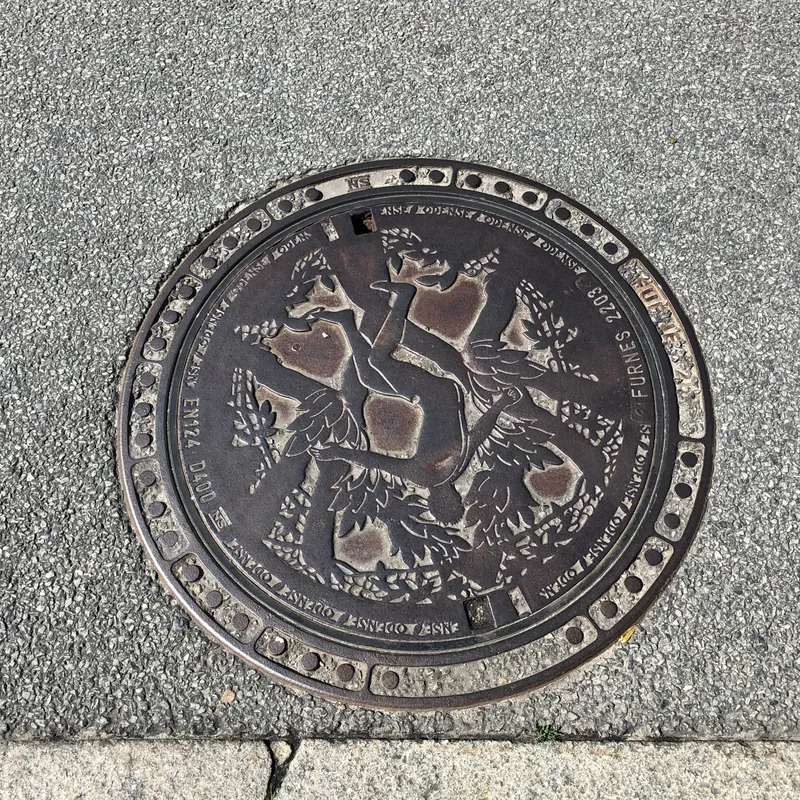
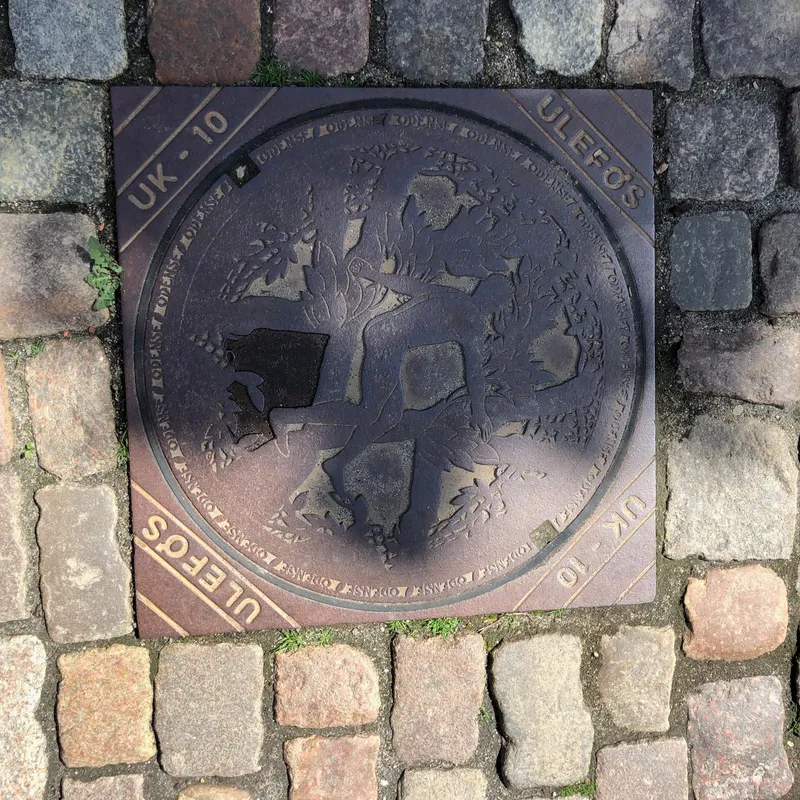
caryfukThe central relief of this specimen depicts a stylized figure intertwined with rich vegetation, evoking themes of nature and growth. The inscriptions 'ODENSE' and the technical designation 'EN124 D400' are repeatedly stamped around the perimeter to classify its load-bearing capacity. The presence of the name "FURNES" and the code "2203" indicates a specific manufacturer and model, a valuable indication for philological typology.

caryfukcaryfuk
Copenhagen, Denmark
Manhole cover in Copenhagen, Denmark

caryfukThis example of urban infrastructure is dominated by an intricate relief motif of a figure with lush vegetation, suggesting a deeper artistic intention than mere utilitarian function. The rim is flanked by the repeating inscription 'ODENSE', a geographical reference to the Danish city, while the markings 'UK - 10' and 'ULEFOS' provide valuable clues to its origin and specification. The entire artefact is set in a pavement of irregular stone cubes, emphasising its historical context and integration into the urban environment.

caryfukcaryfuk
Copenhagen, Denmark
Manhole cover in Copenhagen, Denmark

1 like

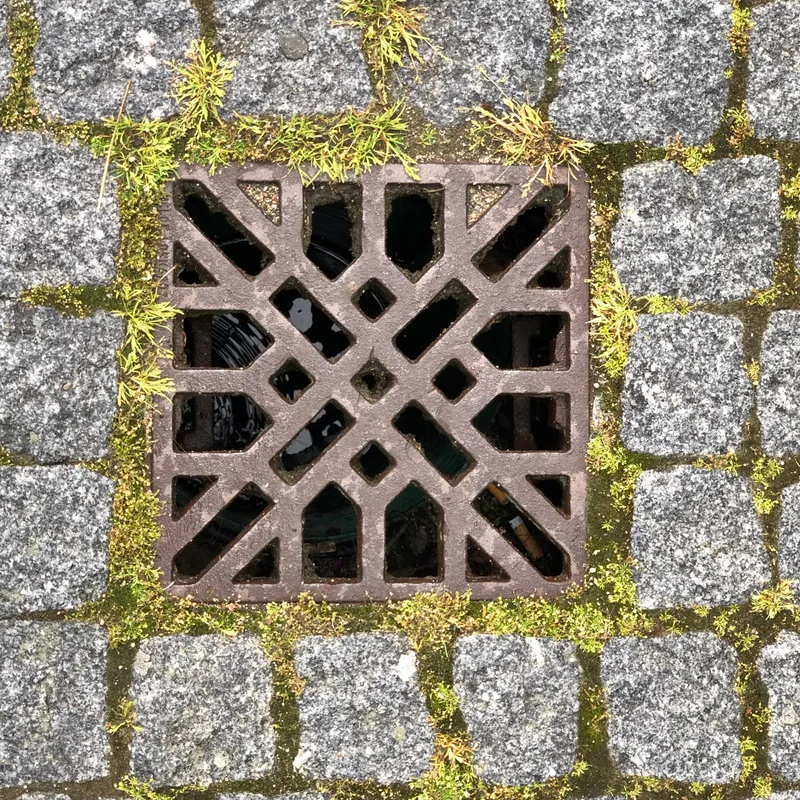
caryfukIn the centre of the paved area of grey granite cubes is a square cast-iron grate, whose ornamental grid shows a remarkable geometric symmetry. Vital vegetation flourishes between the joints of the paving and the edge of the grid, suggesting a long-standing interaction between the urban element and the natural environment. Below the surface of the grating, reflections of the water surface can be seen, which is typical of this type of urban artefact, as often emphasised by the Institute of Lidology in its field studies.

caryfukcaryfuk
Copenhagen, Denmark
Manhole cover in Copenhagen, Denmark

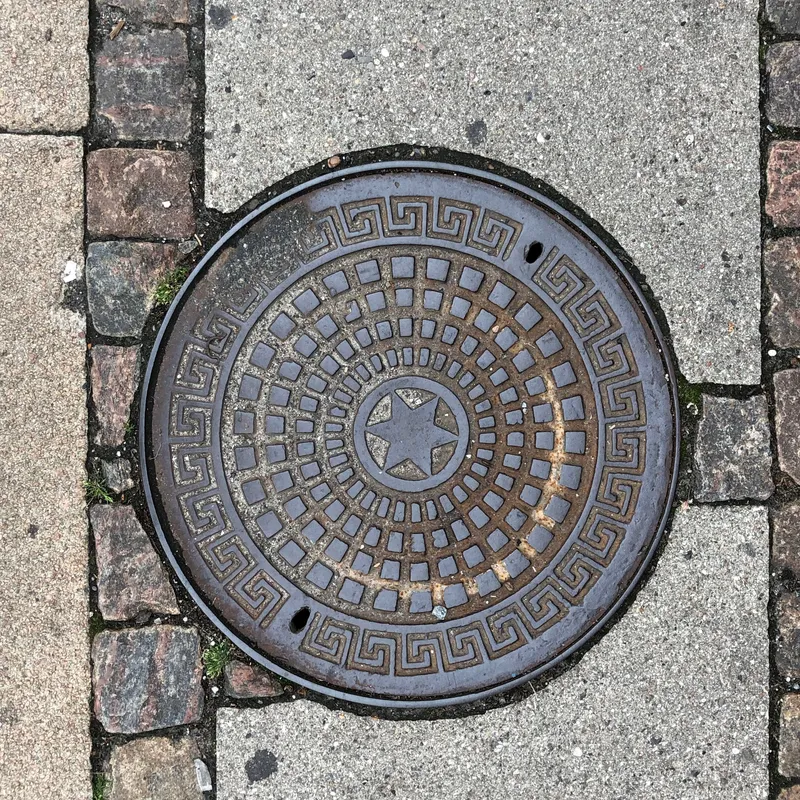
caryfukIn the center of this specimen, there is a five-pointed star, surrounded by concentric circles of square segments. The outer edge is adorned with a geometric meander pattern, reminiscent of ancient Greek motifs. The entire artifact is set into a combination of rough concrete and irregular paving stones, which suggests its long-term exposure to an urban environment.

caryfukcaryfuk
Copenhagen, Denmark
Manhole cover in Copenhagen, Denmark

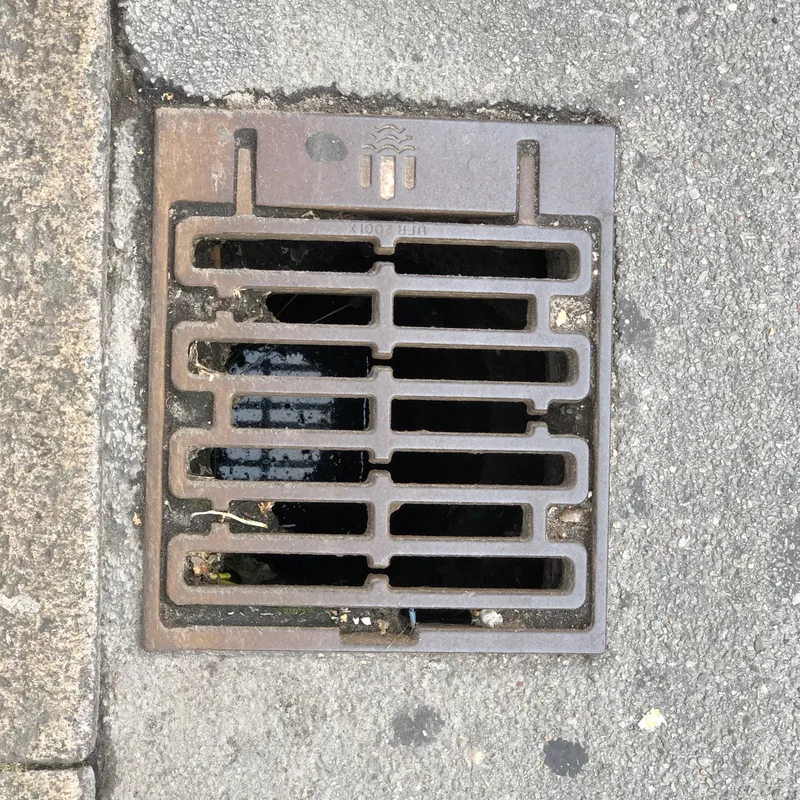
caryfukThe grid pattern of this specimen, made up of rectangular openings, effectively directs surface water into the underground system. A stylized logo with waves above three vertical columns is visible at the top, which, according to preliminary analyses by the Institute of Lidology, could symbolize water infrastructure. The inscription "UFR 2001 X" on one of the partitions then suggests either a model designation or a year of standardization, which is key to the dating of this artifact.