caryfukA rusty relief of fish and water lilies, surrounded by waves, dominates this circular surface, a typical example of a nature motif. The inscriptions clearly identify its function as a drainage of rainwater into watercourses with a warning against pollution. The Institute of Lidology would classify this specimen as an urban artefact with an environmental message, pointing to local environmental initiatives.
USManhole covers in United States
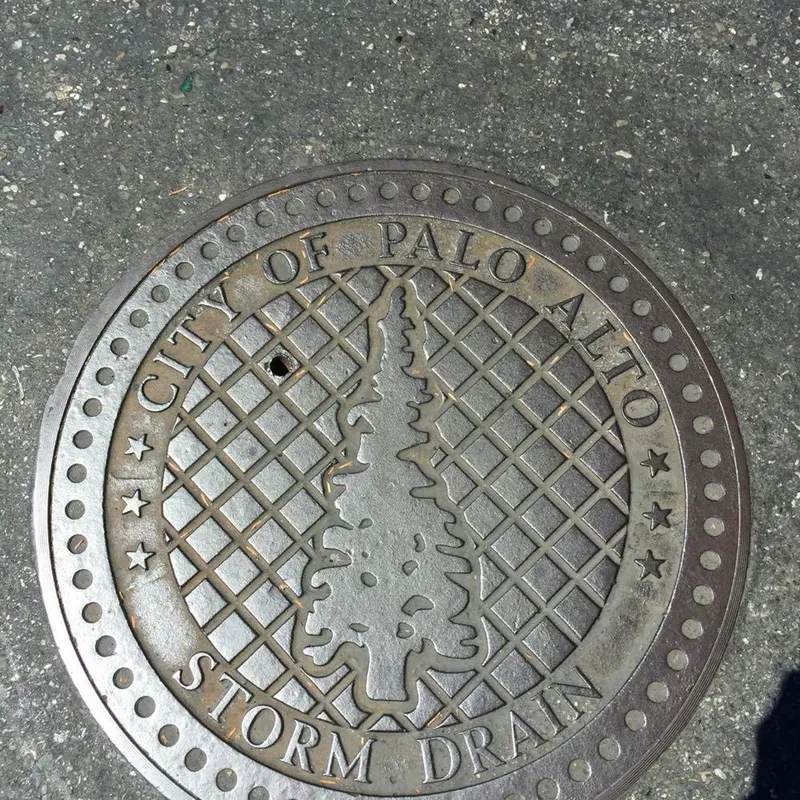
caryfukThe centre of the circular metal surface is dominated by the stylised outline of a coniferous tree, divided into two halves by a grid pattern. Around it stretch the inscriptions 'CITY OF PALO ALTO' and 'STORM DRAIN', separated by a row of small stars and dots that line the outer edge. The entire design is slightly worn but still clearly legible, set in a rough asphalt surface.
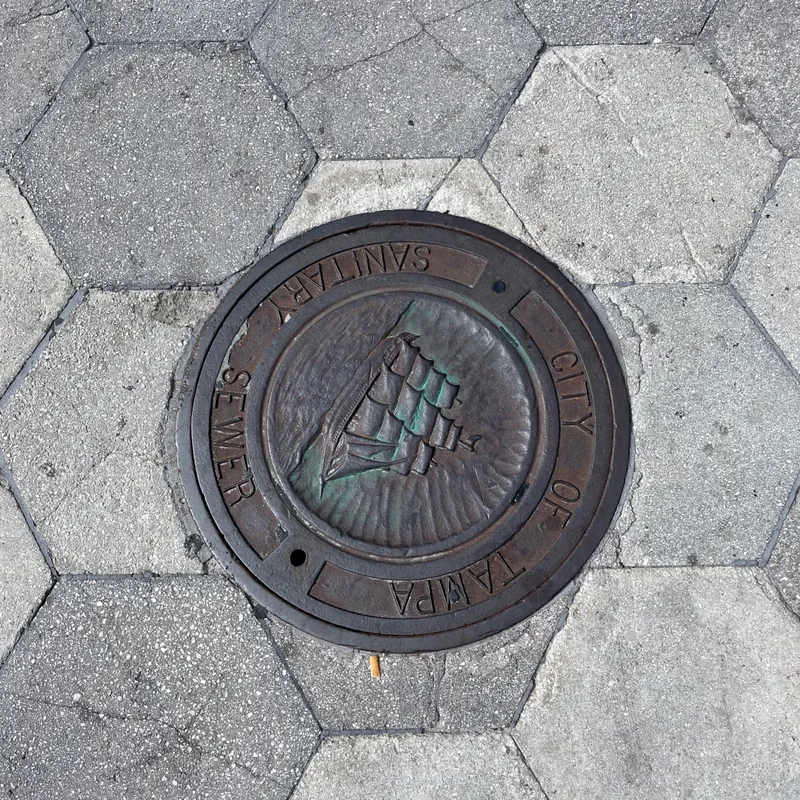
caryfukOn the surface of the grey hexagonal tiles there is a circular metal hatch, the central relief of which depicts a sailing ship with unfurled sails, a remarkable example of urban iconography. Around the rim the inscription 'SANITARY SEWER CITY OF TAMPA' is visible, identifying its functional purpose and the geographical affiliation of this example. The Institute of Lidology would classify this find as typical of a coastal metropolis with a rich maritime history.
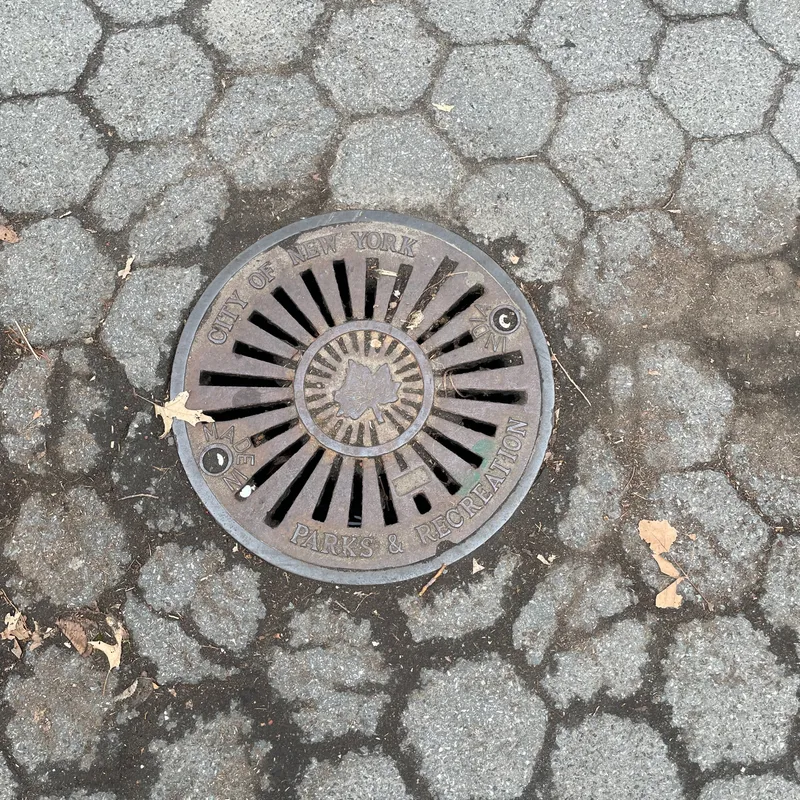
caryfukThe circular metal grating is set into a pavement of hexagonal concrete slabs that show signs of wear and cracks. The central leaf emblem, surrounded by radial slits, bears the inscriptions 'CITY OF NEW YORK' and 'PARKS & RECREATION', suggesting its municipal origins and function within a recreation zone. This example, as the Institute of Lidology would note, is a typical example of urban infrastructure where aesthetics give way to functionality, but with a certain hallmark of local identity.
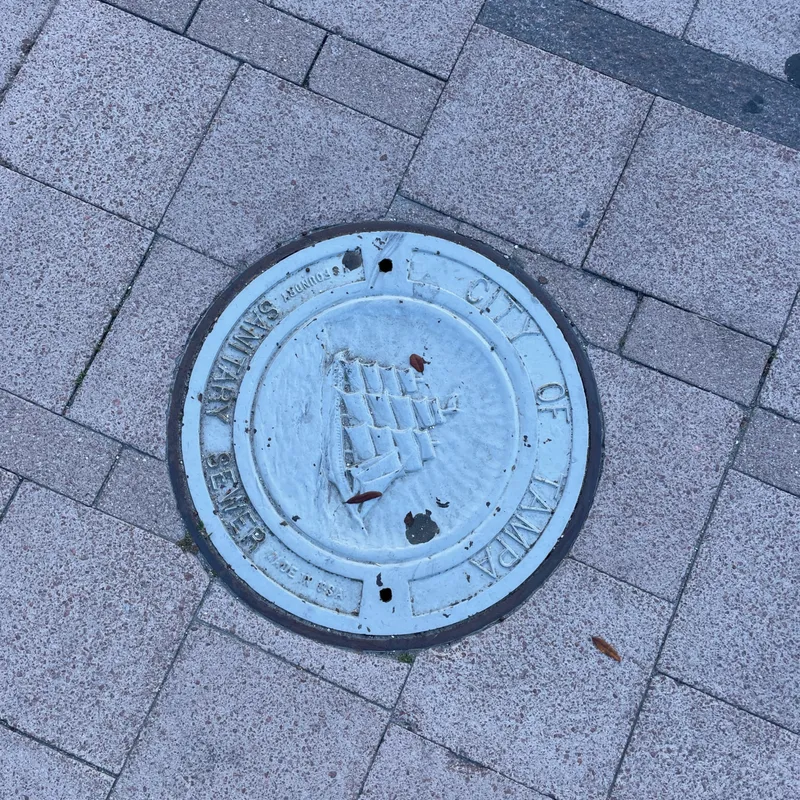
caryfukThe light blue painted circular specimen, examined by the Institute of Lidology, bears in its centre a relief of a ship surrounded by the inscription "CITY OF TAMPA". Around the outer edge, the inscriptions "SEWER SANITARY" and "WITH FOUNDRY" are visible, clearly defining its functional classification and origin. The surface exhibits numerous abrasions and occasional showing rust, indicating its robust but aesthetically tested existence in the urban landscape.
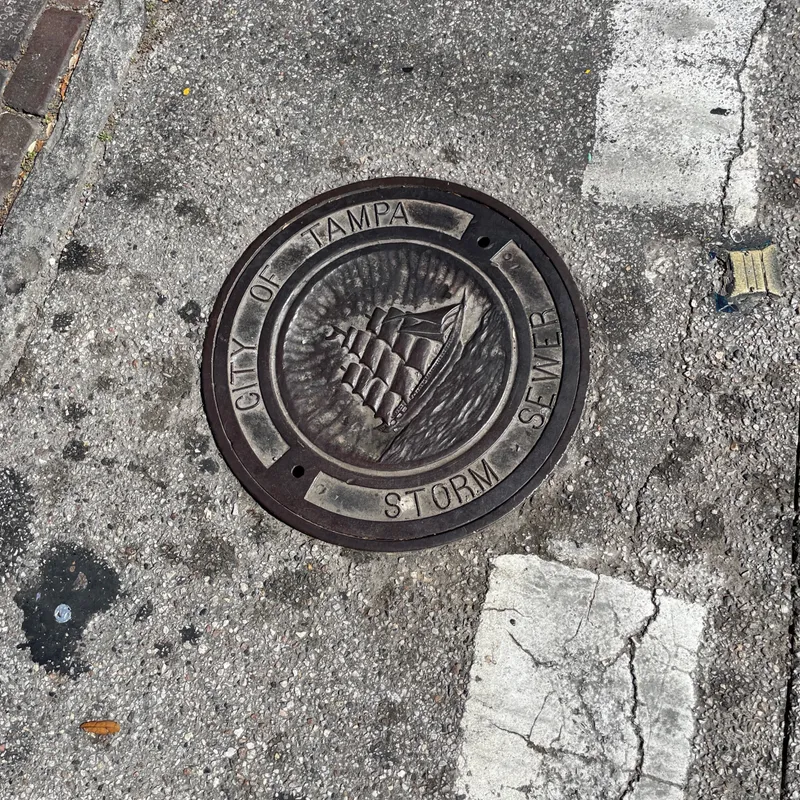
caryfukThe circular metal disc is set in rough asphalt, with the words "CITY OF TAMPA" and "STORM SEWER" emblazoned around the perimeter. The central relief depicts a sailing ship, an iconographic element typical of urban drainage systems. This specimen represents an interesting artifact of urban infrastructure, the study of which contributes to a philological understanding of urban design.
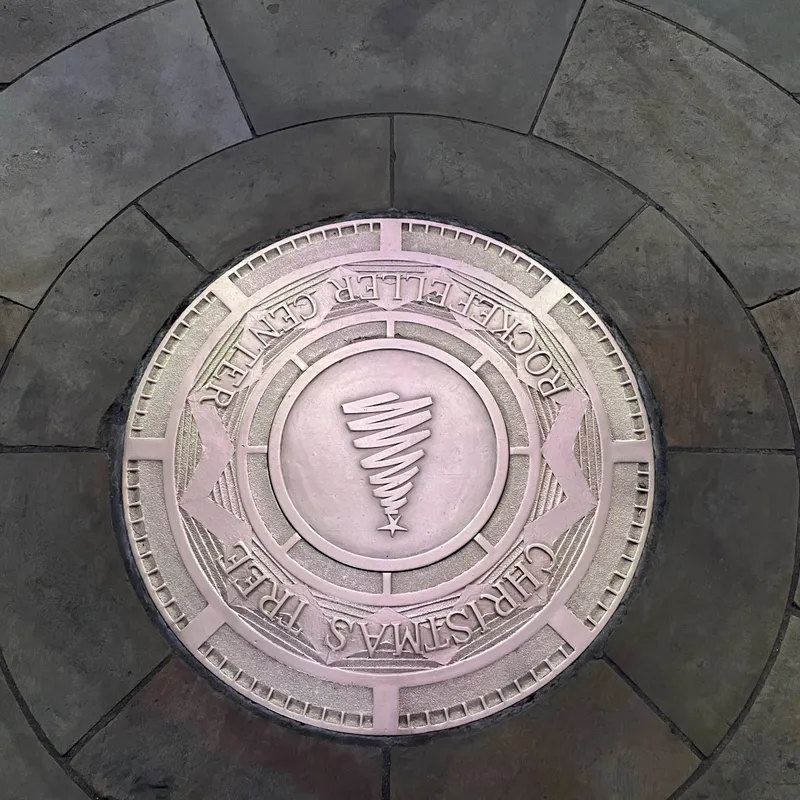
caryfukA central spiral motif, reminiscent of a stylized Christmas tree with a star at the tip, dominates this circular specimen. The surrounding inscription 'ROCKEFELLER CENTER CHRISTMAS TREE' clearly identifies its cultural significance and location. In terms of philology, this artefact represents an interesting example of urban symbolism where a functional element is transformed into a commemorative one.
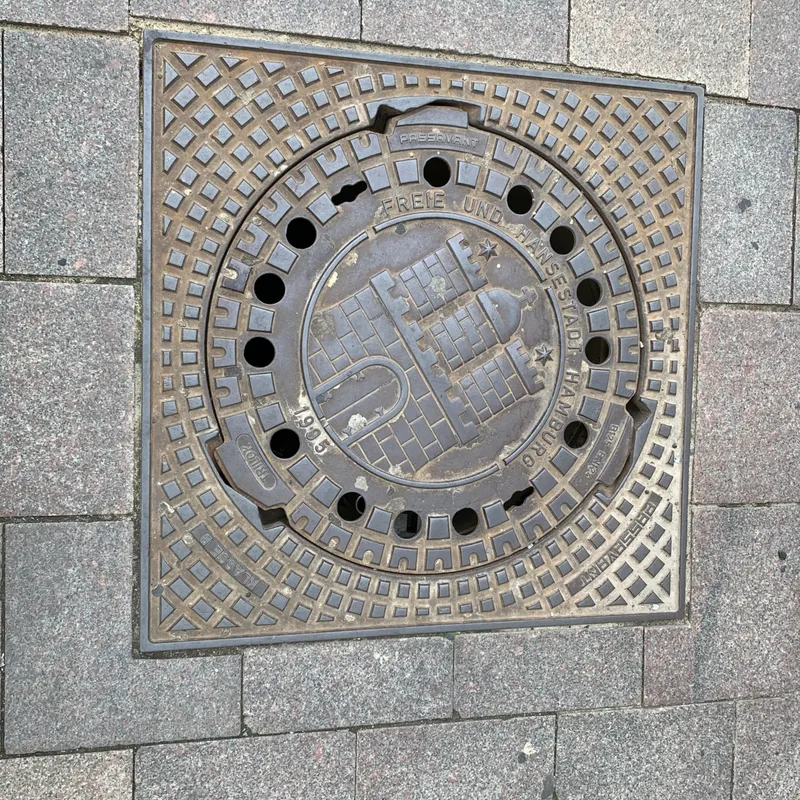
caryfukThe central emblem depicts a stylized building, probably a town hall, surrounded by the text "FREIE UND HANSESTADT HAMBURG". The edge of the manhole cover is adorned with an intricate geometric pattern of squares and rhombuses, which adds significant visual depth to this specimen. Signs of common wear and patina are visible on the surface, which is typical for cast iron manhole covers.
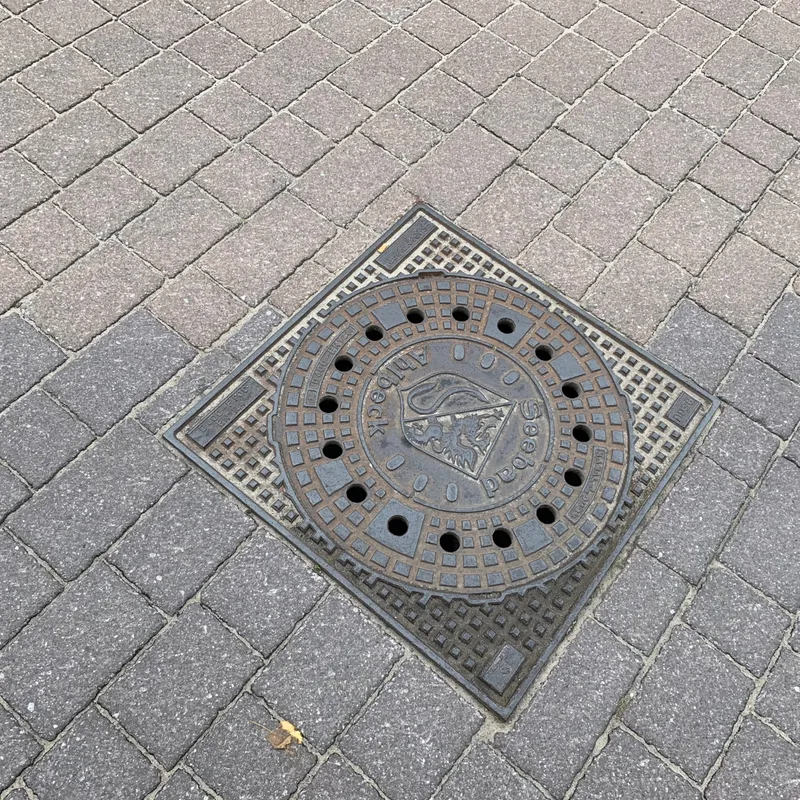
caryfukOn the cobbled path there is a circular cast-iron hatch with a distinctive coat of arms in the middle, depicting a heraldic creature with a fish tail. Around the coat of arms are the inscriptions 'Ahlbeck' and 'Seebad', indicating its geographical affiliation to a German spa town. The Institute of Lidology would classify this specimen as a typical example of urban infrastructure with local heraldry.
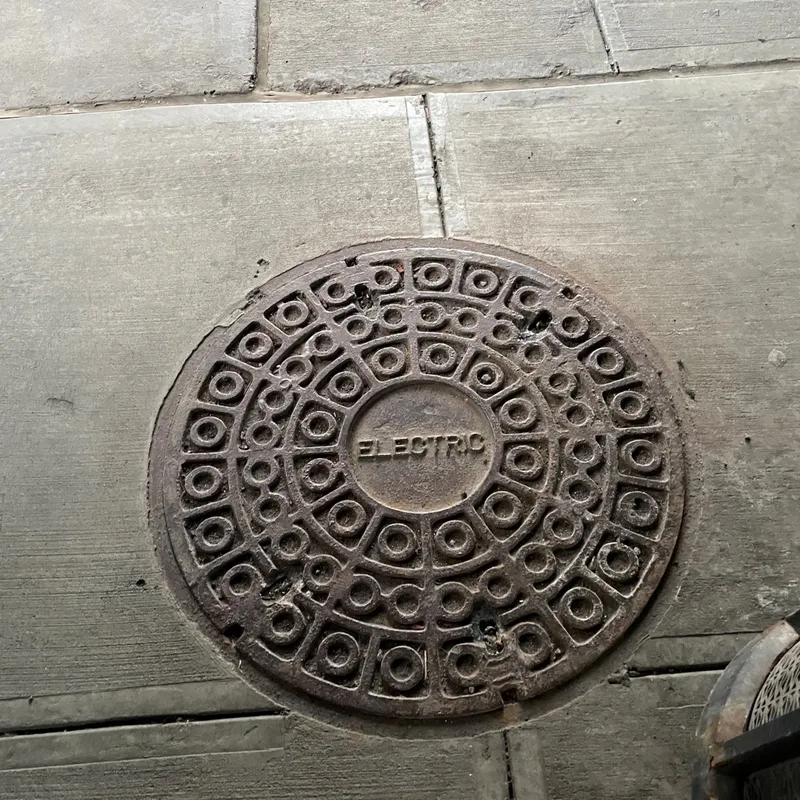
caryfukA complex circular pattern with repeating rings and square segments dominates this example of an engineering manhole cover. The central inscription "ELECTRIC" clearly identifies its function, although the surface bears signs of significant wear and oxidation, testifying to long-term exposure to the elements.
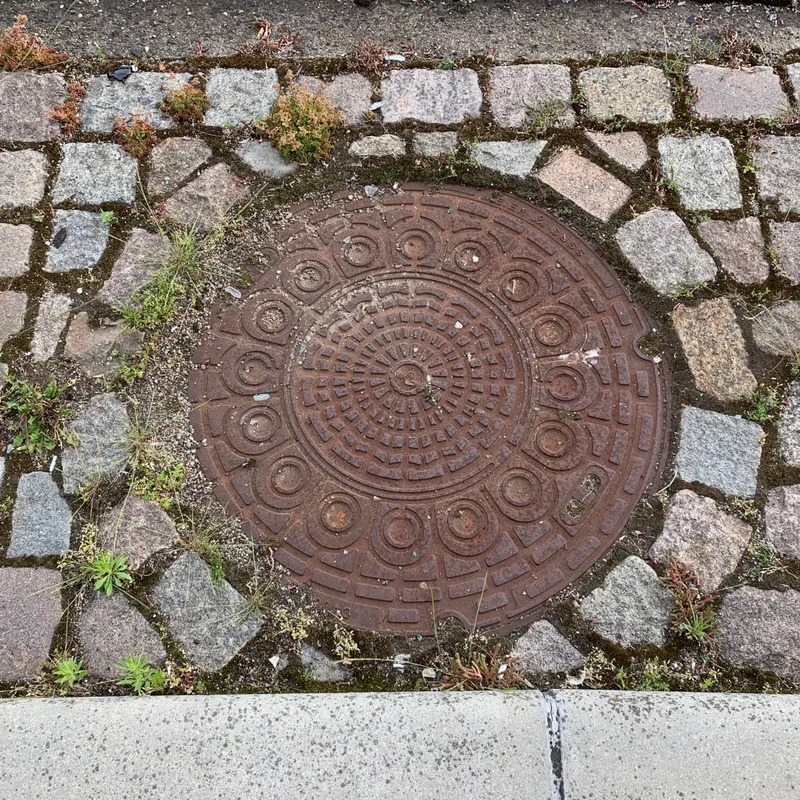
caryfukA complex circular pattern, reminiscent of an ancient labyrinth, dominates this example of urban infrastructure, surrounded by irregular cobblestones and lush vegetation. The rusted patina indicates long-term exposure to atmospheric influences, a valuable indicator for chronological analysis. The ubiquitous signs of wear and tear indicate its robust functionality in a dynamic urban environment.
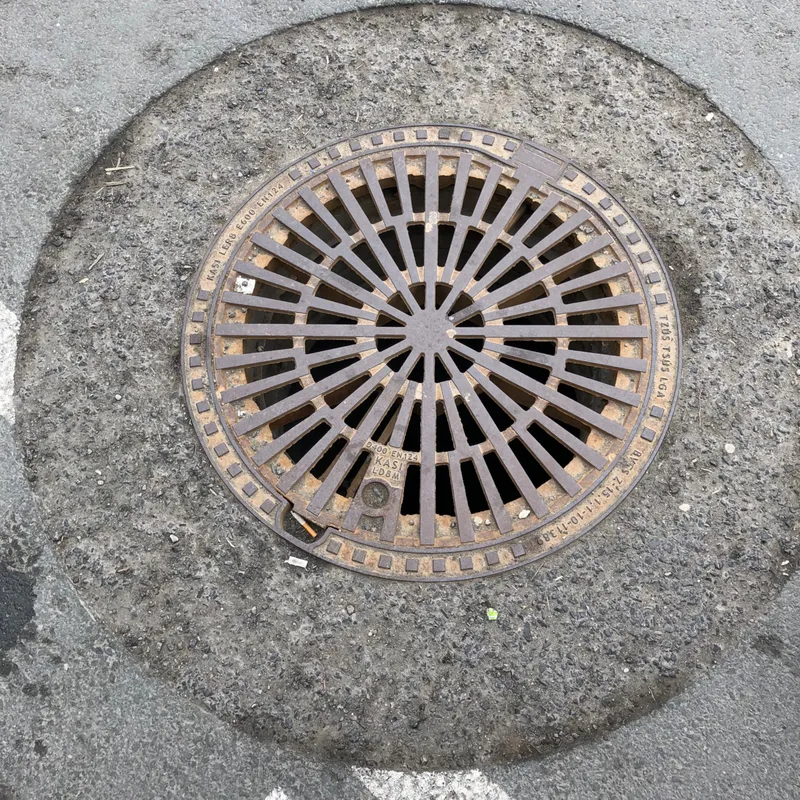
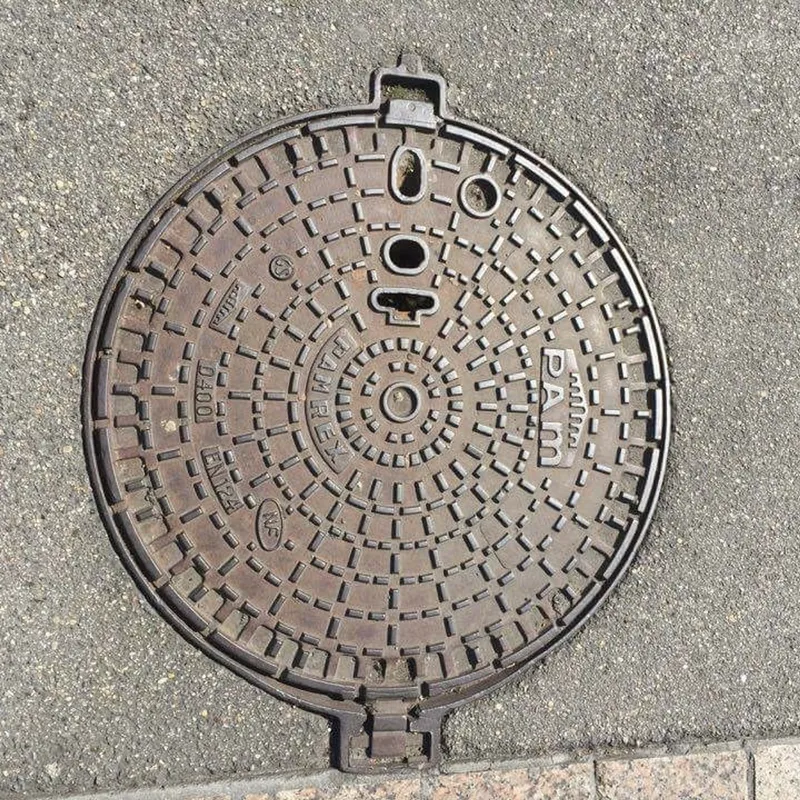
caryfukThe radial grid pattern of this specimen, with its many spokes, suggests an optimized design for efficient drainage. The surrounding asphalt matrix, carefully delineated by a circular cut, suggests a precise installation, although small fragments and cigarette butts suggest a common interaction with the urban environment. Inscriptions such as 'D400 EN124' provide key taxonomic data for the classification of this robust artefact.
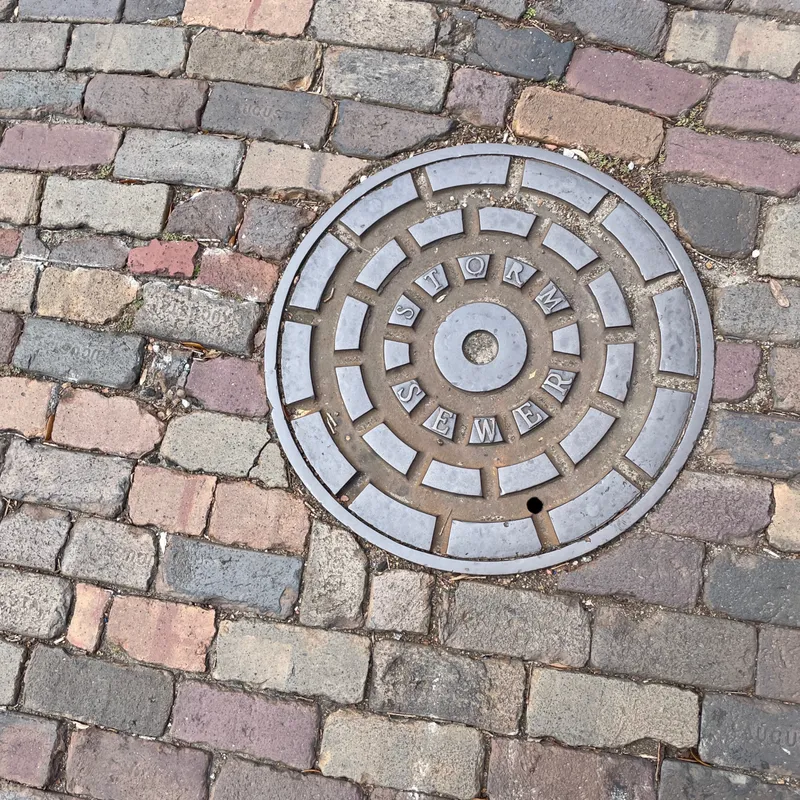
caryfukA circular metal plate, set into a paved path of bricks of various shades, bears a prominent inscription 'STORM SEWER'. Its surface is divided into concentric circles and segments, indicating a robust engineering design. According to an analysis by the Institute of Lidology, it is a typical example of urban infrastructure that effectively drains rainwater.
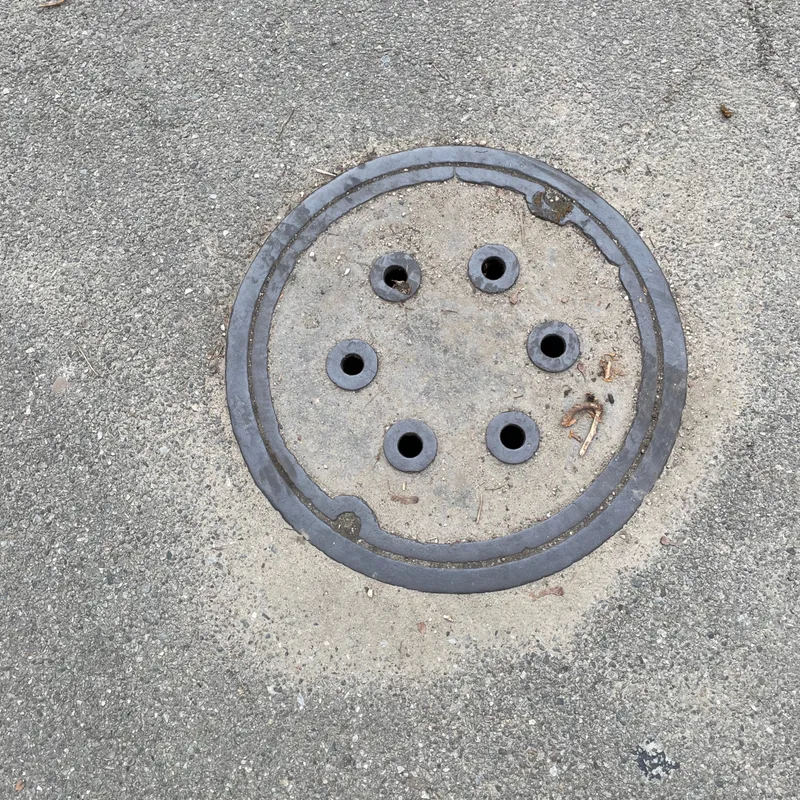
caryfukA circular pattern of five distinct holes distorts the central surface of this specimen, framed by a robust, dark-coloured metal ring. The surrounding ground, a rough aggregate of grey asphalt, suggests its integration into a pedestrian or light traffic route. Small organic fragments are scattered across its surface, indicating its exposure to the elements.
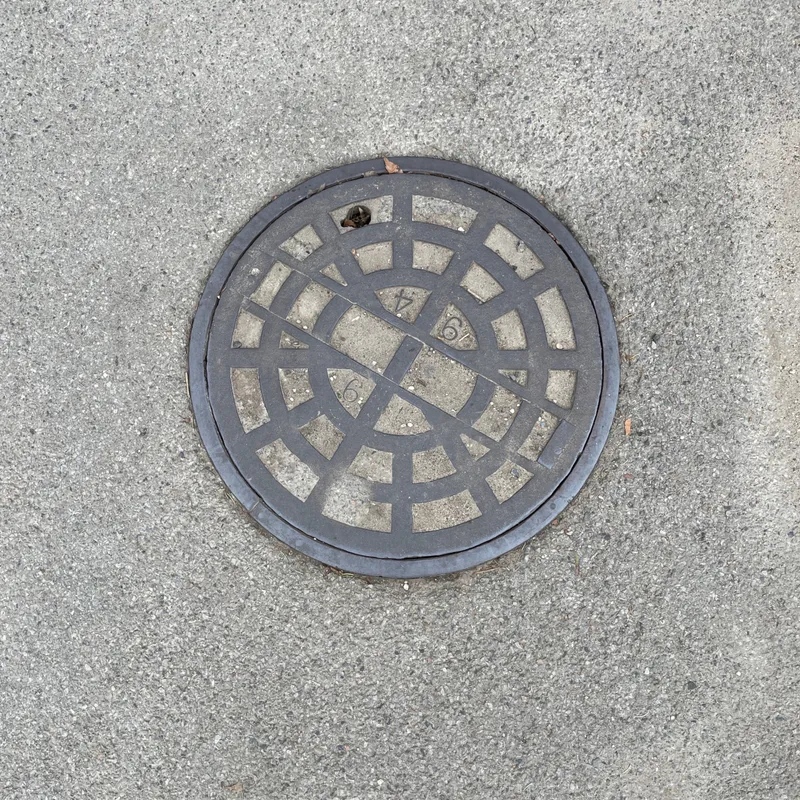
caryfukOn the surface of this specimen, a robust geometric pattern unfolds, formed by radial and concentric segments, which suggest engineering precision. Visible in its structure are the digits '4', '6', and '17', which probably serve for identification or classification. The surrounding asphalt surface testifies to its integration into the urban infrastructure.
caryfukA robust circular specimen, embedded in an asphalt substrate, exhibits a complex radial and concentric pattern that effectively increases traction. In its center are strategically placed holes for manipulation, while along its perimeter are discernible alphanumeric identifiers, which the Institute of Lidology precisely records for future generations of researchers.
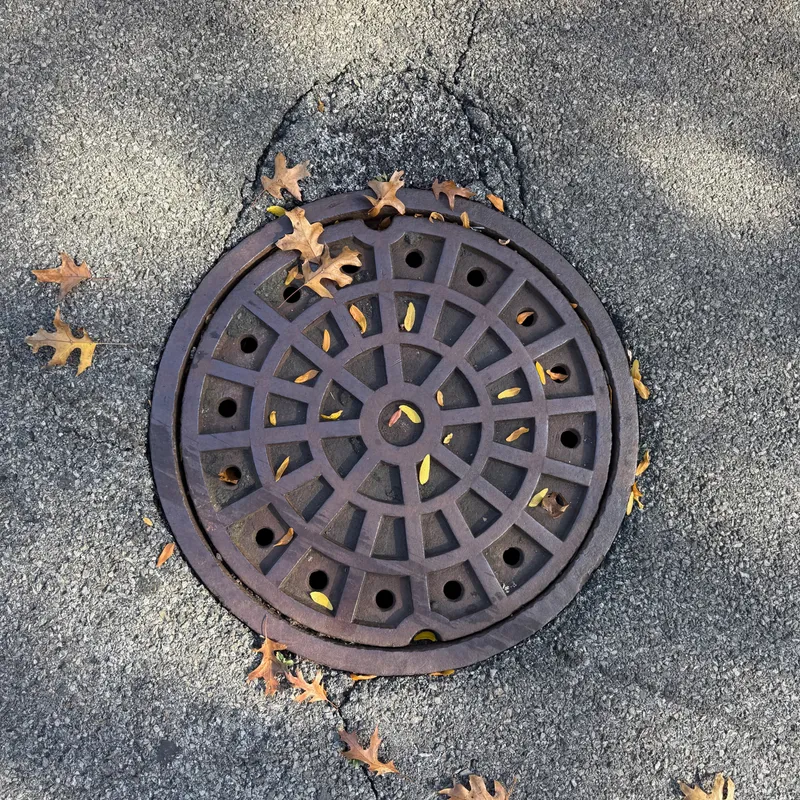
caryfukThe circular metal structure, surrounded by rough asphalt, shows a complex geometric pattern with radial and concentric elements. Its surface is dotted with small autumn leaves, suggesting a seasonal interaction with the surrounding environment. This specimen, as the Institute of Lidology would note, is a fascinating study of urban infrastructure and its natural wear and tear.
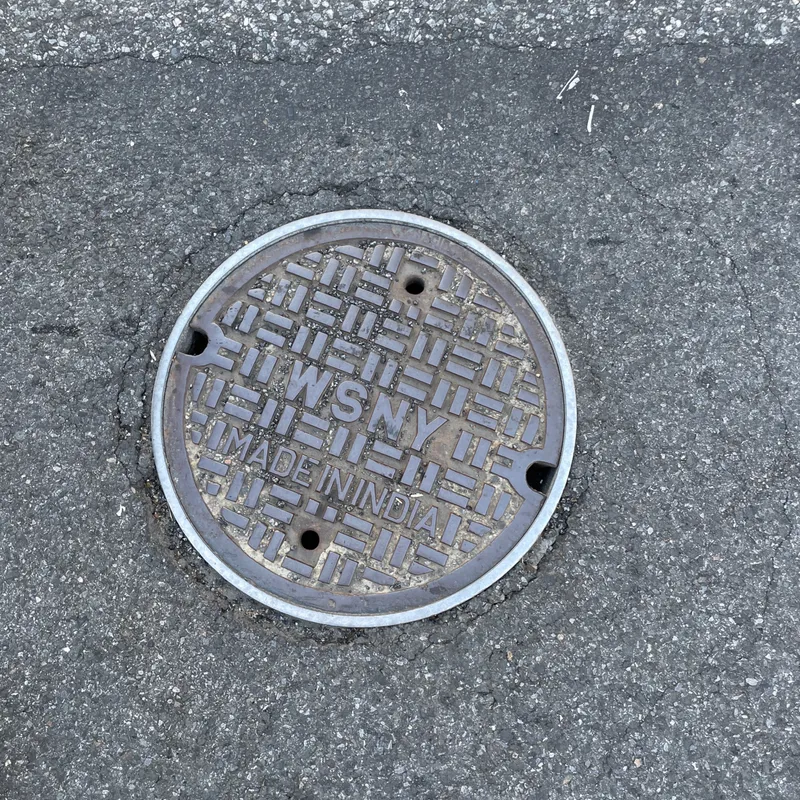
caryfukOn the asphalt surface there is a circular object with a distinctive geometric pattern of rectangular segments. The central inscriptions 'WSNY' and 'MADE IN INDIA' provide clues to its origin and probable functional classification. This particular specimen, carefully documented by the Institute of Lidology, is a typical example of urban infrastructure with obvious signs of long-term use.
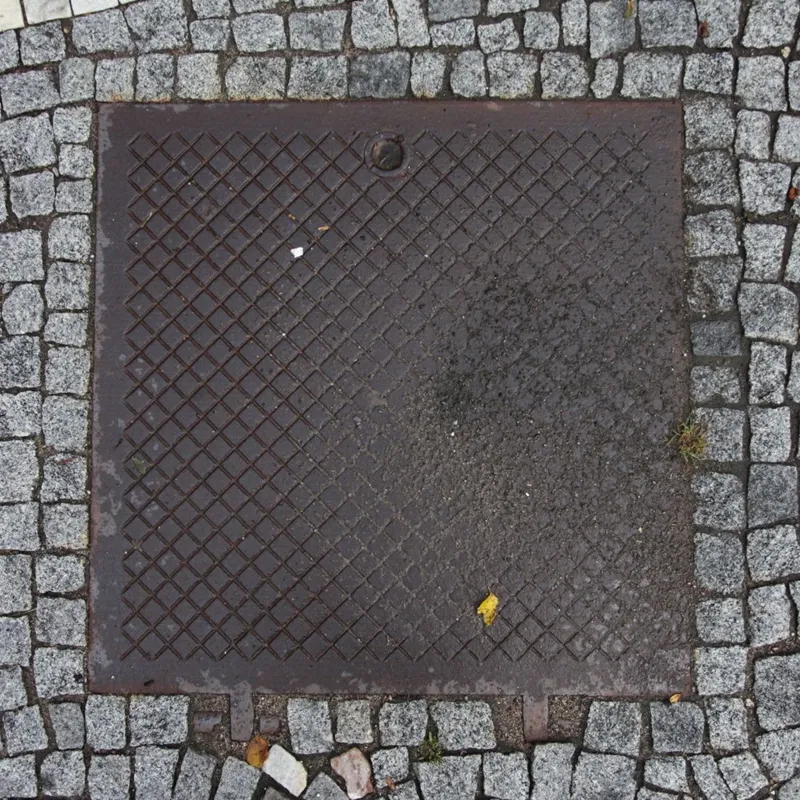
caryfukThe surface of this specimen exhibits the robust diamond-shaped grid pattern that is characteristic of urban infrastructure engineering features. Its dark, apparently iron material is surrounded by irregular paving stones, suggesting its integration into a historic or traditional urban environment. The presence of minor dirt and a solitary yellow leaf indicates its daily exposure to the outside elements, which is of interest to the Institute of Lidology.
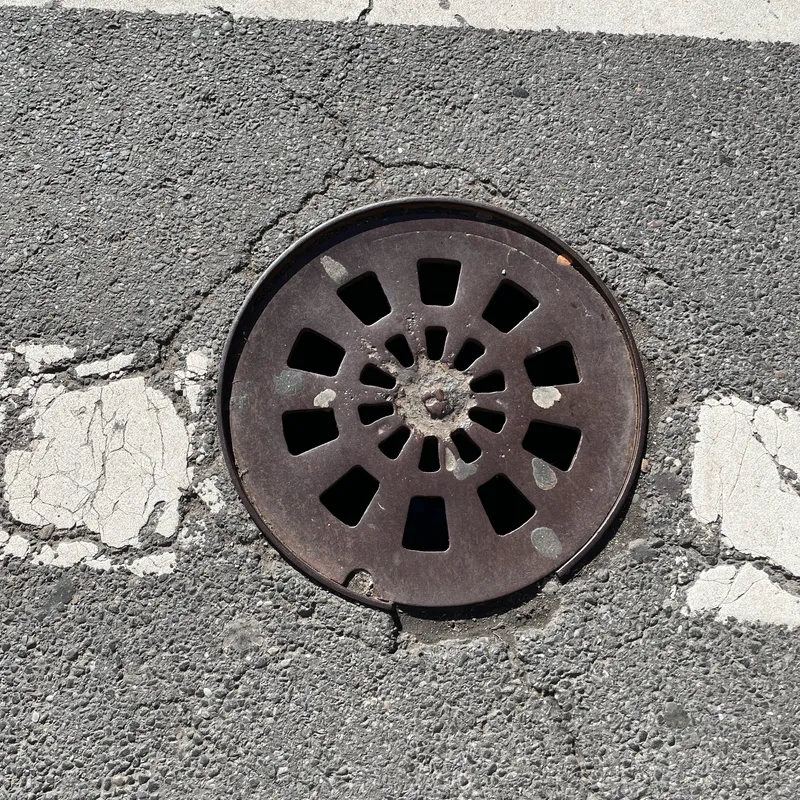
caryfukOn the asphalt surface, interwoven with white road markings, a circular metal artifact is located. Its surface is marked by corrosion and exhibits a radial geometric pattern, which could be the subject of deeper lidological analysis. A central point with a rivet indicates a robust structural solution for drainage, a detail that the Institute of Lidology carefully catalogs.
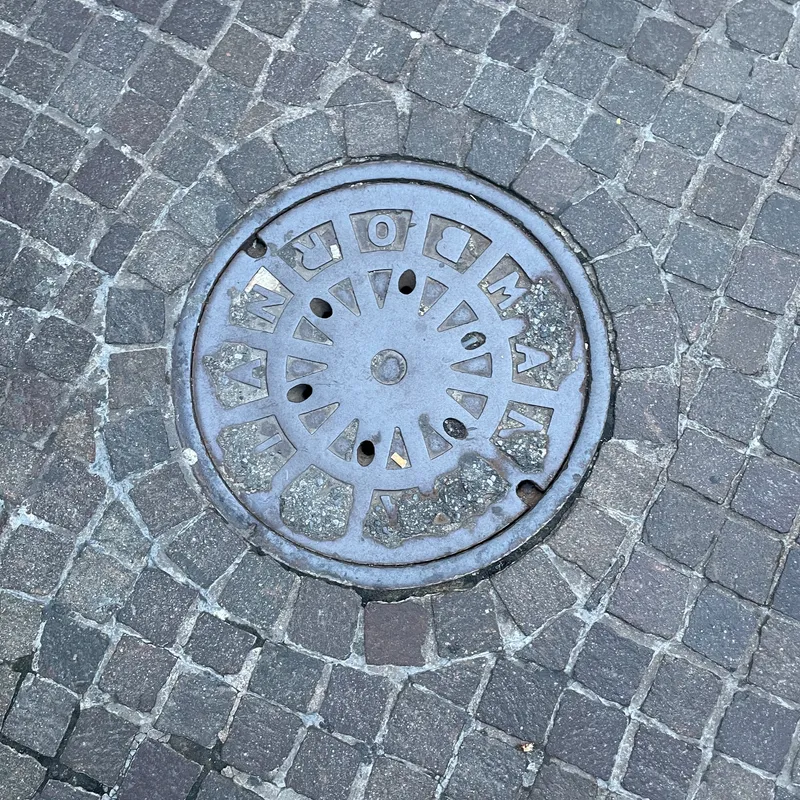
caryfukThe circular metal structure, set in a pavement of stone blocks, shows signs of wear, indicating its long exposure to urban traffic. The central section is perforated with a series of triangular and circular holes that could be used for ventilation or as handholds for handling. The inscription around the perimeter, though partially eroded, provides a key to identifying its original purpose, always a fascinating discovery for the Institute of Humanology.
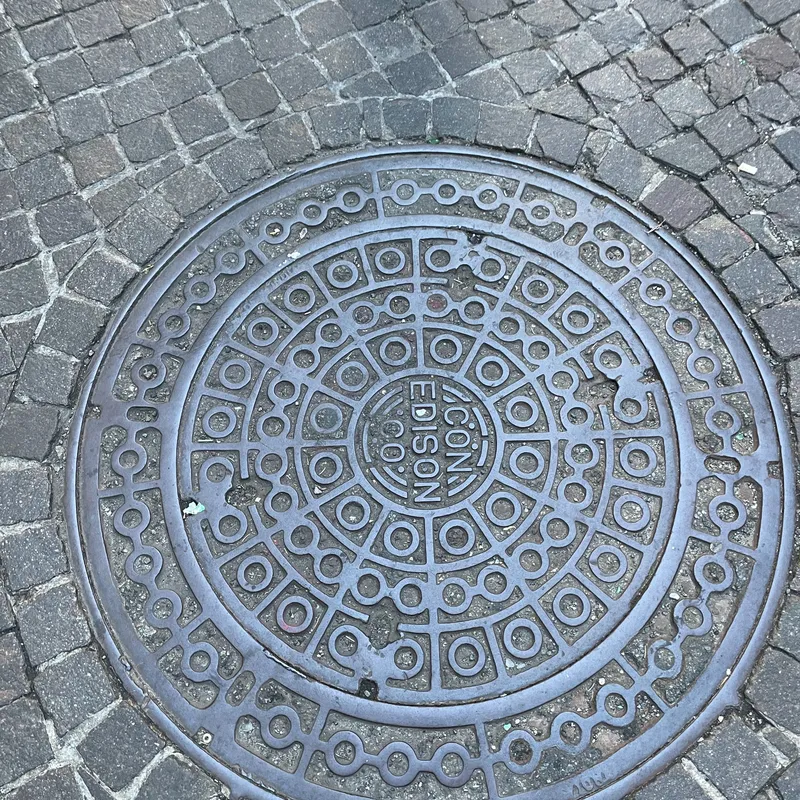
caryfukA complex geometric pattern with many circular elements dominates this example of urban infrastructure. The central inscription 'EDISON CO.' indicates its historical affiliation with early electrical networks, making it a fascinating artifact for the Institute of Lidology. Its robust cast-iron construction is set into a paving of small cobblestones, testifying to its longevity in the urban environment.
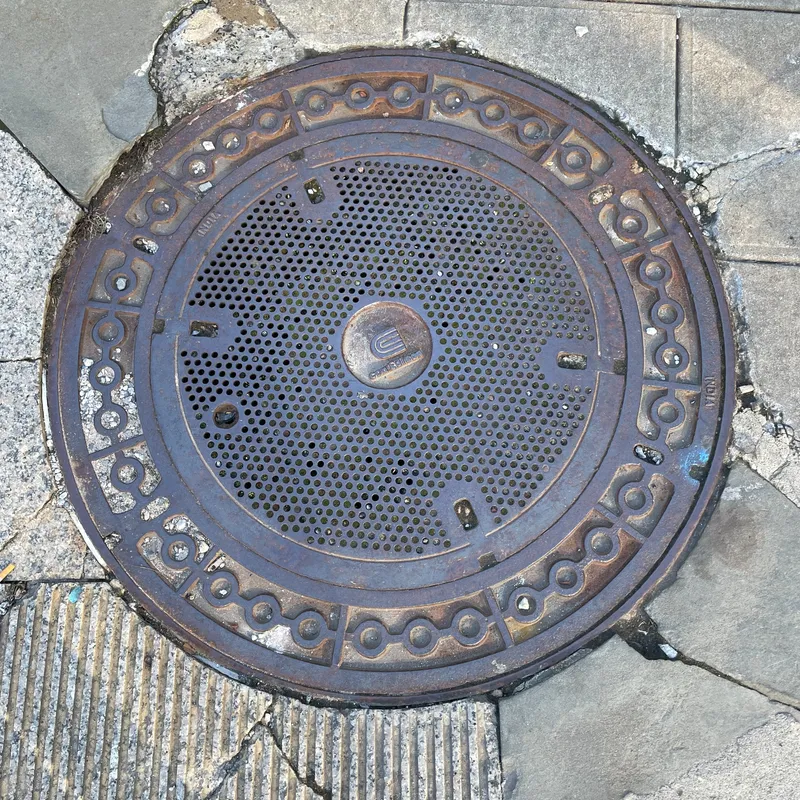
caryfukIn the center of the perforated surface is a prominent logo with the letter 'U' and the inscription 'ConEdison'. A circular pattern with tiny holes spreads around the center, surrounded by a rusty, geometric ornament that gives this specimen an industrial character. The edges of the manhole cover are lined with cracked pavement made of various types of paving stones.
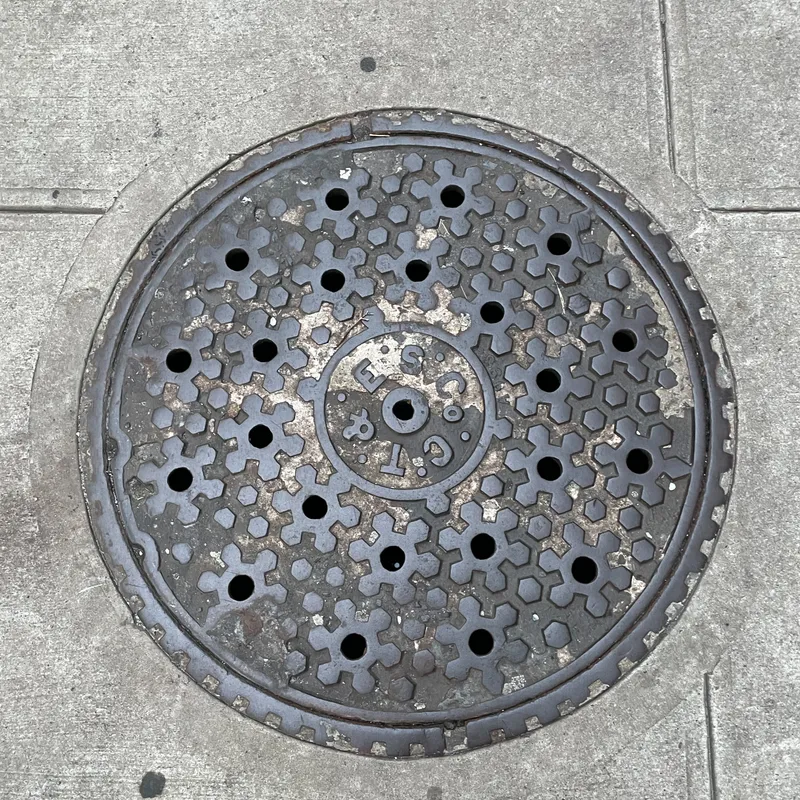
caryfukA circular grate with a repeating pattern resembling gears dominates this example of urban infrastructure. In the central part, alphanumeric characters "E.S.C.", "G.T." and the number "8" are visible, indicating a specific classification. The surface shows signs of significant wear and patina, testifying to its long-term exposure to the elements.
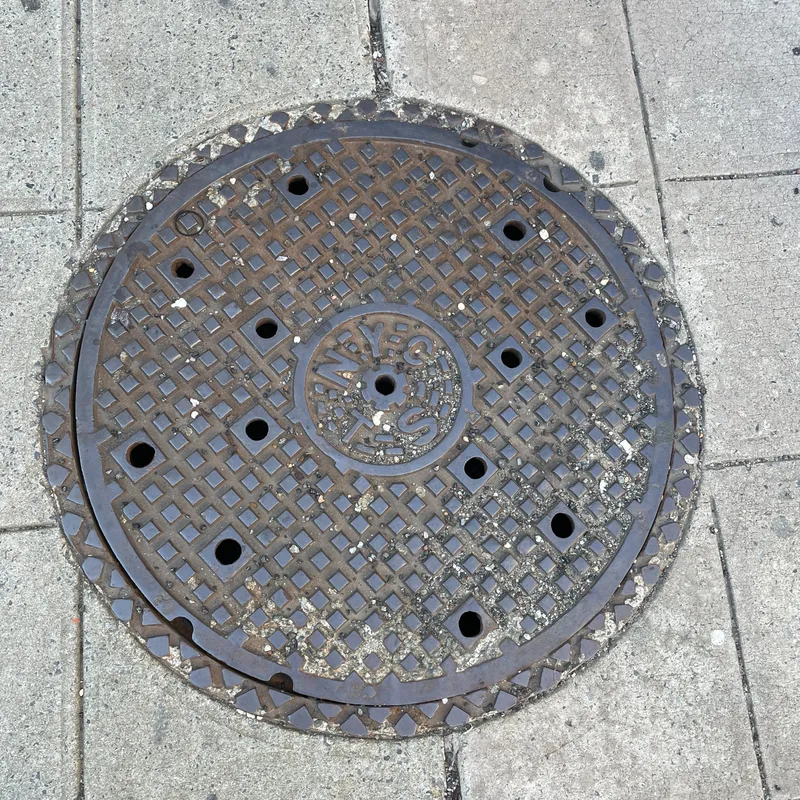
caryfukA round metal artifact, embedded in a grey sidewalk, exhibits an intricate grid pattern with a central circular emblem bearing the inscription 'N.Y.C.S.'. The surface of this specimen, interspersed with regular holes, bears clear signs of wear, testifying to its long-term exposure to the urban environment and the relentless passage of time.
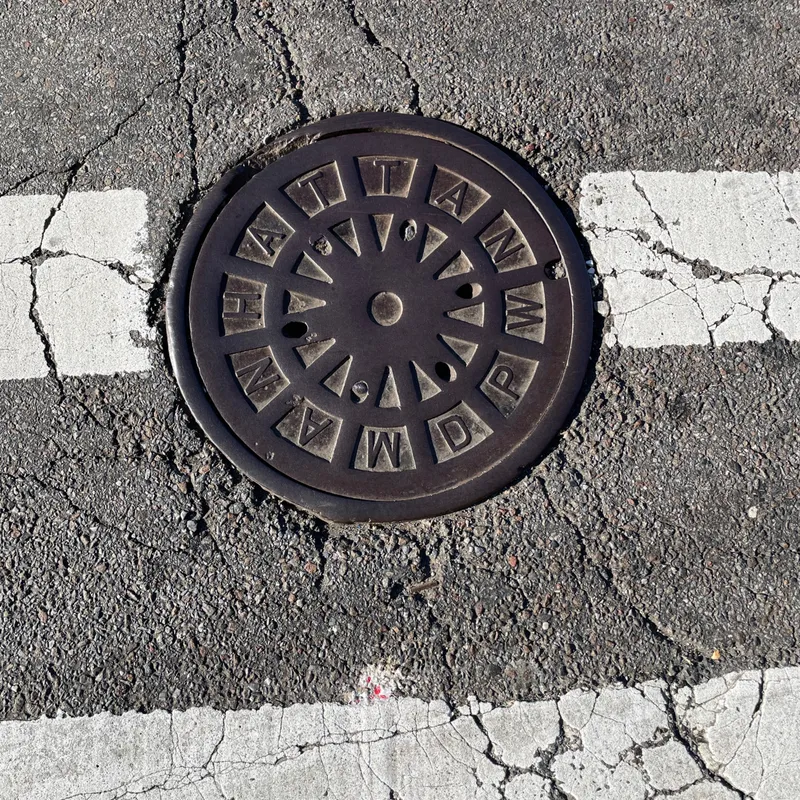
caryfukA sturdy circular pattern with rayed triangles surrounds a central disc bearing the inscription "ATLANTA W.P.D." around its perimeter. This urban artefact, an exemplar of municipal infrastructure, is set in a heavily cracked asphalt surface, intersected by worn white road signs. Its weathered appearance testifies to years of faithful service.
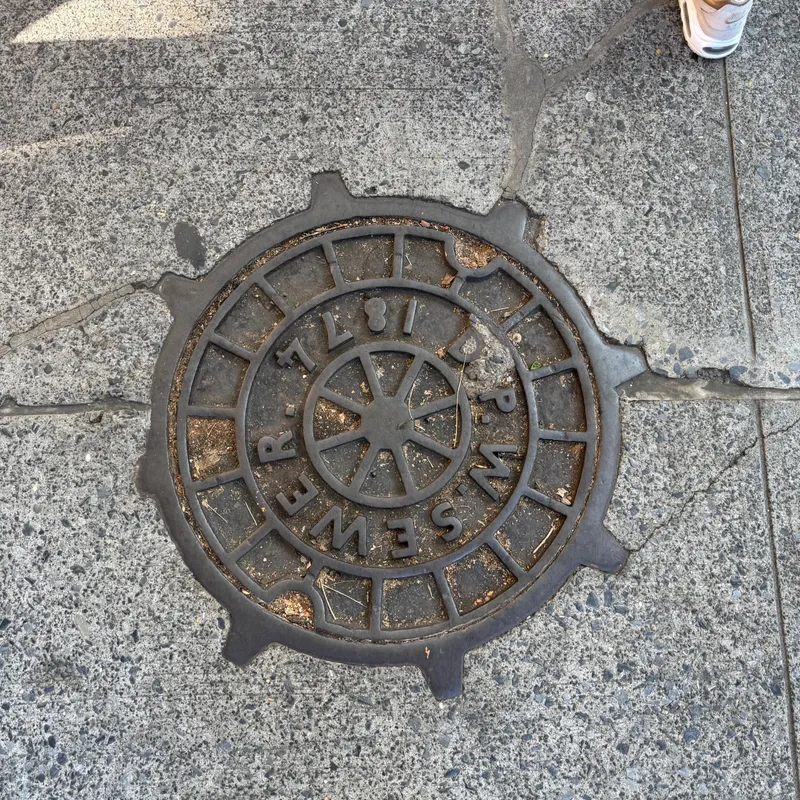
caryfukThe prominent 'SEWER' sign dominating the central part of the circular metal element, set into the granular concrete pavement, clearly indicates its primary function. The numerals '81' and the abbreviations 'W.M.', 'P.M.' and 'L.L.' provide valuable clues to the dating and identification of this specimen, which is being carefully studied by the Institute of Lidology as part of its urban humanology.
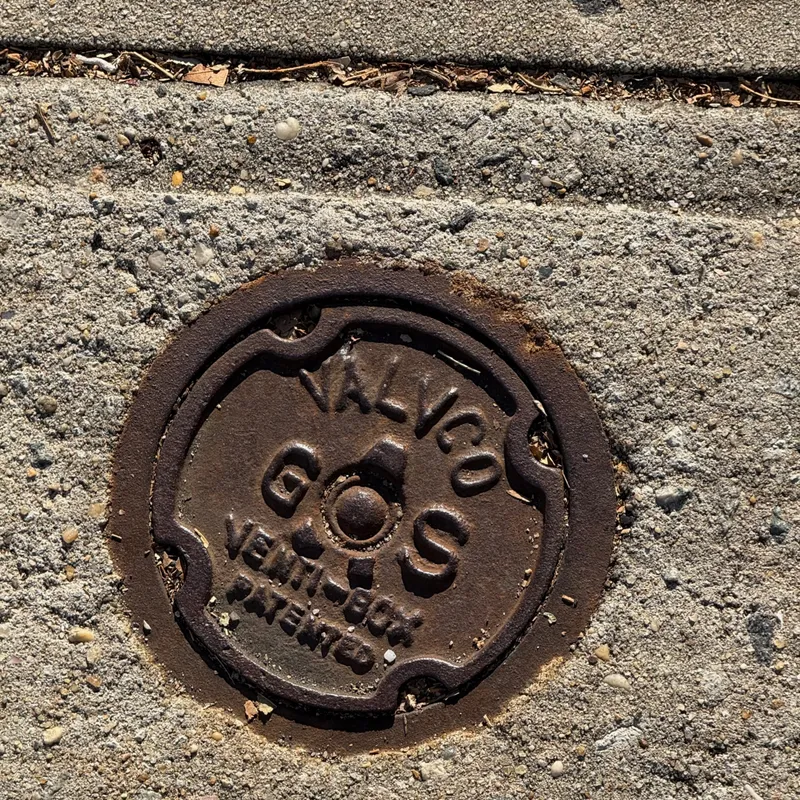
caryfukThe rough concrete surface hosts a circular metal artefact whose surface is marked by significant corrosion and bears clear textual identifiers. The central inscription 'GAS' clearly classifies this specimen as part of the infrastructure for the distribution of the gaseous medium, while the markings 'VALVICO' and 'VENTI-BOX PATENTED' provide valuable clues to its manufacturer and technical specification. From the point of view of the Institute of Lidology, this is a typical example of functional design with historical overlap.
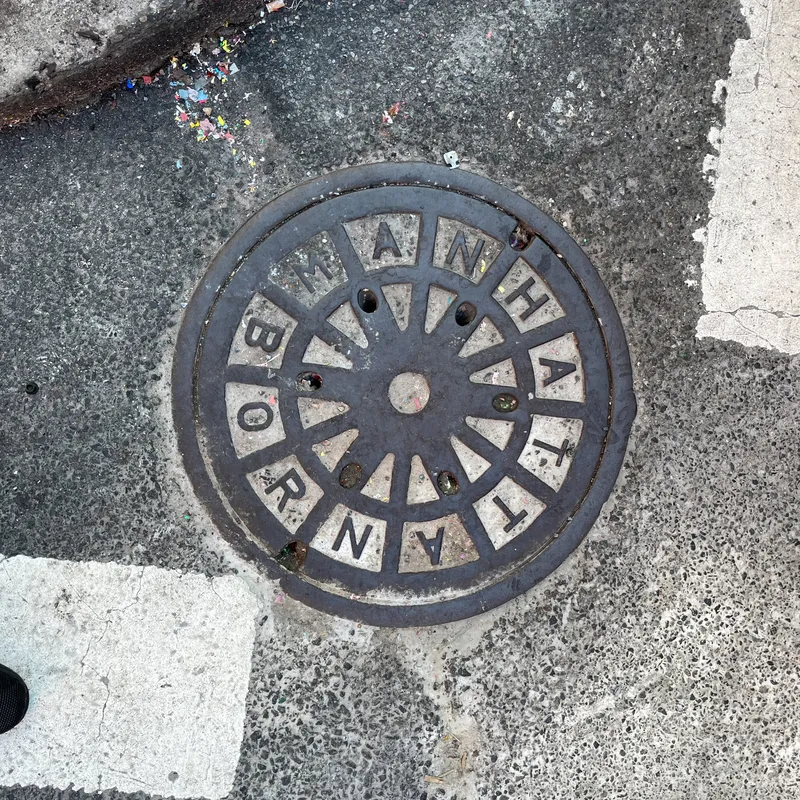
caryfukOn the surface of the dark asphalt is a circular cast-iron disc whose embossed inscription 'BORO MANHATTAN NY' clearly identifies its origin. This example of urban infrastructure exhibits a radial arrangement of triangular segments, a design element that seems to effectively combine aesthetics with functionality. The presence of small openings suggests its role in the drainage system, an area that the Institute of Lidology has studied with unflagging interest.
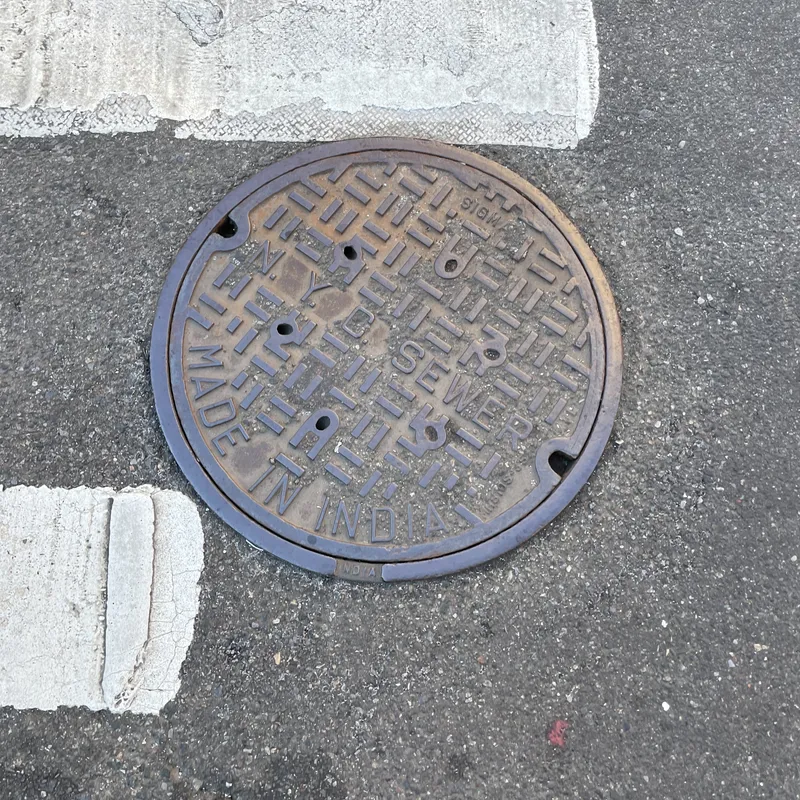
caryfukCircular grille with distinctive geometric pattern and inscriptions "N.Y.C. SEWER" and "MADE IN INDIA" dominate the asphalt surface. Clearly cast in iron, this specimen shows signs of normal wear, but its functional integrity remains intact, which is crucial for the study of urban infrastructure. The Institute of Lidology would appreciate clear identification of the SIGMA manufacturer and country of origin, which contributes to an understanding of global supply chains.
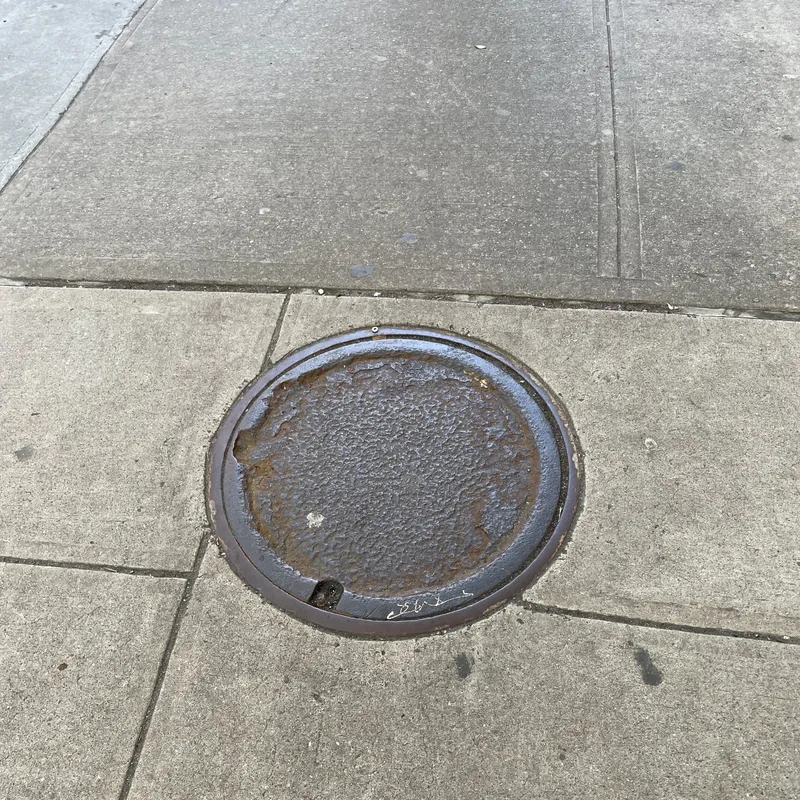
caryfukThe rough, uneven texture of the surface of this example of the cast iron hatch indicates considerable wear and corrosion processes that have affected it over time. The rim is flanked by a simple, slightly raised ring which shows illegible white marks, probably chalk or paint residue, and the very faint numeral '262' on the base. Set in a grey concrete pavement, this artefact is a fascinating study of the interaction of urban infrastructure with the elements, an area that the Institute of Humanology is keen to explore.